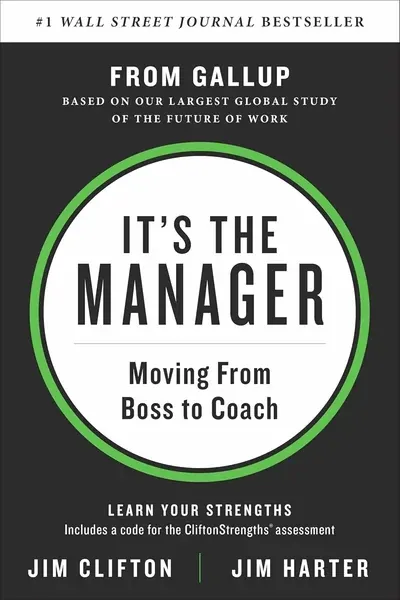
Gallup's Research Foundation
Clifton and Harter leverage Gallup's extensive workplace research to build their arguments. The authors present engagement statistics and productivity data that reveal why traditional management approaches fail. Their methodology examines what separates exceptional managers from mediocre ones, identifying specific behaviors that drive team performance.
The research spans multiple industries and cultures, providing a robust foundation for their coaching framework. Where many business books rely on anecdotal success stories, this approach grounds recommendations in quantifiable outcomes. The data reveals that manager quality directly impacts employee engagement, turnover rates, and organizational productivity.
However, the statistical presentation occasionally overwhelms the narrative. Readers seeking quick takeaways may find themselves wading through extensive survey results before reaching actionable insights.
The authors outline a systematic approach to managerial coaching that moves beyond periodic performance reviews. Their framework emphasizes frequent, meaningful conversations that focus on employee strengths rather than fixing weaknesses. This methodology requires managers to become talent developers rather than task assigners.
The book provides specific conversation templates and questioning techniques designed to unlock employee potential. These tools help managers identify individual motivations and career aspirations, then align them with organizational goals. For managers struggling with team engagement, these frameworks offer practical alternatives to traditional command-and-control methods.
The coaching model emphasizes individualized approaches, recognizing that different employees require different management styles. This personalized methodology demands more time investment from managers but promises higher returns in team performance and retention.
Practical Implementation Challenges
While the coaching philosophy sounds appealing, the main weakness lies in implementation guidance for time-pressed managers. The book advocates for frequent one-on-one conversations and individualized development plans, but offers limited advice for managers juggling these responsibilities with operational demands.
The authors acknowledge that many organizations promote technical experts into management roles without adequate leadership training. However, their solutions sometimes assume more organizational support than most mid-level managers actually receive. For managers in resource-constrained environments, some recommendations may feel impractical despite their theoretical merit.
The book also underestimates the cultural resistance many organizations have to coaching-style management, particularly in results-driven industries where quick decisions and clear directives often take precedence over employee development conversations.
Strengths That Set It Apart
The integration of Gallup's Q12 engagement survey throughout the coaching framework provides measurable benchmarks for management effectiveness. Unlike books that focus solely on soft skills, this approach offers concrete metrics for tracking progress. Managers can assess whether their coaching efforts actually improve team engagement scores.
The book excels at debunking common management myths with data-driven insights. Research-backed strategies replace conventional wisdom about motivation and performance management. This evidence-based approach lends credibility to recommendations that might otherwise seem like trendy management fads.
Clifton and Harter also address the business case for coaching-style management, showing how improved employee engagement translates to bottom-line results. This financial justification helps managers advocate for coaching approaches within profit-focused organizations.
Who Benefits Most From This Approach
Perfect for new managers transitioning from individual contributor roles, this book provides a research-based alternative to trial-and-error leadership development. The frameworks offer structure for managers who lack formal leadership training but want to develop their teams effectively.
Experienced managers stuck in command-and-control patterns will find valuable perspective shifts, though changing ingrained habits requires significant commitment. For HR professionals designing management development programs, the book provides evidence-based curriculum foundations.
Senior leaders seeking to improve organizational engagement culture will appreciate the systematic approach and measurable outcomes. However, not recommended for managers in crisis situations requiring immediate performance corrections, as the coaching methodology emphasizes long-term development over short-term fixes.