
BOOKS
Published
Read Time
6 min read
Our Rating
3.5
Reviewed by
LuvemBooks
Share This Review
Signs by Laura Lynne Jackson: Psychic Medium's Universe Guide Review
Our Rating
3.5
Signs provides compassionate guidance on spiritual communication with personal anecdotes and practical exercises, though its metaphysical claims will appeal primarily to readers already open to psychic phenomena.
In This Review
- What Works & What Doesn't
- A Medium's Personal Journey
- Practical Framework for Recognition
- The Author's Credentialing Claims
- Emotional Resonance and Healing
- Critical Limitations and Concerns
- Our Take
What Works & What Doesn't
What Works
- Compassionate approach to grief and loss that provides comfort to bereaved readers
- Practical exercises and techniques for developing spiritual awareness
- Personal anecdotes that make abstract concepts more relatable and accessible
- Gentle introduction to mediumship that avoids intimidating spiritual jargon
- Validation for readers who have experienced unexplained spiritual encounters
What Doesn't
- Relies heavily on subjective experiences without acknowledging alternative explanations
- Oversimplifies complex life situations by suggesting spiritual signs provide clear answers
- May create unrealistic expectations about receiving definitive guidance from spiritual sources
- Lacks critical analysis of psychic phenomena and consciousness studies
A Medium's Personal Journey
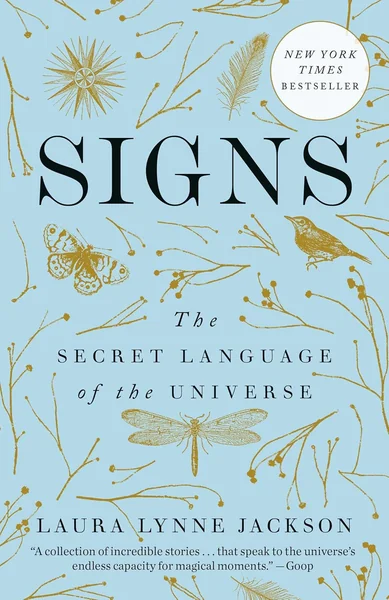
A memoir-style guide that comforts the grief-stricken more than it convinces the skeptical. Jackson structures her narrative around her own discovery and development of psychic abilities. She describes experiencing spiritual communications from childhood, initially dismissing these encounters before eventually embracing her role as a medium. The book chronicles her journey from reluctant recipient of otherworldly messages to someone who actively helps others connect with deceased loved ones.
Her writing style remains conversational and accessible throughout, avoiding dense metaphysical jargon that might alienate newcomers to spiritual topics. Jackson shares intimate details about readings she has conducted, family experiences, and personal struggles with accepting her abilities. These anecdotes form the backbone of the book, providing concrete examples of how she believes the universe communicates with individuals.
The author emphasizes that signs appear constantly around us, requiring only heightened awareness to recognize them. She categorizes different types of spiritual communication, from subtle environmental cues to more dramatic manifestations involving technology or nature.
Practical Framework for Recognition
Unlike purely theoretical spiritual books, Jackson provides specific techniques for identifying and interpreting signs. She outlines methods for quieting mental chatter, maintaining spiritual journals, and creating receptive mental states. The book includes exercises designed to help readers develop their intuitive faculties and become more attuned to subtle energetic shifts.
Jackson presents a systematic approach to discerning meaningful signs from random coincidences. She suggests paying attention to timing, emotional resonance, and patterns of occurrence when evaluating potential messages. The framework encourages readers to trust their initial instincts while maintaining discernment about significance.
Her methodology emphasizes meditation, gratitude practices, and intentional communication with deceased individuals or spiritual guides. Jackson provides step-by-step instructions for establishing protective boundaries during spiritual exploration, acknowledging potential risks associated with opening oneself to otherworldly influences.
The Author's Credentialing Claims
Jackson presents her credentials as a certified psychic medium, citing testing through the Windbridge Research Center and participation in scientific studies of mediumship. She references accuracy rates in controlled readings and validation from researchers studying anomalous cognition. These credentials distinguish her approach from purely intuitive or self-proclaimed mediums.
However, the scientific community remains divided on the validity of psychic phenomena, and Jackson's claims exist within ongoing debates about consciousness and survival after death. Her presentation of research findings may convince readers already inclined toward spiritual explanations while leaving skeptics unconvinced.
The author addresses common criticisms of mediumship, including cold reading techniques and confirmation bias. She argues that controlled testing environments eliminate these concerns, though critics might question the methodology and interpretation of such studies.
Emotional Resonance and Healing
The book's greatest strength lies in its potential to provide comfort to grieving individuals. Jackson's accounts of reuniting families with deceased relatives offer hope and solace to those struggling with loss. Her compassionate approach to death and dying presents mortality as a transition rather than an ending.
Many readers report finding peace through Jackson's perspective on continued consciousness after death. The book validates experiences of sensing deceased loved ones' presence, transforming potentially frightening encounters into sources of comfort. Jackson normalizes spiritual experiences that individuals might otherwise dismiss or fear.
Her emphasis on love as the connecting force between worlds gives grieving readers a concrete lens for reframing loss. The book encourages readers to view challenging circumstances as opportunities for deeper connection rather than permanent severance.
Critical Limitations and Concerns
The main weakness of Signs stems from its reliance on subjective experiences and unverifiable claims. Jackson presents her psychic abilities and spiritual encounters as factual without acknowledging alternative explanations for her experiences. Readers seeking evidence-based approaches to spirituality may find her methodology lacking in critical analysis.
The book occasionally veers into oversimplification, suggesting that recognizing signs will solve complex life problems or provide clear guidance for difficult decisions. This perspective may create unrealistic expectations for readers hoping to receive definitive answers from spiritual sources.
Jackson's writing sometimes lacks nuance when discussing grief and loss, potentially minimizing the complexity of mourning processes. Her optimistic outlook, while comforting to some, might feel dismissive to individuals experiencing profound suffering or questioning their spiritual beliefs.
Our Take
Signs succeeds as a compassionate guide for readers drawn to spiritual explanations of consciousness and death. Jackson's sincere approach and personal vulnerability create an engaging narrative that validates experiences often dismissed by mainstream culture. The book works best for readers already open to metaphysical concepts or those seeking comfort after losing loved ones — not for skeptics or those wanting evidence-based inquiry.
The book functions more as inspirational memoir than rigorous exploration of consciousness studies, and readers in acute grief should treat it as a supplement to, not a replacement for, professional counseling. If you're seeking comfort and a framework for staying open to signs from those you've lost, the Amazon link in the sidebar has the current price.
Product Gallery
Frequently Asked Questions
Is Signs: The Secret Language of the Universe by Laura Lynne Jackson worth reading in 2026?
Based on my 3.5/5 rating, it's worth reading if you're genuinely curious about mediumship and spiritual communication, but approach with realistic expectations. Jackson's personal journey is engaging, though the book relies heavily on anecdotal evidence rather than scientific proof, making it better suited for those seeking inspiration rather than concrete answers.
Who should read Signs: The Secret Language of the Universe?
This book is perfect for readers interested in spirituality, mediumship, or those grieving who seek comfort in the possibility of afterlife communication. It's also suitable for anyone curious about psychic phenomena, though skeptics may find the lack of scientific backing less convincing.
How does Signs: The Secret Language of the Universe compare to other books about mediumship?
Unlike purely instructional books on psychic development, Jackson's work is more of a personal memoir that chronicles her journey from skeptical child to practicing medium. It's more accessible than academic approaches to the subject but less practical than step-by-step guides to developing intuitive abilities.
What is the main takeaway from Signs: The Secret Language of the Universe?
The central message is that the universe constantly sends us signs and messages from deceased loved ones, and we can learn to recognize and interpret these communications. Jackson emphasizes that everyone has the potential to develop their intuitive abilities and connect with the spiritual realm.
Does Signs: The Secret Language of the Universe provide evidence for psychic abilities?
The book primarily relies on personal anecdotes and Jackson's own experiences rather than scientific evidence or rigorous testing. While her stories are compelling and detailed, readers seeking empirical proof of psychic phenomena may find the evidence insufficient.
At $16.71, is Signs: The Secret Language of the Universe worth buying?
The price is reasonable for a spiritual memoir of this length and depth. However, consider borrowing from the library first if you're unsure about the subject matter, as the book's appeal depends heavily on your openness to metaphysical concepts.
What specific spiritual concepts does Laura Lynne Jackson explore in Signs?
Jackson discusses recognizing signs from deceased loved ones, developing intuitive abilities, and understanding spiritual communication patterns. She also explores concepts like soul connections, the continuity of consciousness after death, and how to differentiate between genuine spiritual messages and imagination.
BEST DEAL
Related Reviews
Reviews of books we picked for readers who enjoyed Signs.


Reader Comments
No comments yet
Be the first to share your thoughts!