
In This Article
- What the Adaptation Is and Who Made It
- About the Novel and Its Author
- Context: The Novel's Track Record and the Adaptation's Significance
- What to Watch
The UK stage adaptation of Christy Lefteri's The Beekeeper of Aleppo is currently touring British theatres, and reviewers are remarking on the production's collision with current events. Critics writing about performances at venues including Nottingham Playhouse, Richmond Theatre, Theatre Royal Brighton, and Storyhouse Chester have noted that the play's depiction of forced displacement feels acutely timely given the continuing conflict in the Middle East. Recent theatre coverage has described the production's anti-war message as having "seldom had greater resonance."
What the Adaptation Is and Who Made It
The stage production was adapted by Nesrin Alrefaai and Matthew Spangler and is produced by Martin Dodd for UK Productions Ltd in association with Nottingham Playhouse. The production follows Syrian refugees Nuri and Afra as they flee Aleppo and attempt to reach safety in Britain — the same central journey as the source novel. Broadway World's review of the Theatre Royal Brighton leg describes it as "a tough watch," adding that "the play shines a light on the human stories behind the refugee crisis." Elemental Theatre called the Nottingham Playhouse production "intimate, character-driven storytelling" with "striking performances and thoughtful staging." Adventures in Theatreland, reviewing the Chester date, described the play as one that "puts on display the complete extent of the hardships experienced by refugees, especially those in the war-torn Middle East." London Theatre 1, reviewing the Richmond Theatre performance, noted "a palpable sense of urgency in the need to start a new life" drove the production's momentum.
About the Novel and Its Author
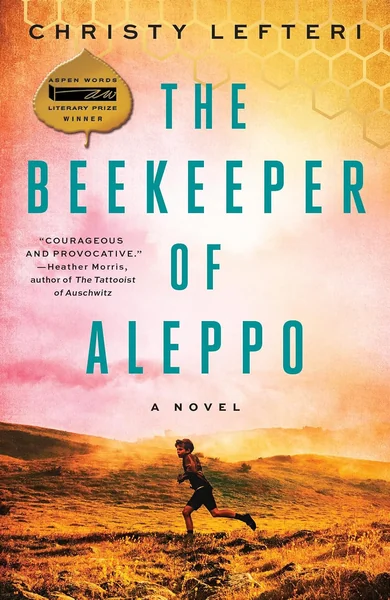
The Beekeeper of Aleppo was published in 2019 and is Lefteri's second novel, according to Wikipedia's entry on the book. Lefteri — a lecturer at Brunel University London and the child of Greek Cypriot refugee parents — drew on two summers of volunteer work at the Hope Centre in Athens, a refugee centre run by the NGO Faros, as documented in her Wikipedia biography. The character of beekeeper Mustafa is based on Ryad Alsous, an academic at the University of York and formerly of Damascus University. Kirkus Reviews observed at the time of publication that "Nuri's story rings with authenticity, from the vast, impersonal cruelties of war to the tiny kindnesses that help people survive it," crediting Lefteri's direct experience in Athens. Penguin Random House describes the novel as putting "human faces on the Syrian war." For a full assessment of the book itself, see our review.
Context: The Novel's Track Record and the Adaptation's Significance
The novel's credentials are well-established. According to Wikipedia, it won the 2020 Aspen Words Literary Prize, was runner-up for the Dayton Literary Peace Prize in the fiction category, reached more than one million copies sold internationally as of 2023, became The Sunday Times' third bestselling fiction paperback of 2020, and featured on the Richard & Judy Book Club list. The audiobook, narrated by Art Malik, was shortlisted for a British Book Award in 2020. When The Guardian reviewed the Nottingham Playhouse staging, critic Anya Ryan acknowledged the story's power while noting "a stiffness and sense of detachment to the staging" — a more measured verdict than some of the tour's other notices, underscoring that critical reception across venues has not been uniform.
What to Watch
The tour continues at multiple UK venues. No closing date has been confirmed in available sources. Whether the production extends its run or generates further critical attention will depend in part on the continued news environment that reviewers have cited as shaping audience response. The adaptation marks the first major stage life for a novel that, per Kirkus Reviews, was built on the premise that "when war has destroyed your home and livelihood… the reasons for that war lose their meaning" — a framing that touring theatre critics are finding difficult to separate from the present moment.
Frequently Asked Questions
Is The Beekeeper of Aleppo: A Novel worth buying in 2026?
Yes, particularly given current global events. Lefteri's authentic portrayal of refugee experience, informed by her professional background, makes this both educational and emotionally engaging. However, be prepared for heavy subject matter and occasional heavy-handed symbolism.
What is the main message of The Beekeeper of Aleppo: A Novel?
The novel focuses on resilience and rebuilding rather than just trauma. Through the metaphor of beekeeping, Lefteri explores how people can reconstruct their lives after devastating loss, emphasizing hope and human connection over political messaging.
Who should read The Beekeeper of Aleppo: A Novel?
Readers interested in contemporary refugee experiences, fans of literary fiction with social themes, and anyone seeking to understand displacement through personal rather than political lenses. Those sensitive to trauma or looking for lighter reads should approach carefully.
Should I read The Beekeeper of Aleppo: A Novel or watch the stage adaptation?
The novel offers more psychological depth and internal character development, while the stage adaptation provides immediate emotional impact. Reading first allows you to appreciate Lefteri's prose style and the full complexity of the characters' journeys.

Reader Discussion
No comments yet
Be the first to share your thoughts!