
BOOKS
Published
Read Time
6 min read
Our Rating
4.2
Reviewed by
LuvemBooks
Share This Review
The Beekeeper of Aleppo by Christy Lefteri - Book Review
Our Rating
4.2
A haunting debut that transforms refugee experience into universal human story through restrained prose and compelling characters, though occasionally heavy-handed symbolism prevents it from reaching masterpiece status.
In This Review
- What Works & What Doesn't
- A Journey Through Trauma and Memory
- Prose That Whispers and Wounds
- Nuri, Afra, and the Weight of Survival
- Themes That Resonate Beyond Headlines
- Where Symbolism Sometimes Overwhelms Story
- Worth the Emotional Investment
- Where to Buy
What Works & What Doesn't
What Works
- Authentic portrayal of refugee experience informed by author's professional background
- Restrained, lyrical prose that respects the gravity of its subject matter
- Complex character development that avoids stereotypes
- Effective dual timeline structure building emotional tension
- Universal themes of home, identity, and resilience
What Doesn't
- Occasionally heavy-handed bee/rebuilding metaphors
- Some secondary characters serve exposition over story
- Final third feels somewhat predetermined in its resolution
- May be too emotionally intense for sensitive readers
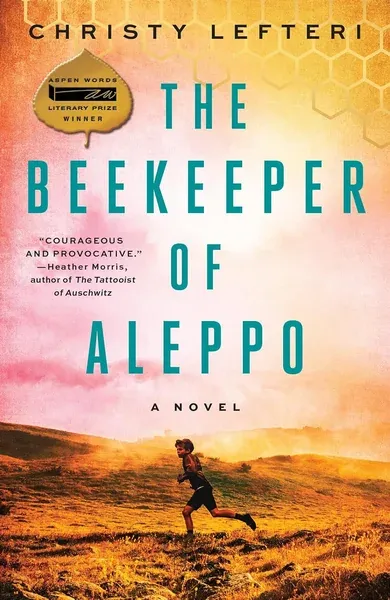
The golden cover of The Beekeeper of Aleppo depicts a solitary figure running across an endless landscape, perfectly capturing the novel's essence of displacement and hope. A quietly devastating novel whose emotional precision makes it one of the more honest pieces of refugee fiction published in recent years. Is The Beekeeper of Aleppo appropriate for young adults? This haunting 2019 debut follows Syrian beekeeper Nuri and his wife Afra as they flee war-torn Aleppo for England, carrying trauma that transforms them both. Readers familiar with The Kite Runner will recognize similar themes of loss and resilience, though Lefteri's approach feels more intimate and psychologically complex.
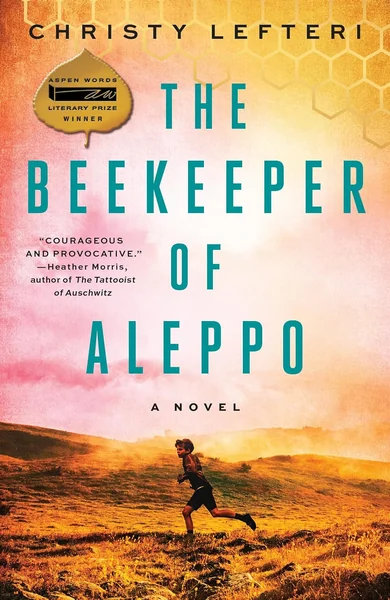
The novel's cover imagery—abstract golden tones suggesting both destruction and possibility—mirrors the story's delicate balance between despair and redemption. This visual representation hints at the book's central metaphor: like bees rebuilding after their hives are destroyed, refugees must reconstruct their lives in foreign soil.
A Journey Through Trauma and Memory
Lefteri structures the narrative around two timelines that gradually converge. In the present, Nuri and Afra wait in a British seaside town for their asylum claim to be processed. Through flashbacks, we witness their harrowing escape from Syria, where bombs destroyed not only their home and Nuri's beloved apiaries, but also Afra's sight and their young son's life.
The author's decision to alternate between timelines creates mounting tension while revealing how trauma fragments memory and identity. Unlike most refugee fiction, Lefteri avoids sensationalizing the journey itself, instead focusing on the psychological aftermath of displacement. Nuri's obsessive care for a young boy named Mohammed becomes a manifestation of his unprocessed grief, while Afra's blindness serves as both literal injury and metaphor for her refusal to see their new reality.
Prose That Whispers and Wounds
Lefteri's writing achieves remarkable restraint given the subject matter's emotional weight. Her background as a child protection officer working with refugees in Athens informs every carefully chosen detail. The prose moves between lyrical passages describing Syrian landscapes and stark, clinical observations of refugee processing centers.
Lefteri's greatest strength lies in her ability to convey profound loss through small, precise moments. When Nuri describes the silence where his bees once hummed, or when Afra's fingers trace objects she can no longer see, Lefteri transforms individual tragedy into universal human experience. Her sentences carry the rhythm of someone who has listened deeply to trauma survivors, capturing both their resilience and their brokenness.
Nuri, Afra, and the Weight of Survival
The marriage between Nuri and Afra forms the novel's emotional core. Before the war, he tended bees while she painted vibrant canvases. War strips away these identities, leaving them as strangers sharing unbearable memories. Nuri's gentle nature, once suited to coaxing honey from hives, struggles with his inability to protect his family. Afra's artistic vision, replaced by literal blindness, forces her to navigate a world suddenly devoid of color and light.
Their relationship feels authentic because Lefteri refuses to romanticize trauma bonding. These characters don't heal each other through love alone—they must each confront their individual wounds before reconnecting. The supporting cast, including other asylum seekers and aid workers, avoids stereotypes by maintaining their own complex motivations and backstories.
Themes That Resonate Beyond Headlines
The Beekeeper of Aleppo explores how home exists not in geography but in relationships and rituals. Nuri's bees represent more than livelihood—they symbolize the delicate ecosystems that war destroys. When Nuri eventually finds work at an English apiary, the familiar hum of insects becomes both comfort and painful reminder.
The novel examines how bureaucratic systems dehumanize refugees through endless waiting and interrogation. Lefteri depicts these institutional failures without preaching, letting readers witness how uncertainty becomes its own form of torture. The book's central argument emerges organically: rebuilding requires not just physical safety but the restoration of dignity and purpose.
Where Symbolism Sometimes Overwhelms Story
The main weakness lies in Lefteri's occasionally heavy-handed use of metaphor. The bee imagery, while powerful, sometimes feels forced rather than organic. Certain scenes prioritize symbolic meaning over narrative momentum, particularly in the novel's final third where resolution feels somewhat predetermined.
Additionally, some secondary characters exist primarily to deliver exposition about refugee experiences rather than functioning as fully realized individuals. The novel occasionally shifts from fiction into educational territory, though Lefteri's obvious expertise prevents this from becoming truly problematic.
Worth the Emotional Investment
The Beekeeper of Aleppo is recommended for readers aged 16 and up. The book deals frankly with war violence, child death, and psychological trauma — content that requires emotional maturity to process. For readers ready to engage seriously with displacement and grief through compelling storytelling, this novel offers that rare thing: a political subject rendered in fully human terms.
Parents should note that while the book contains no graphic sexual content or excessive profanity, its themes of loss and displacement require emotional maturity to process. The book works well for classroom discussions about refugee experiences and contemporary global conflicts.
Where to Buy
If the specific ache of Nuri and Afra's story sounds like what you're looking for, this one earns a permanent place on the shelf — the Amazon link in the sidebar has the current price.
Product Gallery
Frequently Asked Questions
Is The Beekeeper of Aleppo: A Novel by Christy Lefteri worth reading in 2026?
Based on my 4.2/5 rating, this haunting debut novel remains highly relevant and impactful. The story's exploration of displacement and hope resonates powerfully with ongoing global refugee crises, making it a worthwhile read that offers both emotional depth and important social awareness.
Who should read The Beekeeper of Aleppo: A Novel?
This book is perfect for readers who appreciate literary fiction that tackles serious social issues with sensitivity and depth. It's ideal for book clubs, fans of refugee narratives, and anyone seeking to understand the human cost of war through beautifully crafted storytelling.
How does The Beekeeper of Aleppo compare to other refugee novels?
Lefteri's novel stands out for its unique focus on a Syrian beekeeper's perspective and its poetic, hope-filled approach to a tragic subject. Unlike many refugee narratives that can feel overwhelming, this book balances heartbreak with resilience, making it more accessible than heavier works in the genre.
What is the main takeaway from The Beekeeper of Aleppo: A Novel?
The novel's central message is that hope and human connection can survive even the most devastating circumstances. Through Nuri's journey, Lefteri shows how people can rebuild their lives after unimaginable loss, emphasizing the power of love and determination to overcome displacement and trauma.
Is The Beekeeper of Aleppo appropriate for young adults?
While the book deals with mature themes including war and displacement, it's written in an accessible way that makes it suitable for mature young adults aged 16 and up. The hopeful tone and focus on human resilience make it less graphic than many war novels, though parental guidance may be helpful for younger readers.
What themes does The Beekeeper of Aleppo explore beyond the refugee experience?
Beyond displacement, the novel deeply explores themes of marriage and partnership under extreme stress, the connection between humans and nature through beekeeping, and the process of healing from trauma. Lefteri also examines how memory and hope interact to help people survive impossible circumstances.
At $9.49, is The Beekeeper of Aleppo: A Novel worth buying?
At $9.49, this book offers excellent value for a award-worthy literary novel that provides both emotional impact and social awareness. Given its 4.2/5 rating and the depth of themes it explores, it's a worthwhile investment for anyone interested in contemporary fiction that addresses important global issues.
BEST DEAL
Reader Comments
No comments yet
Be the first to share your thoughts!