

In This Article
- What the People Magazine Analysis Found
- The Book and Its Author
- Context: A Long Road to Publication and a Mixed Adaptation
- What to Watch
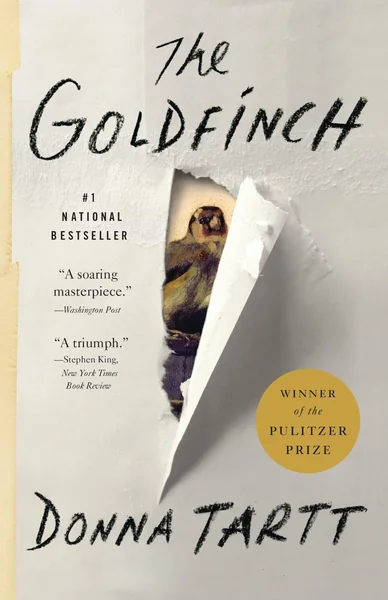
Donna Tartt's The Goldfinch has landed on People magazine's analysis of the top 12 most-searched adult New York Times bestsellers in the United States in 2026. The finding, published in April 2026, places the novel — first released in 2013 — among a short list of titles generating significant reader search interest more than a decade after it first appeared on shelves.
What the People Magazine Analysis Found
People magazine's ranking identified The Goldfinch as one of just 12 adult NYT bestsellers to reach the threshold of most-searched books across the country in 2026. The analysis does not position the novel as a new release but as a title continuing to attract reader attention well into the current decade — a notable inclusion given the volume of books published since 2013.
The Book and Its Author
The Goldfinch is a novel by American author Donna Tartt, published in 2013 as her third work of fiction, following The Little Friend (2002) and The Secret History (1992), according to Hachette Book Group. The novel won the 2014 Pulitzer Prize for Fiction, as confirmed by Wikipedia's entry on the book. Tartt has been published in forty languages and previously received the WH Smith Literary Award, per Hachette.
The novel follows thirteen-year-old Theodore Decker, who survives a terrorist attack at the Metropolitan Museum of Art that kills his mother and leaves him in possession of Carel Fabritius's 17th-century Dutch painting Het Puttertje — known in English as The Goldfinch. According to Wikipedia, Fabritius was Rembrandt's most promising pupil, and almost all of his works were destroyed in the 1654 Delft explosion that also killed the artist. Tartt has said she was partly inspired to write the book after the Taliban's 2001 destruction of the Buddha statues at Bamiyan, Afghanistan, telling interviewers: "There was nothing to write about, there was not really a story — but there was an idea that something so beautiful, a light at the heart of the world, could be just taken away, destroyed, deliberately."
For a full assessment of the novel itself, see our review.
Context: A Long Road to Publication and a Mixed Adaptation
The novel's path to publication took eleven years, a timeline consistent with Tartt's known writing pace across all three of her novels. A notable coincidence attended its release: according to Wikipedia, the actual Goldfinch painting — which is rarely exhibited outside the Netherlands — was on display in New York at the Frick on the precise day The Goldfinch was published in 2013.
The book was subsequently adapted into a film, which Wikipedia's entry on Tartt describes as "a critical and commercial failure." The same source notes that Tartt was not given the option to write the screenplay or serve as a producer, and that she reportedly parted ways with her longtime literary agent over the matter. The film's poor reception makes the novel's continued search prominence in 2026 a distinct development from the book's on-screen history.
What to Watch
The People magazine analysis does not detail what is driving search interest in The Goldfinch specifically among the 12 titles it identified. Whether the novel's inclusion reflects new reading-group activity, curriculum adoption, social media discussion, or other factors is not addressed in the available sources. Readers and industry observers may look to bookseller data or library circulation figures for further context on what is sustaining the title's search footprint more than twelve years after publication.
Frequently Asked Questions
Is The Goldfinch: A Novel worth buying in 2026?
Yes, if you're prepared for a substantial commitment. At 771 pages, The Goldfinch demands patience but rewards readers with rich prose and deep psychological insight. It's ideal for those who appreciate literary fiction that tackles complex themes of grief, art, and human resilience.
What is the main message of The Goldfinch: A Novel?
The novel explores how art and beauty can provide meaning and comfort in the face of devastating loss. Through Theo's relationship with the stolen painting, Tartt examines how we hold onto what matters most when everything else falls apart, and how trauma shapes but doesn't define us.
Who should read The Goldfinch: A Novel?
This book is perfect for readers who enjoy character-driven literary fiction, don't mind a slow burn, and appreciate detailed, immersive prose. It's ideal for those interested in art, coming-of-age stories, and psychological complexity, but may frustrate readers seeking fast-paced plots.
Should I read The Goldfinch: A Novel or watch the movie adaptation?
Definitely read the book first. While the 2019 film captures some visual elements, it lacks the psychological depth and prose style that make Tartt's novel special. The book's internal monologue and character development simply cannot be compressed into a two-hour film format.
How long does it take to read The Goldfinch: A Novel?
Most readers need 15-25 hours to complete The Goldfinch, spread over several weeks. The dense prose and emotional weight make it a book to savor rather than rush through. Many readers find it rewarding to read in longer sessions to maintain immersion in Tartt's carefully crafted world.
Is The Goldfinch: A Novel appropriate for young adult readers?
While the protagonist starts as a teenager, this is firmly adult literary fiction. The book contains mature themes including drug use, violence, and complex moral situations. It's best suited for mature readers who can handle psychologically intense content and sophisticated literary techniques.
Reader Discussion
No comments yet
Be the first to share your thoughts!