

In This Article
- What the Book Was — and Who Made It
- Why the Book Broke New Ground
- What Came Next — and What the Legacy Looks Like Now
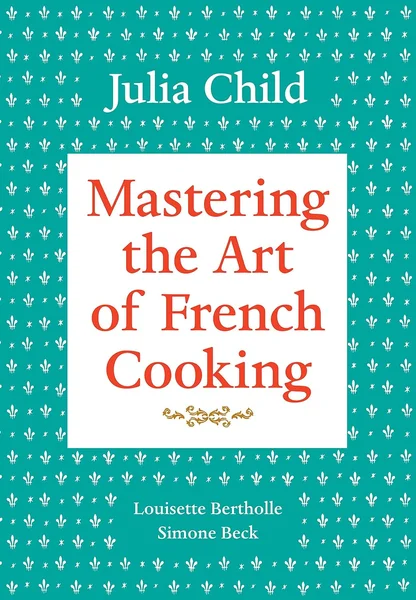
Sixty-five years after Knopf published Mastering the Art of French Cooking, Volume 1, the book's cultural footprint is still generating serious scholarly and journalistic attention. The Library of Congress published a blog post in May 2026 examining French culinary culture through Julia Child's lens — a signal that the conversation around the 1961 cookbook remains active in institutional circles.
A recent piece by Tasting Table argues that Child's most lasting achievement was not simply a cookbook but a cultural intervention that dismantled the perception of French cuisine as inaccessible to ordinary American home cooks.
What the Book Was — and Who Made It
Mastering the Art of French Cooking was written for the American market by three co-authors: Simone Beck and Louisette Bertholle, both from France, and Julia Child, from the United States, according to Wikipedia's entry on the book. Knopf published Volume 1 in 1961 and Volume 2 in 1970.
Child — born Julia Carolyn McWilliams in Pasadena, California, on August 15, 1912 — was 49 years old at the time of the first volume's publication, according to her Wikipedia biography. She had studied at Le Cordon Bleu in Paris, as had Beck and Bertholle, and was recruited by her co-authors specifically because they needed an English-speaking partner who could provide insight into American culture, translate their work, and bring it to American publishers, the book's Wikipedia entry notes.
The project had a direct editorial champion in New York. The New Yorker describes editor Judith Jones — the subject of a forthcoming biography by Sara B. Franklin titled The Editor — as having "discovered Julia Child" and credits her with "essentially inventing the cookbook as we know it today: the account of an unfamiliar cuisine broken into manageable steps."
Jones also worked with John Updike and Anne Tyler, but The New Yorker identifies the Child project among her most significant editorial achievements.
Why the Book Broke New Ground
Before Mastering the Art of French Cooking arrived, Americans interested in French dishes faced a narrow field of options. Wikipedia's account of the book notes that while Gourmet magazine offered French recipes monthly and several dozen French cookbooks appeared throughout the 1950s, those recipes were translated directly from French sources — designed for a middle-class French audience already familiar with technique, common French ingredients, and domestic help.
They were not written for American home cooks starting from scratch.
Beck and Bertholle had previously published a small recipe book, What's Cooking in France, in 1952, but by the late 1950s they were seeking something more comprehensive. Child's role was to bridge the gap — to make the book legible and actionable for American readers in American kitchens.
The archive.org edition of the book describes it as "the only cookbook that explains how to create authentic French dishes in American kitchens with American foods."
Historian David Strauss, as cited by the book's Wikipedia entry, claimed in 2011 that the publication of Mastering the Art of French Cooking "did more than any other event in the last half century to reshape the gourmet dining scene."
What Came Next — and What the Legacy Looks Like Now
The book's success had immediate and lasting consequences for Child personally. According to Wikipedia, it led directly to Child being given her own television program, The French Chef, which premiered in 1963 and became one of the first cooking shows on American television.
Her biography on Wikipedia describes her as "recognized for having brought French cuisine to the American public" through both the cookbook and those subsequent programs. Child died on August 13, 2004, two days before her 92nd birthday.
The Tasting Table piece frames the cookbook's enduring relevance as rooted in its pedagogical ambition — an approach built on the conviction that any motivated home cook could learn French technique if taught with rigor and patience. Meanwhile, The New Yorker situates that achievement within the broader story of Judith Jones's editorial career, a story set to receive fresh examination through Franklin's forthcoming biography.
For LuvemBooks' full assessment of the cookbook itself, see our review of Mastering the Art of French Cooking, Volume 1.
Frequently Asked Questions
Is Mastering the Art of French Cooking, Volume 1 worth buying in 2026?
For cooks who want to build a genuine foundation in French technique, it earns its reputation and our 4.2/5 rating. However, readers should go in knowing the preparations are time-intensive and some ingredients are hard to source outside major cities — it rewards commitment rather than casual use.
What is the main message of Mastering the Art of French Cooking, Volume 1?
Julia Child, Louisette Bertholle, and Simone Beck argued that French cuisine is learnable by any motivated home cook, provided it is taught with rigor and patience. The book explains not just how to cook each dish but why each technique works, treating readers as capable of genuine culinary understanding.
Who should read Mastering the Art of French Cooking, Volume 1?
It is best suited to home cooks who are willing to treat cooking as a long-term skill to develop rather than a nightly chore. Those with access to well-stocked grocery stores or specialty shops, and with time to invest in longer preparations, will get the most from it.
How does Mastering the Art of French Cooking, Volume 1 compare to other classic cookbooks?
Unlike convenience-focused references such as Better Homes and Gardens New Cook Book, Child's work prioritizes comprehensive technique education over quick results. It sits closer to a culinary curriculum than a recipe collection, which makes it uniquely valuable but also more demanding.
Why did Julia Child write Mastering the Art of French Cooking at age 49?
Child came to serious cooking relatively late and spent years studying and teaching French cuisine before publishing. Her later start arguably deepened her pedagogical approach — she knew exactly what an adult learner needed to understand because she had been one herself.
What are the biggest criticisms of Mastering the Art of French Cooking, Volume 1?
Our review identifies three consistent limitations: preparations are too time-intensive for weeknight cooking, many specialty ingredients are difficult to source outside large cities, and the required equipment involves a substantial upfront investment. These are structural features of the book, not minor quibbles.

No Discussion Yet
Be the first to share your thoughts on this news article.