Updated July 24, 2026
Netflix's Pride & Prejudice Confirmed for Fall 2026 Release
See the full update ↓
In This Article
- Why Pride and Prejudice Remains a Powerhouse in 2026
- Our Take: A Balanced View of Pride and Prejudice
- What the 2026 Adaptation Wave Means for Readers and Viewers
Jane Austen's 250th birthday is proving to be a cultural watershed moment. As reported by ABC News Australia, a remarkable surge of Pride and Prejudice adaptations is arriving in 2026, headlined by a Netflix miniseries starring Emma Corrin and Jack Lowden, written by Dolly Alderton and directed by Euros Lyn, produced by Lookout Point for a late 2026 release.
Alongside it, four new theatre productions, a BBC One series, and a Focus Features film starring Daisy Edgar-Jones are all competing to bring Elizabeth Bennet's story to new audiences — a convergence of adaptations unlike anything the literary world has seen for this title in a generation.
Why Pride and Prejudice Remains a Powerhouse in 2026
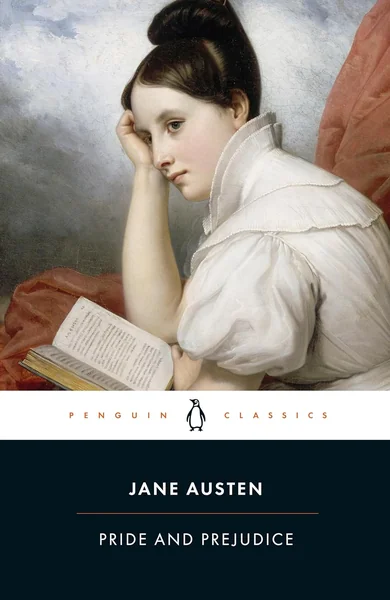
Published in 1813, Jane Austen's Pride and Prejudice has outlasted empires, revolutions, and every conceivable shift in reading taste. At its core, the novel follows Elizabeth Bennet and Fitzwilliam Darcy through a courtship shaped by social pressure, economic anxiety, and mutual misreading — a framework that feels startlingly contemporary in an era of precarious finances and performative social hierarchies.
Austen's ability to embed genuine psychological depth inside the drawing-room comedy of manners is what separates this novel from mere period charm. Its social stakes feel earned, not decorative, which is precisely why dramatists and screenwriters keep returning to it.
The timing of this 2026 wave is no accident. Austen's milestone birthday has galvanised institutions — from the RSC to streaming giants — to stake their claim on an intellectual property that carries instant brand recognition and genuine critical prestige.
For streaming platforms especially, adapting a canonical work for a global audience offers both cultural legitimacy and algorithmic confidence, while Alderton's involvement signals an intention to bring a distinctly modern sensibility to the material without discarding its architecture.
Our Take: A Balanced View of Pride and Prejudice
At LuvemBooks, we rate Pride and Prejudice 4.7 out of 5 stars — one of the highest marks we've given any title in the classics category. Elizabeth Bennet stands as one of fiction's most psychologically complex and genuinely likable protagonists, and Austen's ironic prose rewards every re-read with fresh layers of meaning.
The social stakes feel genuine rather than decorative, giving the romance real dramatic weight that most contemporary romances struggle to match. That said, the novel is not without its tensions.
The resolution arrives with a speed that feels compressed relative to the careful, layered build-up that precedes it, and the social world Austen depicts is deliberately narrow in ways that may feel limiting to readers seeking broader representation. Readers accustomed to fast-moving contemporary fiction may also find the parlor-room plotting slow to ignite.
Read our full Pride and Prejudice review for a complete breakdown of where the novel soars and where it falls short.
What the 2026 Adaptation Wave Means for Readers and Viewers
For readers encountering Pride and Prejudice for the first time through Netflix or a theatre production, the most important takeaway is that the novel will likely surprise them. The Austen on the page is sharper, funnier, and more unsettling than almost any screen version has managed to convey — the irony operates at a sentence level that cameras struggle to replicate.
Dolly Alderton's track record of emotionally intelligent storytelling, and Euros Lyn's directorial precision, suggest the Netflix adaptation may come closer than most, but the book remains the benchmark. Readers who enjoy novels that blend sharp social observation with genuine romantic tension should go to the source directly.
For those who love exploring how classic texts travel across media, this moment — with four theatre productions, a BBC series, and two screen adaptations all arriving in the same year — is a rare opportunity for comparative study.
It's also worth noting that the cultural appetite driving this wave speaks to something beyond nostalgia. In periods of economic and social uncertainty, audiences have historically turned to Austen because her fiction takes material precarity seriously while insisting that wit and moral clarity are their own forms of power.
For readers who want to explore other works that reward sustained attention to social and emotional complexity, our reviews of Raymond Carver's What We Talk About When We Talk About Love and J.R.R. Tolkien's The Fellowship of the Ring offer two very different but equally rewarding journeys into fiction's capacity to make sense of the world.
Want the full verdict? Read our complete review: Is Pride and Prejudice Worth It? — where we break down exactly who this book is perfect for, who should skip it, and how to get the most value from one of the most re-read novels in the English language.
Story updates
We track this developing story and add verified developments as they happen. Originally published July 24, 2026.
Netflix's Pride & Prejudice Confirmed for Fall 2026 Release
Netflix has confirmed its Pride & Prejudice miniseries, written by Dolly Alderton and directed by Euros Lyn, is arriving this fall, giving the previously announced project a firmer seasonal release window. Additionally, a new Variety report reveals that Daisy Edgar-Jones — previously linked to a Focus Features Pride and Prejudice film in the original article — actually stars in a Sense and Sensibility adaptation opposite George MacKay, produced by Working Title Films, clarifying her role in the broader 2026 Austen wave.
Frequently Asked Questions
Is Pride and Prejudice worth reading in 2026?
Absolutely. LuvemBooks rates Pride and Prejudice 4.7 out of 5 stars. Austen's ironic prose and psychologically rich characters reward every re-read, and the novel's themes of social pressure and economic anxiety feel more relevant than ever. Even readers coming to it via the Netflix adaptation will find the book significantly sharper and more nuanced than any screen version.
Should I read Pride and Prejudice or watch the Netflix series first?
We'd recommend reading the novel first. Austen's irony operates at the sentence level in ways that are difficult to translate to screen, and approaching the adaptation with the source text in mind will deepen your appreciation of the creative choices Dolly Alderton and director Euros Lyn have made. That said, the 2026 Netflix miniseries starring Emma Corrin and Jack Lowden looks to be one of the more ambitious attempts at the material.
What is Pride and Prejudice actually about?
Pride and Prejudice follows Elizabeth Bennet, one of five sisters in a financially precarious English family, as she navigates a courtship with the proud and wealthy Fitzwilliam Darcy. Beneath the romantic comedy, Austen is conducting a sharp analysis of class, marriage as economic survival, and the way social performance distorts genuine human connection. It is both a love story and a critique of the society that makes that love story so complicated.
Who should read Pride and Prejudice?
Pride and Prejudice is ideal for readers who appreciate psychologically complex characters, precise and witty prose, and romances with genuine dramatic stakes. It rewards patience and close reading. Readers who prefer fast-paced plots or broader social representation may find it limiting, but for those willing to engage on its own terms, it is one of the most rewarding novels in the English language.
How many Pride and Prejudice adaptations are coming in 2026?
According to ABC News Australia, 2026 will see at least six major adaptations tied to Jane Austen's 250th birthday: a Netflix miniseries written by Dolly Alderton starring Emma Corrin and Jack Lowden, a BBC One series, a Focus Features film starring Daisy Edgar-Jones, and four new theatre productions. It is one of the most concentrated adaptation surges the novel has ever experienced.
Is Pride and Prejudice suitable for younger readers or teens?
Yes, Pride and Prejudice is widely read by teenagers and is a staple of school curricula. The language is 19th-century formal English, which may require some adjustment, but the emotional core — navigating social expectations, misreading people you care about, and learning to challenge your own assumptions — is universally relatable. Many readers first encounter it in their teens and return to it repeatedly as adults.

No Discussion Yet
Be the first to share your thoughts on this news article.