

Bob Woodward, the legendary investigative journalist behind All the President's Men, is back in the headlines — and the subject matter couldn't be more urgent. As noted in a Britannica biography updated to reflect a July 10, 2026 NPR interview, Woodward has been discussing his new book alongside what he describes as the most serious nuclear threat he has ever covered in a career spanning more than five decades of American political journalism.
The NPR interview, conducted by Scott Detrow, finds Woodward in characteristic form: measured, insistent on the gravity of the moment, and unwilling to soften his warnings. As NPR reports, Woodward addressed the new book alongside his assessment of a global nuclear situation he considers more alarming than anything he has previously encountered in his reporting life.
That is not a claim Woodward makes lightly — and given his decades inside the corridors of American power, it is not one readers or journalists should dismiss.
From All the President's Men to War: Woodward's Arc of Power Journalism
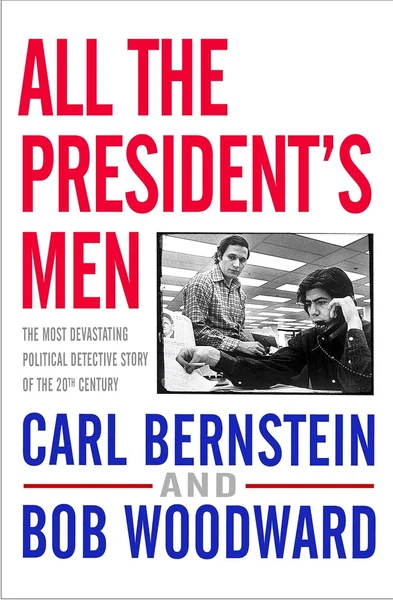
To understand the weight Woodward carries into any new book, it helps to understand where he started. All the President's Men, co-authored with Carl Bernstein and first published in 1974, remains one of the most consequential works of American journalism ever written.
As Wikipedia documents, the book chronicles how Woodward and Bernstein — then young Washington Post reporters — unraveled the Watergate scandal, beginning with a break-in at the Democratic headquarters and working upward through layers of conspiracy to the Nixon White House itself. The Simon & Schuster 50th Anniversary Edition frames it simply: 'The work that brought down a presidency.'
It is the definitive template for what accountability journalism can achieve.
Woodward's new book, titled War, marks his latest deep excavation of power under pressure. PBS NewsHour describes it as a book about war in Ukraine, war in the Middle East, and a war for the American presidency — three overlapping crises Woodward examines with the kind of inside-access reporting that has defined his post-Watergate career.
And CBS News notes that the book takes readers inside the Biden White House during the Russia-Ukraine conflict, Israel's war against Hamas and Hezbollah, and the broader geopolitical turbulence that has defined the era.
Why Woodward's Nuclear Warning Demands Attention
Woodward's declaration that the current nuclear threat is the most serious he has ever reported is striking precisely because of the baseline it implies. This is a journalist who has covered presidents from Nixon onward — through the Cold War's final years, through post-9/11 military build-ups, through multiple administrations navigating the line between deterrence and catastrophe.
When a reporter with that specific and lengthy vantage point uses superlatives, the claim carries a different kind of evidential weight than it might from a less seasoned voice. It is the accumulated credibility of the sourcing that makes Woodward's framing significant, not simply the headline.
What War also does — and what makes the July 2026 NPR conversation particularly resonant — is reconnect Woodward's current work to the foundational journalism of All the President's Men. The throughline is access, accountability, and the willingness to report what powerful people would prefer remain unsaid.
Bernstein and Woodward built that template in the early 1970s when they followed a burglary to the Oval Office. Woodward has continued that mission across decades, and War appears to represent its most consequential application yet, at least in his own assessment.
For readers of political nonfiction, the broader context is equally interesting. In a publishing landscape crowded with retrospective memoirs and insider accounts that arrive long after the events they describe, Woodward's work has consistently distinguished itself by its contemporaneity — the sense that the reporting is happening in real time, with real consequences.
Books like War sit in a tradition that includes some of the most important works of political nonfiction of the last century, and they invite comparison to other landmark examinations of how power shapes societies — from Jared Diamond's Guns, Germs, and Steel to the raw autobiographical testimony found in The Autobiography of Malcolm X. Woodward's lens is narrower and more specific, but the underlying question — who holds power, and how do they use it — is the same.
All the President's Men remains the essential entry point for understanding what Woodward and Bernstein built together, and what Woodward has spent his career extending. Want the full verdict?
Read our review of All the President's Men for a complete assessment of why the book endures as a benchmark of American political journalism.
Frequently Asked Questions
What is Bob Woodward's new book about in 2026?
Bob Woodward's new book, titled War, covers the conflicts in Ukraine and the Middle East, as well as the contest for the American presidency. In a July 2026 NPR interview, Woodward also described the current nuclear threat as the most serious he has ever reported in his career.
Is All the President's Men by Bob Woodward and Carl Bernstein worth reading in 2026?
All the President's Men remains one of the most important works of American political journalism ever published. Its account of how two Washington Post reporters unraveled the Watergate scandal — from a break-in to the collapse of a presidency — is as instructive about power and accountability today as it was when first published in 1974. It is essential reading for anyone interested in investigative journalism or modern American political history.
What is the main subject of All the President's Men?
All the President's Men by Bob Woodward and Carl Bernstein chronicles their investigation of the 1972 Watergate break-in and the trail of conspiracy it revealed leading to the Nixon White House. The book is widely considered the definitive account of how accountability journalism can reach the highest levels of political power.
Who should read All the President's Men by Bob Woodward and Carl Bernstein?
All the President's Men is essential for anyone interested in investigative journalism, American political history, or the Watergate scandal. It is also highly relevant for readers drawn to questions of institutional accountability and the role of a free press in democratic society — themes that remain urgent decades after the book's original publication.
How does Bob Woodward's new book War connect to All the President's Men?
Both books reflect Woodward's defining commitment to sourcing deeply inside the corridors of power and reporting what those in authority would prefer to keep private. Where All the President's Men exposed the corruption of one administration, War examines how multiple governments are navigating war, nuclear risk, and political crisis in the current era — continuing the same accountability-journalism tradition Woodward and Bernstein established in the 1970s.
What did Bob Woodward say about nuclear threats in his July 2026 NPR interview?
In a July 10, 2026 NPR interview cited in Woodward's Britannica biography, Woodward described the current nuclear threat as the most serious he has ever covered in his reporting career. Coming from a journalist who has reported on American power across multiple presidencies and decades, the characterization has drawn significant attention.


No Discussion Yet
Be the first to share your thoughts on this news article.