
9 min read
4.7
· 41,932 Amazon ratingsShare This Review
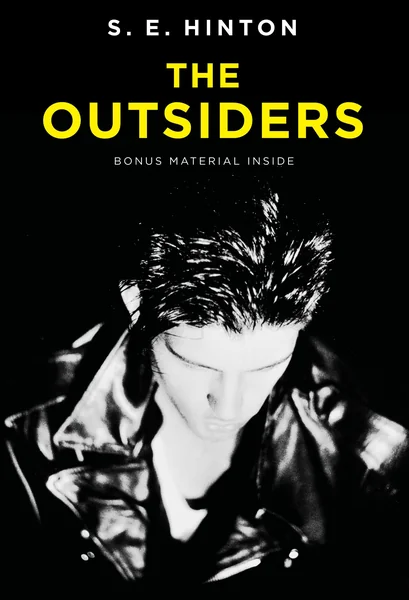
The Outsiders by S. E. Hinton Review: A Genre-Defining YA Classic That Endures
First published in 1967 by Viking Press, S. E. Hinton's The Outsiders is a coming-of-age novel that redefined what young adult fiction could be — raw, class-conscious, and told entirely from the inside of a teenage world that adult literature had largely ignored. Narrated by fourteen-year-old Ponyboy Curtis, a working-class greaser navigating gang rivalry, loyalty, and loss in an unnamed Oklahoma city, the novel remains a standard-bearer of the YA genre and a fixture on school curricula across the United States. Critics has credited it with transforming young adult fiction "from a genre mostly about prom queens, football players and high school crushes to one that portrayed a darker, truer world."
LuvemBooks Verdict
Best for
Middle- and high-school readers — and adults revisiting their school years — who want a short, emotionally honest coming-of-age story about class, loyalty, and identity that still feels urgent decades after it was written.
Worth it if
Worth reading if you're drawn to foundational YA fiction that dismantles stereotypes on both sides of a class divide and earns its emotional weight through credible, specific characters rather than genre shorthand.
Skip if
Skip it — or approach it with extra care — if depictions of gang violence, underage drinking and smoking, strong language, or an exclusively white, male-dominated cast are dealbreakers for you or the young reader you're selecting for.
What readers & critics say
The Guardian credits The Outsiders with having "revolutionised the genre by presenting adolescent characters that were the opposite of everything a teenager, by adult standards, should have been," and notes that despite its 1967 setting it continues to resonate with young adult readers today. Kirkus Reviews situates the novel in a long tradition of tribe-and-identity storytelling, drawing comparisons to Romeo and Juliet, West Side Story, and Lord of the Flies, while NPR describes it as "an American classic that millions of teens have been devouring for decades."
“Revolutionised the genre by presenting adolescent characters that were the opposite of everything a teenager, by adult standards, should have been.”
— The Guardian“Ponyboy could easily be judged a hooligan because of his clothes and hair, but in fact gets good grades at school and loves books and films.”
— The Guardian“Hinton, herself a teenager, began writing a story with echoes of Romeo and Juliet by way of West Side Story and of Lord of the Flies alike.”
— Kirkus Reviews“It is an American classic that millions of teens have been devouring for decades — at the time it felt like we had discovered it, that it was our book.”
— NPRAge & Reading Level
Recommended age
Ages 12–18
Reading level
Young adult
4 content notes · who it suits
Content to know about
Best for: Ages 12 and up — reading level and emotional complexity suit confident middle-school and high-school readers; frank depictions of gang violence, underage drinking and smoking, and strong language make parental awareness advisable at the younger end of that range.
Skip if you want a story with a racially or gender-diverse cast, or prefer fiction free of gang conflict and strong language.
The Outsiders by S. E. Hinton is Trending
The Outsiders Is Having a Moment Again — And It's Easy to See Why
Nearly 60 years after it was first published, The Outsiders keeps pulling readers back in. The novel's themes of class tension, loyalty, and feeling like you don't belong hit differently when the world feels divided — and right now, a lot of readers are feeling exactly that.
The Outsiders has been circulating in conversations again lately, and it's not hard to understand why. S. E. Hinton's story of greasers and Socs — working-class kids versus the wealthy crowd — taps into something that never really goes away: the feeling that the deck is stacked against you depending on where you came from. In a cultural moment where economic anxiety and class consciousness are very much part of everyday conversation, Ponyboy Curtis's world feels surprisingly current.
The book also has a genuinely remarkable legacy that keeps drawing new readers in. It's credited with transforming YA fiction from light fare into something that could tackle real, hard teenage experiences — gang violence, grief, poverty, identity. That shift mattered enormously, and readers who discover that history for the first time often go straight to the source. Add in the enduring cult status of the 1983 Francis Ford Coppola film — with a cast that includes Tom Cruise, Patrick Swayze, Rob Lowe, and Matt Dillon — and you've got a book with multiple entry points for new fans.
If you've never read it, or if you read it in school and barely remember it, now is a genuinely good time to pick it up as an adult. It's short, it's fast, and it hits harder than you'd expect from a novel written by a 16-year-old. Stay gold, and all that.
In This Review
- What Works & What Doesn't
- What the Novel Is and What It Contains
- Significance: A Novel That Rewrote the Rules
- Genuine Strengths: Character, Class, and Emotional Authenticity
- Limitations and Ongoing Challenges
- Who It Is For and How It Reads Today
What Works & What Doesn't
What Works
- A foundational YA novel credited by critical coverage with transforming the genre toward authentic, socially honest storytelling
- Ponyboy Curtis is a richly drawn narrator whose perspective dismantles class-based stereotypes on both sides of the greaser-Soc divide
- Listed among the BBC's 100 most influential novels (2019), reflecting its enduring cultural and literary reach
- Spawned a Tony Award-winning Broadway musical (2024) and a Francis Ford Coppola film (1983), demonstrating exceptional cross-format longevity
- Written by a sixteen-year-old author, giving the novel an insider's emotional credibility that critics from The Horn Book to The Guardian have singled out
What Doesn't
- Frequently challenged in schools and libraries for depictions of gang violence, underage drinking and smoking, strong language, and family dysfunction — a real consideration for some readers and educators
- The cast is exclusively composed of white American characters and the story is male-dominated, with female characters occupying secondary roles — a structural limitation some contemporary readers will notice
What the Novel Is and What It Contains
Significance: A Novel That Rewrote the Rules
Genuine Strengths: Character, Class, and Emotional Authenticity
Limitations and Ongoing Challenges
Who It Is For and How It Reads Today
Frequently Asked Questions
Sources & Further Reading
The key facts and claims in this review are grounded in the retrieved, verified sources listed below.
- Cited in this review
- 1
- 2
en.wikipedia.org
- 3
- Further reading
- 4
S. E. Hinton, Wikipedia
- 5
- 6
- 7
- 8
- 9
- 10
heightsforum.org
- 11
- 12
yabookscentral.com
- 13
sueleewriting.com
- 14
booksofbrilliance.com
- 15
bookanalysis.com
- 16
newbookrecommendation.com
- 17
penguinrandomhouse.com
- 18
barnesandnoble.com
Related Reviews
Reviews of books we picked for readers who enjoyed The Outsiders.
Reader Comments
No comments yet
Be the first to share your thoughts!