BOOKS
Published

Read Time

3 min read

Reader rating

4.6

· 24,200 Amazon ratings
reader ratings, not a LuvemBooks score
Curated & edited by

LuvemBooks Editorial

How we create our reviews →
Share This Review

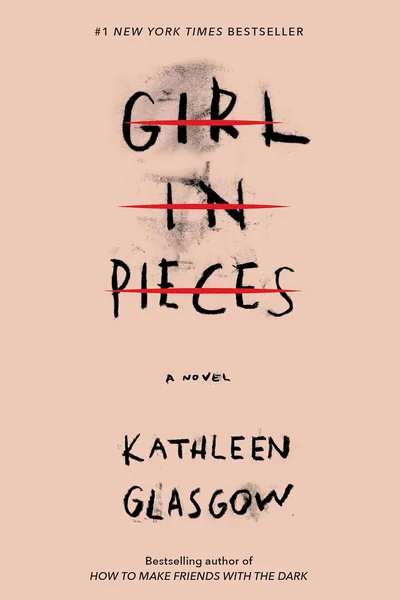
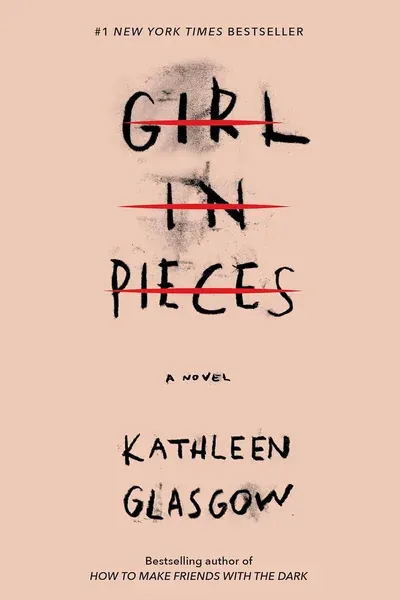
Girl in Pieces by Kathleen Glasgow Review: A Searingly Raw YA Debut on Recovery

Girl in Pieces is a New York Times bestseller and Kathleen Glasgow's debut young adult novel, following seventeen-year-old Charlie Davis through the brutal, nonlinear process of healing from self-harm, trauma, and near-suicide — a story Kirkus Reviews called "poignant and transcendent."
LuvemBooks Verdict

Best for

Readers aged fourteen and up — especially those who have lived with self-harm, mental illness, or know someone who has — seeking a YA novel that treats its protagonist's inner world with unflinching authenticity and refuses to simplify recovery.

Worth it if

Worth it if you want a first-person, diary-close portrait of trauma and nonlinear healing that is grounded in the author's own lived experience and insists on hope without pretending recovery is clean or fast.

Skip if

Skip it — or hold it for a better moment — if you are a younger teen or a reader currently in crisis, since the immersive format and cumulative weight of self-harm, suicide, sexual assault, and drug use is deliberately intense and warrants careful timing.

Kirkus Reviews awarded the novel its "Get It" verdict, calling it a "grittily provocative debut" that is "poignant and transcendent," and it went on to become a New York Times bestseller. Common Sense Media highlights the book's core balance — despite relentlessly heavy subject matter, Glasgow "always keeps a spark of hope in the pages" — and notes that Glasgow draws on her own history of cutting to deliver a realistic, empathetic portrayal of self-harm.

This grittily provocative debut explores the horrors of self-harm and the healing power of artistic expression.

Kirkus Reviews

Guilt and other trauma swarm up in Charlie's mind, consume her, and threaten to keep her from moving forward.

Common Sense Media
Sources: Kirkus Reviews, Common Sense Media
4.6from 24,200 Amazon ratings— reader ratings, not a LuvemBooks score
In This Review
  • What Works & What Doesn't
  • What the Novel Is and What It Follows
  • Significance and Place in the Genre
  • What the Novel Does Well
  • Genuine Limitations and Who May Struggle With It
  • Who This Book Is For and How It Reads Today

What Works & What Doesn't

What Works
  • A New York Times bestseller that Kirkus Reviews called 'poignant and transcendent,' earning its 'Get It' verdict
  • Grounded in Kathleen Glasgow's own lived experience with self-harm, lending the portrayal of Charlie's inner world rare authenticity
  • Common Sense Media praises the novel's balance — serious subject matter consistently offset by a genuine thread of hope
  • The diary-like, first-person structure places readers in direct, moment-to-moment contact with Charlie's recovery, making the narrative emotionally immersive
  • All characters, including minor ones, are written as fully complicated people, according to Common Sense Media, keeping readers invested throughout
What Doesn't
  • Kirkus Reviews acknowledges it shares the challenges of 'issue books' — this is not an easy read, and the cumulative weight of trauma, relapse, and loss is deliberately intense
  • The subject matter — including self-harm, suicide, sexual assault, and drug use — makes this a book that warrants thoughtful matching to the right reader at the right moment, particularly for younger teens
Glasgow's debut is a novel that earns — and demands — its reputation as one of the most unflinching explorations of self-harm in contemporary young adult fiction.

What the Novel Is and What It Follows

Back cover with a review quote about a girl's journey of self-recovery and resilience.
Girl in Pieces centers on seventeen-year-old Charlie Davis, a white girl living on the margins of society whose life has collapsed from nearly every direction: her father died by suicide, her mother — bereft and abusive — has thrown her out, and her best friend Ellis is left in critical condition after cutting too deeply. After surviving a suicide attempt and spending time in an inpatient ward alongside other young women who cut, burn, and otherwise hurt themselves, Charlie is discharged when her insurance runs out and boards a bus from the Twin Cities to Tucson, hoping proximity to Mikey — a boy she cares for — will serve as an anchor. It does not. Mikey only wants friendship, and the rejection pulls Charlie toward a destructive relationship with an older co-worker, a self-described "semifamous" local musician who is also a junkie and an alcoholic. Glasgow structures the narrative in intense, diary-like chapters, with Charlie's backstory — the streets, the violence, the losses — surfacing in flashbacks as they crowd her present-tense attempts at survival. Art, the one thing Charlie consistently knows about herself, threads through the novel as both lifeline and language.
explores the horrors of self-harm and the healing power of artistic expression.

Significance and Place in the Genre

Originally published by Delacorte in August 2016, the novel arrived as a debut and went on to become a New York Times bestseller. Glasgow has been publicly open about her own history with self-harm and mental illness, and that autobiographical foundation gives the book a credibility and specificity that distinguishes it within YA fiction dealing with mental health. Kirkus Reviews awarded it a coveted "Get It" verdict on its initial review, praising it as a "grittily provocative debut" that "explores the horrors of self-harm and the healing power of artistic expression." The novel is widely cited alongside Glasgow's subsequent YA work — including How to Make Friends with the Dark and You'd Be Home Now — as evidence of her sustained commitment to writing about complicated emotional terrain with nuance.

What the Novel Does Well

Common Sense Media, in its review, identifies one of the book's core strengths: balance. Despite subject matter that is relentlessly heavy, Glasgow, as Common Sense Media puts it, "always keeps a spark of hope in the pages." The same review notes that even minor characters are drawn as complicated, fully realized people, which keeps readers emotionally invested rather than merely distressed. Kirkus, similarly, describes the result as "poignant and transcendent" — noting that Charlie "breaks more and more before piecing herself back together" in a way that feels earned rather than engineered. Glasgow's choice of a first-person journal style, as Common Sense Media describes it, places readers directly inside Charlie's moment-to-moment experience, including the way guilt and trauma "swarm up in her mind" and threaten her forward momentum. The novel's treatment of recovery as nonlinear — marked by relapse, poor decisions, and the slow construction of chosen family — is one of its most frequently noted qualities across reader and critical reception.

Genuine Limitations and Who May Struggle With It

Kirkus acknowledges the book's kinship with "issue books" and notes plainly that "this is not an easy read." That descriptor is not a caveat but a structural truth about the novel: passages recounting Charlie's life on the streets and her episodes of returning to old habits are designed to be difficult, and readers approaching the book expecting a conventional YA arc of tidy uplift will find themselves on different terrain. The subject matter — which includes self-harm, suicide, sexual assault, drug use, and abusive relationships — is intense in accumulation. Common Sense Media places the appropriate age at fourteen and above, and for readers at the lower end of that range, or for readers in active crisis, the immersive diary-like format may be challenging to navigate without support. This is not a flaw in craft; it is a consequence of Glasgow's commitment to unflinching honesty, but it is a meaningful consideration for readers and the adults who guide them to the book.

Who This Book Is For and How It Reads Today

Girl in Pieces is designed for readers aged fourteen and up, and it speaks most directly to those who have experienced — or know someone experiencing — the specific anguish Charlie carries. Common Sense Media's review notes that Glasgow draws on her own history of cutting "to weave a realistic, empathetic look at what goes on in the minds of people who self-harm," making the novel's emotional logic feel authenticated rather than observed from a distance. For readers seeking a YA novel that refuses to simplify mental illness, that treats its protagonist's interiority with respect, and that insists on hope without pretending recovery is clean or fast, Girl in Pieces remains a significant work in the genre. Its continued presence on shelves — with an Ember reprint edition — reflects a readership that has kept returning to Charlie's story since the book's original publication.

Sources & Further Reading

The key facts and claims in this review are grounded in the retrieved, verified sources listed below.

  1. Cited in this review
  2. 1
  3. 2
  4. 3
  5. 4
  6. Further reading
  7. 5

    Kathleen Glasgow, Wikipedia

  8. 6
  9. 7
  10. 8
  11. 9
  12. 10
  13. 11
  14. 12
  15. 13