
8 min read
4.6
· 915 Amazon ratingsShare This Review
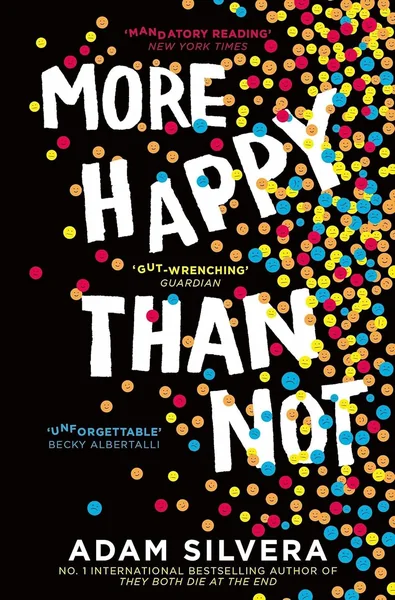
More Happy Than Not by Adam Silvera Review: A Gutting, Genre-Bending YA Debut
Adam Silvera's debut novel, More Happy Than Not, is a New York Times bestseller that follows sixteen-year-old Aaron Soto through grief, emerging queer identity, and the seductive but devastating promise of a memory-erasure procedure in a near-future Bronx — a book that earned starred reviews from Kirkus, Publishers Weekly, School Library Journal, Booklist, and Shelf Awareness, and a place on TIME Magazine's 100 Best YA Books of All Time.
LuvemBooks Verdict
Best for
Readers drawn to intersectional YA — particularly those who want Bronx working-class life, Latinx identity, queerness, and mental health addressed within a single, structurally ambitious narrative — and anyone seeking a foundational text in contemporary LGBTQ+ YA fiction.
Worth it if
You want speculative fiction where the sci-fi conceit — memory erasure as a metaphor for internalized homophobia and self-erasure — carries genuine emotional and political weight, and you're prepared for a narrative that builds to a retroactive structural revelation.
Skip if
Skip it if you're in a fragile headspace or want a gentler read: the novel's unflinching accumulation of suicide, anti-gay violence, and parental rejection is relentless, and the abrupt shift from Bronx naturalism to speculative sci-fi premise mid-novel may feel jarring if you prefer tonal consistency.
What readers & critics say
Kirkus Reviews called it "a brilliantly conceived page-turner," and School critical coverage's verdict praised Silvera for skillfully weaving "many divergent young adult themes within an engrossing, intense narrative." The New York Times — whose own review page was retrieved — lauded Silvera for managing "a delicate knitting of class politics through an ambitious narrative about sexual identity and connection that considers the heavy weight and constructive value of traumatic memory."
“A brilliantly conceived page-turner.”
— Kirkus ReviewsAge & Reading Level
Recommended age
Ages 12–18
Reading level
Young adult
5 content notes · who it suits
Content to know about
Best for: Ages 14+ — frank depictions of suicide, anti-gay violence, and parental rejection suit older teens and mature readers rather than younger YA audiences.
Skip if you're looking for a light or hopeful coming-of-age story — this novel is relentless in its accumulation of trauma.
In This Review
- What Works & What Doesn't
- What the Novel Is and What It Does
- Significance and Critical Standing
- What Silvera Does Well: Craft and Thematic Layering
- Limitations and Who May Struggle With It
- Who This Book Is For
What Works & What Doesn't
What Works
- New York Times bestseller with starred reviews from five major trade publications — among the most decorated YA debuts of 2015
- A structurally inventive twist — Aaron's prior memory erasure recontextualizes the entire narrative — praised for the gradual, reader-inclusive way it reveals Aaron's identity
- The Leteo Institute's memory-erasure premise functions as a powerful metaphor for internalized homophobia and self-erasure, not merely a plot device
- Praised by critical coverage for weaving class politics and Bronx setting into its narrative about sexual identity and traumatic memory
- Recognized on TIME Magazine's 100 Best YA Books of All Time and Paste Magazine's Best Young Adult Novels of All Time lists
What Doesn't
- Unflinching accumulation of trauma — suicide, anti-gay violence, parental rejection — makes this a demanding read not suited to all moods or readers
- The shift from naturalistic Bronx realism to speculative sci-fi premise may feel like an abrupt genre pivot for some readers
What the Novel Is and What It Does
Significance and Critical Standing
What Silvera Does Well: Craft and Thematic Layering
Limitations and Who May Struggle With It
Who This Book Is For
Frequently Asked Questions
Sources & Further Reading
The key facts and claims in this review are grounded in the retrieved, verified sources listed below.
- Cited in this review
- 1
adamsilvera.com
- 2
- 3
- 4
novelparadiseblog.wordpress.com
- Further reading
- 5
Adam Silvera, Wikipedia
- 6
en.wikipedia.org
- 7
sohopress.com
- 8
bookbrowse.com
- 9
commonsensemedia.org
- 10
- 11
newbookrecommendation.com
Related Reviews
Reviews of books we picked for readers who enjoyed More Happy Than Not.
Reader Comments
No comments yet
Be the first to share your thoughts!