Reviewed

Read Time

8 min read

Age & reading levelAges 16+ · Adult
Reader rating

4.4

· 429,381 Amazon ratings
reader ratings, not a LuvemBooks score
Curated & edited by

LuvemBooks Editorial

How we create our reviews →
Share This Review
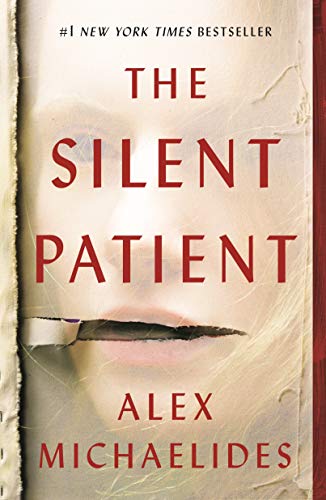
Front cover of The Silent Patient

Our review

The Silent Patient by Alex Michaelides Review: A Propulsive Debut Thriller With a Divisive Twist

The Silent Patient is the debut psychological thriller by British-Cypriot author Alex Michaelides, following psychotherapist Theo Faber as he becomes obsessed with Alicia Berenson — a celebrated painter who shot her husband Gabriel five times and has not spoken a word since. It debuted at No. 1 on the New York Times Best Seller list and won the Goodreads Choice Award 2019 in Mystery and Thriller.

LuvemBooks Verdict

Best for

Readers who love twist-driven psychological thrillers in the Agatha Christie tradition and want a fast-paced, structurally ingenious debut that carries genuine thematic weight — silence, trauma, and the ethics of therapy — alongside its propulsive plot.

Worth it if

Worth reading if you prize plot architecture and a racing pace over leisurely character study, and are willing to let a dual-narrative structure — therapist's investigation interwoven with a patient's diary — deliver its climactic gut-punch on its own terms.

Skip if

Skip it if you are well-versed in Christie-style twist mysteries and suspect you'll clock the ending early, because readers who anticipate the turn tend to find the preceding tension retroactively hollow and the supporting character arcs underdeveloped.

Kirkus Reviews called the novel "amateurish, with a twist savvy readers will see coming from a mile away," representing a pointed critical dissent. Against that, Wikipedia records that the book debuted at No. 1 on the New York Times Best Seller list and won the Goodreads Choice Award 2019 in Mystery and Thriller, marking an unusually dominant commercial and reader-driven reception for a debut.

“Amateurish, with a twist savvy readers will see coming from a mile away.”

— Kirkus Reviews
Sources: Kirkus Reviews, Wikipedia
4.4from 429,381 Amazon ratings— reader ratings, not a LuvemBooks score
Buy on Amazon
In This Review
  • What Works & What Doesn't
  • What the Novel Is and How It Works
  • Origins, Influences, and the Making of the Book
  • Reception and Cultural Footprint
  • Where the Novel Draws Criticism
  • Who This Book Is For

What Works & What Doesn't

What Works
  • Debuted at No. 1 on the New York Times Best Seller list and won the Goodreads Choice Award 2019 in Mystery and Thriller — unusually strong validated reception for a debut
  • Dual narrative structure alternating between Theo Faber's present-day investigation and Alicia Berenson's diary entries sustains tension and builds toward a climactic recontextualization of events
  • Grounded in real literary and personal influences — the Euripidean tragedy Alcestis, Agatha Christie's structural tradition, and Michaelides's own psychotherapy background — giving the premise unusual depth
  • Blake Crouch praised it as one of the best psychological thrillers he has ever read, calling the twist one of the most shocking in recent memory
What Doesn't
  • Critics called it 'clumsy, contrived, and silly...with a twist savvy readers will see coming from a mile away' — readers attuned to Christie-style plotting may feel the ending is telegraphed
  • The twist-reliant structure means the novel's impact depends heavily on the reader not anticipating the turn; those who do may find the build-up feels retroactively thin
A debut that exploded onto bestseller lists and sparked fierce debate about its ending — The Silent Patient earns its place in the modern psychological thriller canon, even as its ambitions occasionally outrun its execution.

What the Novel Is and How It Works

The Silent Patient, published by Celadon Books on 5 February 2019, is a psychological thriller built around a deceptively simple premise: renowned painter Alicia Berenson shoots her husband, Gabriel, five times in the face one August night and never utters another word. Found guilty and institutionalized at the Grove, a secure forensic unit in North London, she becomes a tabloid obsession — the silent patient.
Psychotherapist Theo Faber, driven by an obsession he cannot fully explain, engineers a transfer to the Grove specifically to treat her. The novel alternates between Theo's first-person narration and Alicia's diary entries, using that dual structure to shuttle between present-day sessions at the Grove and the events leading up to the murder.
The only statement Alicia does offer is a self-portrait she titles Alcestis — a nod to the Euripidean tragedy that, as Wikipedia's summary notes, served as a direct inspiration for the plot.

Origins, Influences, and the Making of the Book

Michaelides, who worked previously as a screenwriter, has spoken candidly about what pushed him toward fiction. As he put it: "I was feeling very disillusioned as a screenwriter. I kept seeing scripts being mangled in the production and this sense of frustration made me decide to sit down and finally write a novel."
That creative frustration produced a manuscript he revised approximately 50 times before publication. The influences are worn openly: the narrative structure draws on Agatha Christie's tradition of the twist-driven mystery, while the psychiatric setting reflects Michaelides's own background — he worked at a unit for teenagers during his psychotherapy studies.
Theo Faber, the narrator, is himself a product of a traumatic childhood shaped by a violent father and neglectful parents, and his decision to pursue psychology is framed as an attempt to understand himself as much as his patients. Those biographical threads give the novel's psychological architecture more personal grounding than the average genre entry.

Reception and Cultural Footprint

Few debut thrillers have landed with quite this force. The novel debuted at No. 1 on the New York Times Best Seller list upon its February 2019 release and went on to win the Goodreads Choice Award 2019 in the Mystery and Thriller category — a reader-driven accolade reflecting genuine popular enthusiasm at scale.
Blake Crouch, bestselling author of Dark Matter, called it "one of the best psychological thrillers I have ever read," describing it as "a swarming, paranoid nightmare of a novel with an ending that is destined to go down as one of the most shocking, mind-blowing twists in recent memory." The book's cultural reach extended further still: Sony Pictures, alongside Annapurna Pictures and Plan B Entertainment, acquired the rights for a film adaptation.
That combination of commercial dominance, awards recognition, and Hollywood interest marks The Silent Patient as one of the defining thriller debuts of its era.

Where the Novel Draws Criticism

Not all reception was celebratory. Reviewers panned the novel as "clumsy, contrived, and silly...with a twist savvy readers will see coming from a mile away" — a pointed dissent that captures the genuine fault line in reader response.
The twist-dependent structure is both the book's greatest asset and its most polarizing feature: readers who feel the narrative has played fair with them tend to be electrified; those who feel manipulated or who anticipate the turn early find the preceding tension retroactively hollow. Some readers have also noted that Theo's personal storyline — particularly the arc involving his wife Kathy, an American actress in London whose loyalty becomes increasingly suspect — can feel subordinated to the mechanics of the plot rather than developed on its own terms.
These are real limitations worth naming for readers who prioritize character depth over structural ingenuity.

Who This Book Is For

The Silent Patient is designed for readers who prize plot architecture and a racing pace over leisurely character study. Its dual-narrative structure — Theo's present-tense investigation interwoven with Alicia's diary — is engineered to sustain suspense across its full length and deliver a climax that recontextualizes what came before.
Readers steeped in Christie-style mysteries will recognize the DNA and may bring heightened skepticism to each narrative choice; readers newer to the genre are more likely to experience the ending as the gut-punch it was designed to be. The psychiatric setting and the themes of childhood trauma, silence, and the ethics of psychological boundaries give the thriller more thematic texture than its genre packaging alone suggests — making it a strong entry point for readers who want their suspense to carry at least some intellectual weight alongside the propulsion.

Age & Reading Level

Recommended age

Ages 16+

Reading level

Adult

Content to know about

psychological manipulation
domestic violence
depictions of violent crime (shooting)

Best for: Adults / mature 16+ — themes of violent crime, childhood trauma, domestic violence, and psychological manipulation.

Skip if you prioritize deep character development over plot architecture and structural twists.

Sources & Further Reading

The key facts and claims in this review are grounded in the retrieved, verified sources listed below.

  1. Cited in this review
  2. 1
  3. 2
  4. 3
  5. 4
  6. Further reading
  7. 5

    Alex Michaelides, Wikipedia

  8. 6
  9. 7
  10. 8
  11. 9
  12. 10
  13. 11
  14. 12