Share This Review
Our review
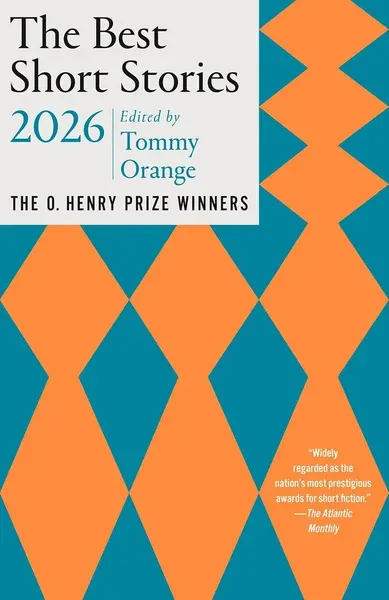
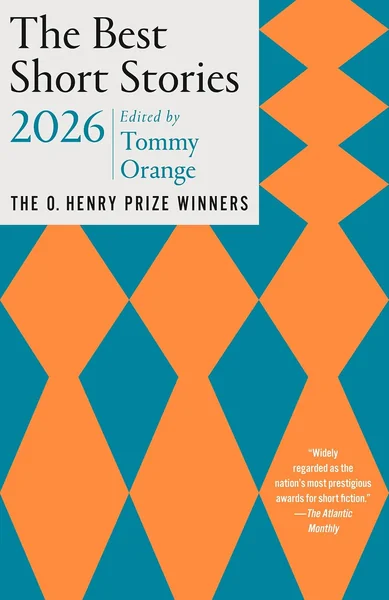
The Best Short Stories 2026: The O. Henry Prize Winners by Tommy Orange Review: A Bold, Internationally Diverse Anthology
The Best Short Stories 2026: The O. Henry Prize Winners, edited by Tommy Orange with series editor Jenny Minton Quigley, gathers twenty prizewinning stories—selected from thousands published in magazines over the prior year—by an international roster spanning celebrated names and emerging voices. Literary Hub's series editor introduction calls the resulting collection "truly genius," crediting Orange's perspective for producing stories that "take risks and ask questions about the communities in which we live."
LuvemBooks Verdict
Best for
Devoted short-fiction readers and aspiring writers who want an annually refreshed, editorially rigorous panorama of what literary magazines are publishing right now, curated through a single distinctive sensibility.
Worth it if
Worth reading if you want a single volume that delivers both a curated cross-section of today's literary short fiction — spanning established names like Tóibín and Erdrich alongside emerging voices — and genuine craft insight through each writer's own reflections on their story's inspiration.
Skip if
Skip it if you prefer genre or commercial short fiction, favour multi-year retrospective anthologies over annual snapshots, or find that your aesthetic sensibilities diverge sharply from Tommy Orange's particular editorial vision.
What readers & critics say
Literary Hub's series editor Jenny Minton Quigley describes Orange's selection as "truly genius," praising stories that "take risks and ask questions about the communities in which we live" and "expand our understanding of life and death, of family and friendships." The Lagos Review notes that the 2026 collection signals a deliberate shift toward modern urban narratives and diverse global voices, with stories ranging from speculative realism and genre-bending westerns to medical dramas.
“The book he created is truly genius — stories that expand our understanding of life and death, of family and friendships.”
— Literary HubAsk LuvemBooks
Was this helpful?
- Is it worth reading?
- For readers who follow literary short fiction seriously, this anthology is a strong pick: twenty stories curated from thousands of magazine submissions, representing a rigorous, century-old selection process, with an exceptionally international range and a guest editor — Tommy Orange — whose MacArthur Genius Grant sensibility pushes the selections toward genuine risk-taking. The writer commentary on each story's inspiration adds craft insight that elevates the experience beyond passive reading. The key caveat is that the guest-editor model means the collection reflects one aesthetic sensibility, and readers who gravitate toward more traditional narrative forms or genre fiction will not find that here.
- Similar books
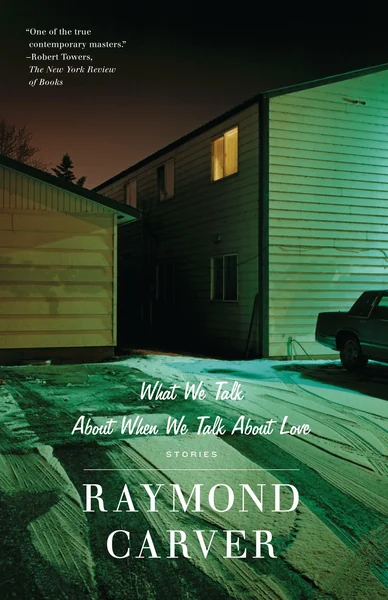
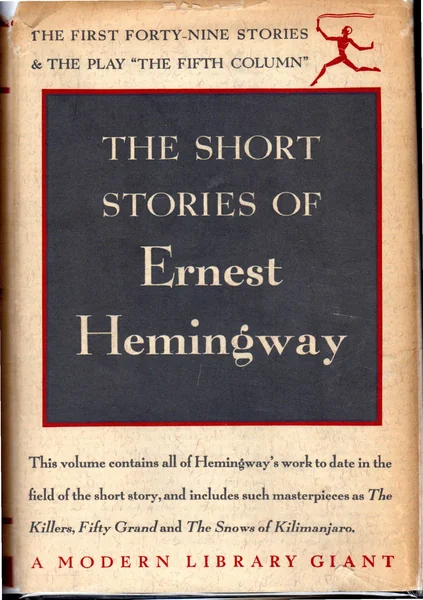
- Readers drawn to this anthology might also explore Raymond Carver's What We Talk About When We Talk About Love, a landmark collection that helped define the minimalist American short story and remains essential reading for anyone tracing the form's history. For a deeper grounding in the canonical tradition that the O. Henry Prize both honors and pushes against, The Short Stories of Ernest Hemingway offers an authoritative look at the style that shaped a century of short fiction. Among the [NOT IN CATALOGUE] titles displayed below, The Best Short Stories 2024: The O. Henry Prize Winners (edited by Amor Towles) offers the closest structural parallel as the immediate predecessor edition in the same series, while George Saunders's Tenth of December and Lauren Groff's The Best American Short Stories 2024 represent the kind of rigorous, contemporary literary short fiction that shares the 2026 anthology's ambitions.
- Who should read this?
- This anthology is aimed squarely at adult readers with an active interest in literary short fiction — those who follow magazines like The New Yorker, Ploughshares, or similar outlets and want an annually curated, editorially rigorous cross-section of the form. Aspiring writers will find particular value in the contributor notes on each story's inspiration and the extensive resource list of short-fiction magazines. Readers who prefer genre fiction, commercial short stories, or more traditional narrative structures are explicitly outside this anthology's scope.
- What guides Orange's selections?
- Series editor Jenny Minton Quigley quotes Orange's MacArthur acceptance speech to illuminate his editorial principle: "Specificity makes something feel universal... Other people connect to it." That philosophy — finding the broadly human through the rigorously particular — appears to have governed his curation, producing stories that, per Quigley, "take risks and ask questions about the communities in which we live" and "expand our understanding of life and death, of family and friendships." The result is a collection that balances celebrated names like Tóibín and Erdrich with emerging and mid-career voices, and that extends the definition of "American" short fiction to include translated work from Galician, Russian, French, and Spanish.
- Who are the standout contributors?
- The 2026 edition features an impressive spread of established and emerging voices. Among the most celebrated names: Colm Tóibín contributes "Five Bridges," Louise Erdrich "Love of My Days," Brandon Taylor "American Realism," Weike Wang "Case Study," Samanta Schweblin "Welcome to the Club" (translated from Spanish by Megan McDowell), and Catherine Lacey "The Ghost Coat." Kevin Wilson, Jenny Xie, and Marie-Helene Bertino also appear. On the translation front, Ismael Ramos, Evgenia Nekrasova, and Guka Han bring Galician, Russian, and French voices to the collection respectively.
- How does this fit into the O. Henry series?
- The O. Henry Prize anthology has run continuously since 1919, established in honor of the short-story writer O. Henry with the explicit aim of stimulating younger authors — giving the series more than a century of editorial credibility. Each annual edition is shaped by a different guest editor, meaning the collection's character shifts meaningfully from year to year; Jenny Minton Quigley, a former book editor at several Random House imprints, serves as series editor providing continuity across editions. The 2026 volume is among the more internationally minded editions in the series' recent history, with translated stories from four languages.
Summarize this book
Follow up
Synthesized from verified book data & published reviews · How we review
Press Enter to ask. Answers come from our editorial Q&A — start typing to see related questions.
Our Review
What the Anthology Is and How It Works
The Range and Texture of the Twenty Stories
Tommy Orange as Guest Editor: Perspective and Significance
Strengths of the Annual Format
Considerations for Prospective Readers
Sources & Further Reading
The key facts and claims in this review are grounded in the retrieved, verified sources listed below.
- Cited in this review
- 1
- 2
- 3
penguinrandomhouse.com
- Further reading
- 4
- 5
- 6
thelagosreview.ng
- 7
- 8
Age & Reading Level
Recommended age
Adult
Reading level
Adult
who it suits
Skip if you prefer genre fiction, commercial short stories, or traditional narrative structures — this anthology draws exclusively from literary magazines and reflects one guest editor's serious literary sensibility.
Reader reviews
No reader reviews yet
Read it? Be the first to say what you thought.
Books like The Best Short Stories 2026
Curated picks for readers who enjoyed The Best Short Stories 2026, with our reasoning for each match.
If you liked The Best Short Stories 2026