BOOKS
Published

Read Time

6 min read

Our Rating

3.5

A practical framework for reducing stress through emotional detachment that works well for everyday relationship dynamics, though it oversimplifies complex situations requiring deeper intervention.

Reviewed by

LuvemBooks

Share This Review

Let Them Theory by Mel Robbins - Self-Help Book Review

Our Rating

3.5

A practical framework for reducing stress through emotional detachment that works well for everyday relationship dynamics, though it oversimplifies complex situations requiring deeper intervention.

Trending Now
Other

Theory Let Them - Mel Robbins by Mel Robbins is Trending

Self-Help Book Gains Traction During Economic Uncertainty

Mel Robbins' stress-reduction guide is resonating with readers looking for practical ways to manage anxiety during uncertain times. The book's focus on emotional detachment offers tools for handling workplace and relationship stress.

Mel Robbins' latest self-help book is finding an audience among readers seeking practical stress management techniques during a time of economic volatility and workplace changes. The book's central premise—learning when to emotionally detach from situations beyond your control—appeals to people dealing with job insecurity, relationship tensions, and general anxiety about the future.

The timing makes sense: when external circumstances feel unpredictable, readers gravitate toward books that promise internal control and peace of mind. Robbins, known for her straightforward approach to personal development, delivers actionable strategies rather than abstract philosophy. Her "let them" framework gives readers permission to stop trying to control other people's actions and reactions.

While the book works well for everyday interpersonal challenges, readers dealing with serious relationship issues or trauma may need to look elsewhere for more comprehensive guidance. Still, for those seeking a practical toolkit for reducing daily stress and improving boundaries, Robbins offers concrete steps that don't require major life overhauls.

Read more
Updated Apr 30, 2026
In This Review
  • What Works & What Doesn't
  • The Core Framework Behind "Let Them"
  • Practical Applications That Actually Matter
  • Where the Theory Hits Real-World Obstacles
  • Robbins' Direct Communication Style
  • Who Benefits Most From This Approach

What Works & What Doesn't

What Works
  • Simple, memorable framework that's easy to implement in daily situations
  • Concrete examples covering workplace, family, and social scenarios
  • Direct writing style that anticipates and addresses reader resistance
  • Effective for chronic people-pleasers and over-functioners
  • Focuses on internal change rather than trying to modify others
What Doesn't
  • Oversimplifies complex relationship dynamics and systemic issues
  • Limited guidance for situations requiring genuine intervention or advocacy
  • May not address underlying trauma or anxiety driving controlling behaviors
  • Some examples feel idealized rather than reflecting messy real-world situations

The Core Framework Behind "Let Them"

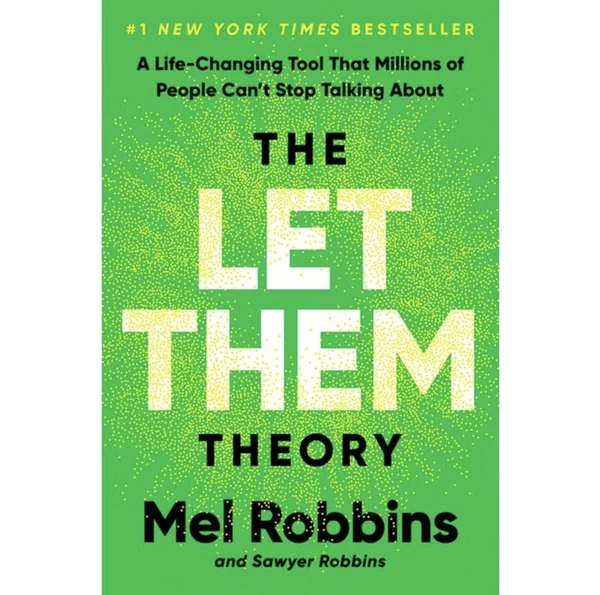
Theory Let Them - Mel Robbins_main_0
The Let Them Theory operates on a deceptively simple premise: let them think what they think, feel what they feel, and do what they do. Rather than building complex psychological frameworks, Robbins strips the concept down to its essence. The theory suggests that most of our daily stress stems from attempting to control outcomes and responses that lie entirely outside our influence.
What sets this approach apart from traditional boundary-setting advice is its emphasis on internal shifts rather than external negotiations. Where many self-help books focus on having difficult conversations or setting explicit limits, Robbins argues that the real work happens in your own mind. The framework asks readers to identify where they're expending emotional energy trying to manage others and redirect that energy toward their own goals and well-being.
The book presents this as both a mindset shift and a practical tool. Robbins provides specific language patterns and mental exercises designed to help readers catch themselves in the act of over-managing others' experiences.

Practical Applications That Actually Matter

For readers who want actionable strategies, the book delivers concrete tools rather than abstract philosophy. Robbins breaks down common scenarios where the Let Them Theory applies: workplace dynamics with difficult colleagues, family relationships with boundary issues, and social situations involving judgment or criticism.
The methodology shines particularly in professional contexts. Rather than spending energy trying to convince a micromanaging boss to trust you, the theory suggests focusing on your own performance while letting them manage however they choose to manage. This approach can reduce workplace stress significantly, though it requires genuine mental discipline to implement consistently.
Parent-child relationships receive substantial attention, especially for parents of adult children. The framework addresses the challenge of watching adult children make choices you disagree with while maintaining connection without control. This application feels particularly valuable for readers struggling with empty nest transitions or family members dealing with addiction or financial instability.
However, the book's strength in providing examples also reveals a limitation. Many scenarios feel somewhat idealized, focusing on situations where emotional detachment is clearly beneficial while spending less time addressing relationships where some level of intervention or concern is appropriate.

Where the Theory Hits Real-World Obstacles

The main weakness of Robbins' approach lies in its apparent simplicity. While "let them" sounds straightforward, the psychological mechanisms that drive our need to control others run deep. The book acknowledges this challenge but doesn't fully address the underlying anxiety, trauma responses, or learned family patterns that fuel controlling behaviors.
Readers dealing with serious relationship issues may find the approach insufficient. The theory works well for everyday annoyances and low-stakes social dynamics, but situations involving safety concerns, financial interdependence, or genuine harm require more nuanced responses than the book provides.
The writing style, while accessible and motivational, occasionally veers into oversimplification. Complex family systems, workplace hierarchies, and intimate relationships involve dynamics that can't always be resolved through individual mindset shifts. Some readers may find themselves frustrated when the theory doesn't account for situations requiring genuine advocacy or intervention.
Additionally, the book's focus on individual transformation doesn't adequately address systemic issues or power imbalances that make "letting them" a privilege not everyone can afford.

Robbins' Direct Communication Style

Robbins writes with the confidence of someone who has tested these concepts extensively in her own life and coaching practice. Her voice feels conversational and encouraging rather than academic or preachy. The book moves at a brisk pace, avoiding the dense psychological theory that can bog down similar titles.
What works particularly well is Robbins' ability to anticipate reader resistance. She addresses common objections directly: "But what if they're making a mistake?" or "Doesn't this make me selfish?" These preemptive responses demonstrate an understanding of the emotional hurdles readers face when implementing the theory.
The structure follows a logical progression from concept introduction through practical application to maintenance strategies. Each chapter builds on previous ideas without feeling repetitive, though some readers may wish for more depth in certain areas.

Who Benefits Most From This Approach

This book is ideal for readers who recognize their tendency to over-function in relationships and want concrete tools for change. People pleasers, chronic advice-givers, and those who feel emotionally drained by trying to manage others' responses will find the most value here.
The approach works particularly well for readers already familiar with basic boundary concepts but struggling with implementation. If you understand intellectually that you can't control others but find yourself repeatedly falling into management mode, the Let Them Theory provides a simple framework for course-correction.
However, it's not recommended for readers dealing with abusive relationships, severe mental health challenges, or complex family trauma without additional support. The book's emphasis on individual change doesn't substitute for therapy or professional guidance in serious situations.
Parents of teenagers and young adults represent a sweet spot for this material. The theory offers a practical way to maintain connection while allowing natural consequences to do their teaching work.