BOOKS
Published

Read Time

9 min read

Curated & edited by

LuvemBooks Editorial

How we create our reviews →
Share This Review

The Let Them Theory by Mel Robbins Review: A Viral Mantra Expanded Into a Self-Help Framework

The Let Them Theory, co-authored by Mel Robbins and Sawyer Robbins, is a self-help book built around a two-part mindset framework: "Let Them" — releasing the urge to control other people's choices and reactions — and its essential counterpart, "Let Me," which redirects that reclaimed energy toward personal responsibility and self-directed action. A New York Times bestseller, the book grew out of a personal moment involving Robbins's son Oakley's junior prom and has since attracted endorsements from high-profile voices including physician and author Gabor Maté. It is a natural next chapter for readers already familiar with Robbins's "five-second rule," and is positioned for anyone wrestling with control, connection, and the habits that shape everyday life.

LuvemBooks Verdict

Best for

Readers new to self-help or to Robbins's work who want a memorable, immediately applicable framework for releasing anxiety about other people's choices and reclaiming focus on their own next move.

Worth it if

The "Let Them / Let Me" pairing is genuinely new to you, or you're the kind of reader who benefits from a clear, repeatable mantra backed by relatable personal stories and practical bonus material tailored to parents, educators, or workplace leaders.

Skip if

You already have a working familiarity with Stoic, Buddhist, or CBT-rooted acceptance frameworks, or you're looking for deep, domain-specific guidance on any single area — careers, parenting, or relationships — rather than a broad, accessible introduction.

Kirkus Reviews praised it as "a truly helpful treatise" and "a sensible self-help guide" for counselling readers to release illusory control over others while reclaiming their own power. At the other end, Cannonball Read was sharply critical, arguing the core concept is "something that's been around forever" and that the book's remaining pages don't justify its length.

A truly helpful treatise on seeing others as they are, and letting that be — a sensible self-help guide.

Kirkus Reviews
Sources: Kirkus Reviews, Cannonball Read, Notes by Thalia, At Home Alot

Ask LuvemBooks

Was this helpful?

The Let Them Theory is a self-help framework built around two complementary principles: "Let Them" — releasing the need to control others' choices — and "Let Me," the pivot toward personal responsibility and self-directed action. Co-authored by Mel Robbins and Sawyer Robbins, the book is a New York Times bestseller backed by an endorsement from Gabor Maté, M.D., and includes bonus material developed with Harvard's Dr. Stuart Ablon. It is best suited to readers new to acceptance-based thinking; those already versed in Stoic philosophy or cognitive-behavioral frameworks may find the core insight familiar, however cleanly it is packaged.
Is it worth reading?
For readers new to acceptance-based thinking or to Mel Robbins's work, The Let Them Theory offers a genuinely memorable and immediately applicable framework. The 'Let Them / Let Me' pairing is binary and easy to internalise, designed to function as an in-the-moment reset rather than just a reading experience. The caveat: readers already versed in Stoic philosophy or cognitive-behavioral approaches will likely recognise the core insight as familiar territory — a point the book's own mixed reception underscores, with Gabor Maté, M.D. calling it 'a revolutionary volume' while a Waterstones reviewer characterised it as 'an old philosophy repeated in many books.'
Similar books
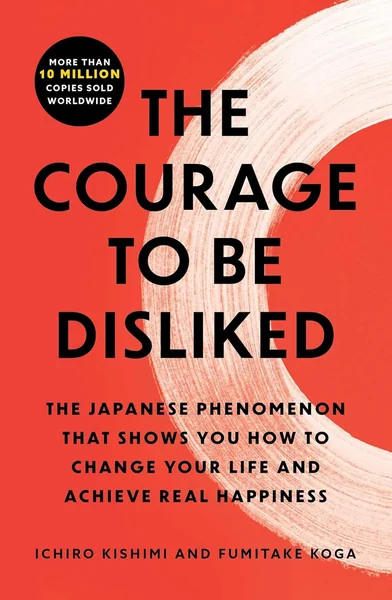
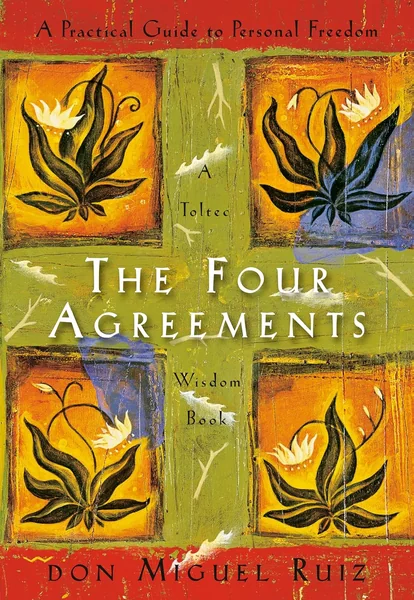
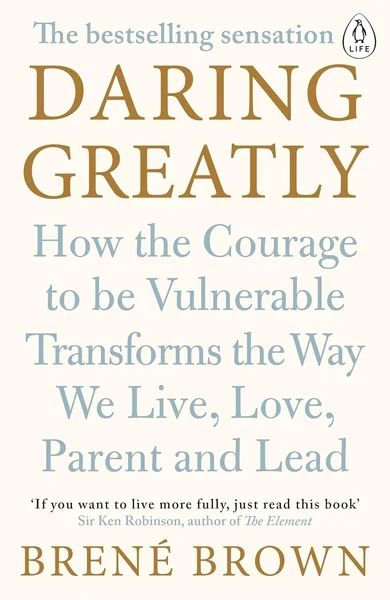
Readers drawn to The Let Them Theory will likely find common ground with several titles. Mel Robbins's own The Let Them Theory (the original edition) and the behavioral habit work in James Clear's Atomic Habits share the emphasis on practical, repeatable frameworks for everyday life. For the acceptance and releasing-control theme specifically, The Courage to Be Disliked by Ichiro Kishimi and Fumitake Koga and Don Miguel Ruiz's The Four Agreements are natural companions, both exploring freedom through detachment from others' expectations. Brené Brown's Daring Greatly and Nick Trenton's Stop Overthinking round out the shelf for readers interested in connection, vulnerability, and quieting the mental noise that drives controlling behavior.
Who should read this?
The Let Them Theory is best suited to readers who struggle with the impulse to control other people's choices and reactions — whether in personal relationships, parenting, or workplace settings. It is a particularly strong fit for those new to acceptance-based thinking or to Mel Robbins's work, as they are most likely to find the framework genuinely revelatory. The layered bonus material — tailored separately for leaders, parents, educators, and coaches — also makes it useful for readers with specific professional or caregiving roles. Seasoned readers of Stoic philosophy or cognitive-behavioral literature may find the core insight familiar.
About Mel Robbins
Melanie Lee Robbins is an American author, podcast host, and lawyer.
How does this compare to The 5 Second Rule?
The Let Them Theory is a natural next chapter for readers already familiar with Robbins's 'five-second rule.' Where The 5 Second Rule focused on a counting-down technique to interrupt hesitation and prompt action, The Let Them Theory shifts emphasis to releasing the urge to control others before pivoting to personal responsibility via the 'Let Me' principle. Both books share Robbins's characteristic approach: a distillable, memorable framework designed for in-the-moment real-world application rather than abstract theory. The new book also arrives with more layered supplementary material, including expert-co-developed resources for parents, educators, and leaders.
What are the main themes?
The book's central themes are control, acceptance, and personal responsibility. 'Let Them' addresses the human impulse to manage other people's choices and reactions — releasing that impulse rather than acting on it. 'Let Me' is the counterweight: reclaiming the energy spent on controlling others and redirecting it toward ownership of one's own next move. Across its chapters, the book applies these themes to personal relationships, workplace dynamics, parenting, habit formation, and leadership, positioning the framework as a broadly transferable reset tool rather than a domain-specific guide.
Summarize this book

Summarize this book

The Let Them Theory, co-authored by Mel Robbins and Sawyer Robbins, centers on a two-part mindset framework: 'Let Them' encourages readers to stop micromanaging other people's choices and reactions, while its essential counterpart, 'Let Me,' redirects that reclaimed energy toward personal responsibility. The concept grew from a personal moment involving Robbins's son Oakley's junior prom, when her daughter Kendall told her to simply let Oakley and his friends do what they wanted — a phrase that crystallized into a broader philosophy. The book applies this framework across careers, relationships, parenting, and leadership, and includes bonus material co-developed with Harvard's Dr. Stuart Ablon and business coach David Gerbitz for parents, educators, and workplace leaders.

Follow up

What is the 'Let Me' principle?
What bonus material is included?
What's the origin story behind the concept?

Synthesized from verified book data & published reviews · How we review

Press Enter to ask. Answers come from our editorial Q&A — start typing to see related questions.

Age & Reading Level

Recommended age

Adult

Reading level

Adult

Skip if you're seeking deep, domain-specific guidance on one area — careers, parenting, or leadership — rather than a broad, transferable framework.

Our Review

The Let Them Theory delivers a self-help framework sturdy enough to carry a full book — but how far it travels beyond its two core words depends entirely on the reader it meets.

What the Book Actually Is and Where It Came From
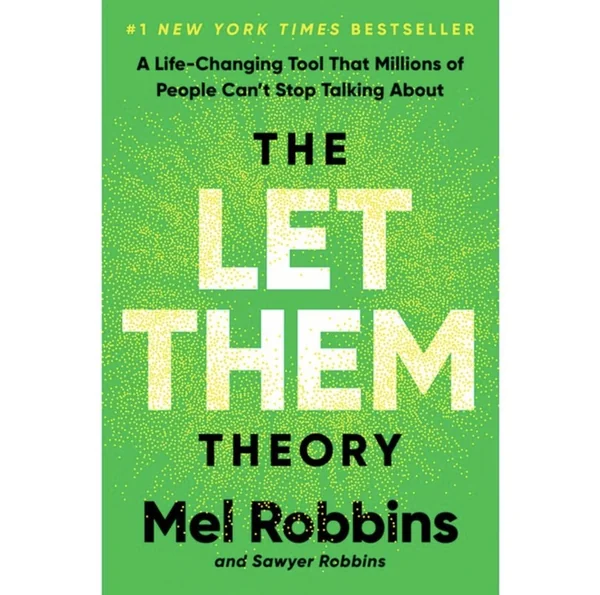
Theory Let Them - Mel Robbins by Mel Robbins front cover
The Let Them Theory is a self-help book co-authored by Mel Robbins and Sawyer Robbins, built around a two-word mantra and its necessary follow-on. The concept's origin is specific and personal: as Robbins recounts in the book, she was micromanaging the scene on the night of her son Oakley's junior prom, overwhelmed by the anxiety of her youngest child growing up. Her daughter Kendall finally told her, "Mom, if Oakley and his friends want to go to a taco bar for pre-prom, LET THEM." That phrase landed hard. Robbins began repeating it whenever she felt stressed about other people's thoughts or actions, and the philosophy expanded from there.
Crucially, the book does not stop at passive release. Its second and arguably more substantive move is the "Let Me" principle — the pivot from letting others be to claiming ownership of one's own next step. As the book frames it: "Let Me is where your real power lies. It's in Let Me that you take responsibility for your next move, for creating the life, relationships, and connection you want." This pairing is the book's structural spine, and it distinguishes the work from a simple affirmation exercise.

Scope, Format, and Companion Resources

Beyond its central argument, the book is designed with a notably broad application in mind. Its publisher positions it as a resource for readers who want to advance their careers, build better habits, find deeper connections, motivate others to change, or simply create more happiness in their lives. The scope spans personal relationships, workplace dynamics, parenting, and self-development.
The edition also comes with substantial supplementary material. A bonus chapter co-authored by Robbins and business coach David Gerbitz provides tactics specifically for leaders, managers, and coaches. A 13-page companion resource, created with Harvard's Dr. Stuart Ablon — Director of Think:Kids at Massachusetts General Hospital — offers strategies for parents, grandparents, teachers, and coaches focused on building confidence and resilience in children. A separate companion guide is designed to turn the book's ideas into group discussion prompts. This layered structure suggests the book is engineered for practical application well beyond a single read.

Standing and Reception

Robbins arrives at this book with significant platform momentum. Her TEDx talk introducing the "five-second rule" has accumulated more than 33 million views, and she turned that idea into her first bestseller. The Let Them Theory is a New York Times bestseller, consistent with her prior titles including The 5 Second Rule and The High 5 Habit.
The endorsement from Gabor Maté, M.D., a New York Times bestselling author, is among the most substantive on record for the book. Maté called it "among the most straightforward and deepest of the many wisdom books published in recent years" and described it as "a revolutionary volume." At the other end, a Waterstones reviewer offered a notably cooler read, characterising the book as "an old philosophy repeated in many books" — a critique that surfaces a genuine tension in the book's reception. Both verdicts reflect something real about a work that is, by design, built on an accessible and distillable idea.

Genuine Strengths

Robbins's particular skill, widely noted, is her ability to cut through noise and deliver clarity with firmness. The "Let Them / Let Me" framework is genuinely binary and easy to internalise, which is precisely the point — it is designed to function as an in-the-moment reset, not merely a reading experience. The book's architecture supports that goal: it moves from a relatable, grounded origin story to a scalable framework, then outfits that framework with bonus material tailored to specific audiences (leaders, parents, educators).
The co-authorship credit with Sawyer Robbins, reflected in an updated cover, ties the book's personal origin to its finished form in a visible way. For readers already inside Robbins's world — through her podcast, her social media presence, or her earlier books — The Let Them Theory represents a deepening of themes she has been developing publicly for years.

Limitations and Who May Find It Frustrating

The most honest limitation is the one the Waterstones reviewer named plainly: the core philosophy is not new. Acceptance-based frameworks, the idea of releasing control over others while focusing on one's own responses, appear across traditions ranging from Stoic philosophy to contemporary cognitive-behavioral approaches. Readers who have spent time in those bodies of work may find the book's central insight familiar, however well it is packaged.
Additionally, the book's breadth — careers, relationships, habits, parenting, leadership — is both a strength and a structural trade-off. A framework applied to everything risks being tested rigorously in none of these areas. Readers seeking deep, domain-specific guidance on any single one of those fronts may find the book's wide lens less satisfying than a more focused treatment. Those new to Robbins's work, or to self-help as a category, are the audience most likely to find the two-word framework genuinely revelatory.

Sources & Further Reading

The key facts and claims in this review are grounded in the retrieved, verified sources listed below.

  1. Cited in this review
  2. 1
  3. 2
  4. Further reading
  5. 3
    Mel Robbins — author profileHigh-authority source

    Mel Robbins, Wikipedia

  6. 4
  7. 5
  8. 6
  9. 7
  10. 8
  11. 9
  12. 10
  13. 11

Books like Theory Let Them - Mel Robbins

Curated picks for readers who enjoyed Theory Let Them - Mel Robbins, with our reasoning for each match.