8 min read
Share This Review
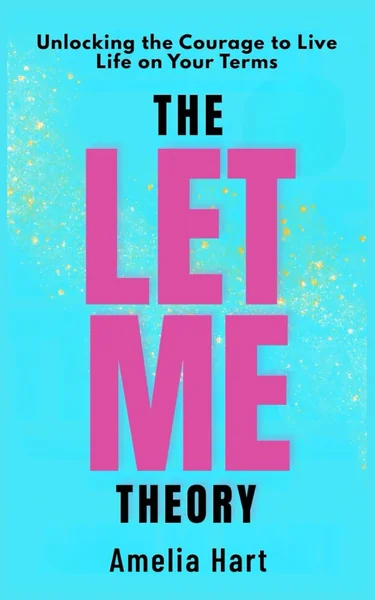
The Let Me Theory by Amelia Hart Review: A Practical Self-Permission Guide for Boundary-Seekers
Amelia Hart's independently published self-help book, The Let Me Theory: Unlocking the Courage to Live Life on Your Terms, delivers an actionable, coaching-style framework for readers ready to shed people-pleasing habits, dismantle self-imposed "shoulds," and reclaim authentic decision-making — though some readers note it has limited reach for those dealing with clinical anxiety and can repeat certain ideas across sections.
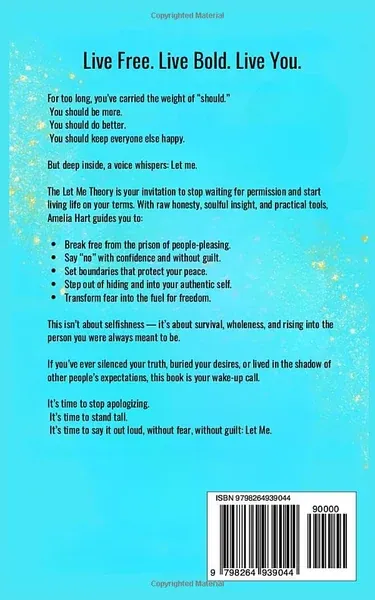 Tap to enlarge
LuvemBooks Verdict
Best for
Readers who recognise a chronic pattern of deference, people-pleasing, or filtering choices through others' expectations, and want a structured, coaching-style framework — rather than a motivational pep talk — to move toward greater self-permission and boundary-setting.
Worth it if
The Permission Protocols and fear-reframing sequence appeal to you: you want immediately usable, step-by-step tools rather than atmospheric inspiration, and a concise format (103 pages or a short audiobook listen) suits your reading habit.
Skip if
You are managing clinical anxiety or a mental-health condition that requires professional support, are already well-versed in the boundary-setting and authenticity genre, or want a deeply researched, academically grounded treatment of psychological courage.
What readers & critics say
LuvemBooks' own records describe The Let Me Theory as "a practical courage-building guide with actionable frameworks, though limited for clinical anxiety and occasionally repetitive in execution" (luvembooks.com). No independent critical reviews of this specific title were retrieved from external outlets; the Guardian and Kirkus results retrieved relate to Mel Robbins' similarly titled but distinct work, The Let Them Theory, and cannot be applied to Hart's book.
Sources: LuvemBooksAsk LuvemBooks
Was this helpful?
- Is it worth reading?
- For readers who recognise a specific pattern in themselves — chronic deference, difficulty naming their own preferences, or habitually filtering choices through others' expectations — The Let Me Theory delivers a focused, structured path forward. Its value lies in execution: the Permission Protocols and fear-reframing sequence are designed as genuinely usable tools rather than ornamental concepts, which distinguishes it from the motivational-speaker tradition where exhortation often substitutes for mechanism. Those seeking clinical or therapeutic intervention, or a deeply researched academic treatment of psychological courage, should look elsewhere.
- Similar books
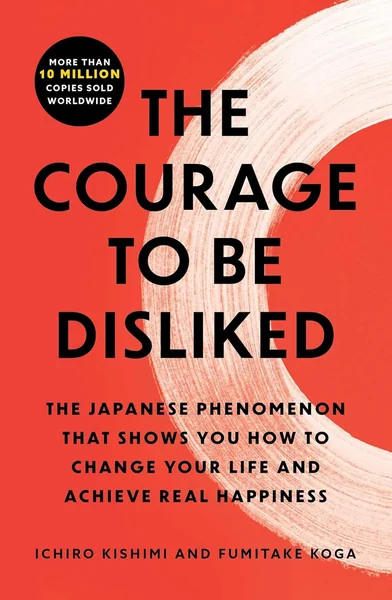
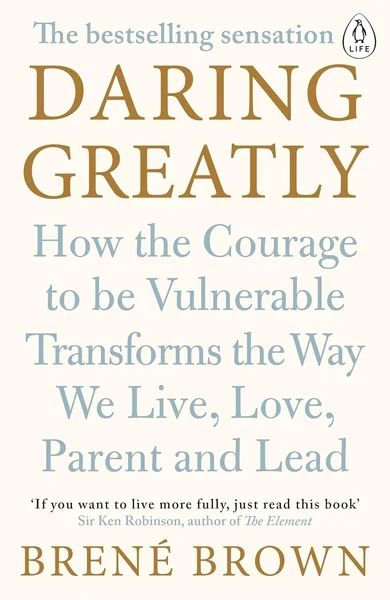
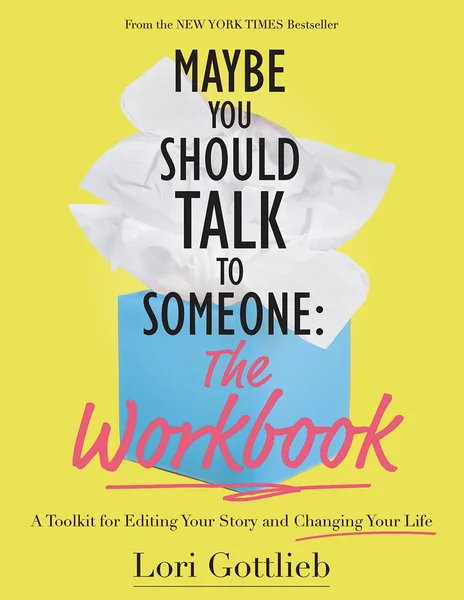
- Readers drawn to The Let Me Theory will find natural companions in several titles rendered below. Mel Robbins' The Let Them Theory shares the punchy, single-concept framework approach and addresses the habit of over-investing in others' reactions. Ichiro Kishimi and Fumitake Koga's The Courage to Be Disliked tackles the same fear-of-disapproval territory through an Adlerian philosophical lens, while Brené Brown's Daring Greatly offers a more research-grounded treatment of vulnerability and authentic living. Don Miguel Ruiz's The Four Agreements provides another compact, agreement-based model for shedding inherited assumptions — a structural cousin to Hart's Permission Protocols approach.
- Who should read this?
- The Let Me Theory is best matched to adults who recognise a specific self-limiting pattern — chronic deference, habitual people-pleasing, or reflexive filtering of choices through others' expectations — and want a structured, coaching-style path out of it rather than a motivational pep talk. It is particularly well-suited to readers who have found conventional self-help too vague to act on, since the book's core design intent is concrete tools over atmospheric inspiration. It is not the right fit for those managing clinical anxiety or seeking a therapeutically grounded or academically rigorous treatment of psychological courage.
- About Amelia Hart
- Amelia Hart is a book author whose works span a notably diverse range of genres. Her catalogue includes The Let Me Theory: Unlocking the Courage to Live Life on Your Terms, Whispers of Kindness: 7 Short Stories of Compassion, Courage, and Connection, The Seduction of Suzanne, The Virgin's Auction, and Effective Parenting of Children. This breadth — across self-help, fiction, short-story collections, and parenting resources — signals a versatile authorial voice rather than a single-platform brand.
- Coaching tool or therapy substitute?
- The Let Me Theory is explicitly a coaching tool, not a therapeutic one. Its Permission Protocols and self-permission framework are designed to address everyday self-doubt, socially conditioned restriction, and people-pleasing habits — not clinical conditions. Sources consistently note that readers managing clinical anxiety or mental-health conditions requiring professional support may find a frustrating gap between the book's accessible framing and their actual situation, and Hart's model is not positioned as a substitute for professional mental-health care.
- Is the audiobook worth it?
- The audiobook edition of The Let Me Theory is narrated by Destiny Curtis and is available on Audible. Given the book's compact length — 103 pages in paperback — it is well-suited to the audio format, offering a complete listening experience across a short commute or a single session. The structured, coaching-register prose Hart employs also lends itself to listening rather than requiring heavy visual annotation.
Summarize this book
Follow up
Synthesized from verified book data & published reviews · How we review
Press Enter to ask. Answers come from our editorial Q&A — start typing to see related questions.
Age & Reading Level
Recommended age
Adult
Reading level
Adult
who it suits
Skip if you're managing clinical anxiety or a mental-health condition and are looking for therapeutically grounded or clinically informed guidance.
Our Review
What the Book Is and What It Argues
Significance and Place in the Genre
Craft and Strengths
Genuine Limitations
Who This Book Is For
Sources & Further Reading
The key facts and claims in this review are grounded in the retrieved, verified sources listed below.
- Cited in this review
- 1
- Further reading
- 2
thriftbooks.com
- 3
audible.com
Books like The Let Me Theory
Curated picks for readers who enjoyed The Let Me Theory, with our reasoning for each match.
If you liked The Let Me Theory