8 min read
4.4
· 184 Amazon ratingsShare This Review
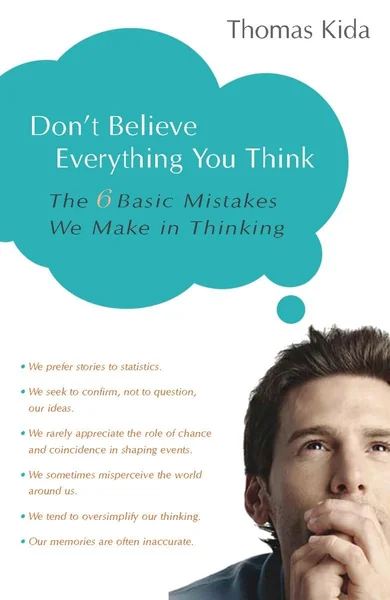
Don't Believe Everything You Think by Thomas E. Kida Review: A Sharp, Science-Grounded Wake-Up Call
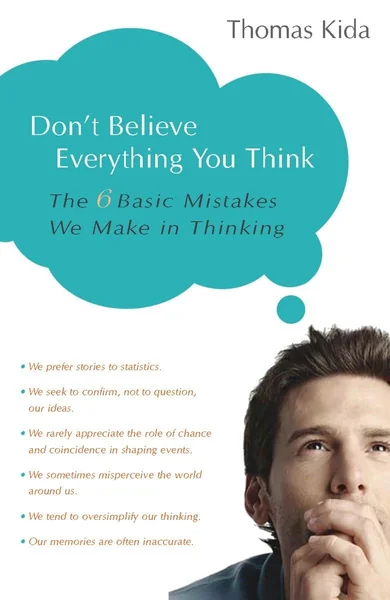
Published by Prometheus Books in 2006, Thomas E. Kida's Don't Believe Everything You Think is a popular-science work that identifies six core patterns of faulty reasoning — from misreading coincidence and fabricating associations to confirmation bias and the malleability of memory — and argues that scientific thinking offers a reliable corrective. Michael Shermer, publisher of Skeptic magazine and columnist for Scientific American, called it "exceptionally readable and delightfully informative," adding that Kida's six mistakes "should be printed on a laminated wallet-sized card and examined every morning before we go out into the world." The book is designed for general readers who want to recognize and counter the unconscious errors that distort everyday decision-making.
LuvemBooks Verdict
Best for
Curious non-specialists — including skeptic-community members, introductory critical-thinking students, and motivated general readers — who want a structured, research-backed explanation of why smart people hold demonstrably false beliefs and what mental habits can counteract that tendency.
Worth it if
Worth reading if you want a broad, clearly sequenced map of the six core reasoning pitfalls — from illusory pattern recognition and confirmation bias to faulty memory and social influence — grounded in an extensive bibliography that doubles as a gateway to deeper inquiry.
Skip if
Skip it if you are already well-versed in cognitive psychology, behavioral economics, or skeptical literature, as the chapter-length treatment of each error will feel compressed compared to the specialist depth available in works by Kahneman, Nisbett, or Shermer.
What readers & critics say
Metapsychology.net praised the book's suitability as a high-school or first-year college critical-thinking text, highlighting its accessibility and wide array of real-world examples spanning the stock market, medicine, and the paranormal. Sobrief.com notes that while readers appreciated its relevance to modern issues and its skeptical, science-grounded approach, some found portions repetitive or the writing style dry.
Sources: Metapsychology.net, Sobrief.com, NHBS, Pearceonearth.com, ThriftBooksAsk LuvemBooks
Was this helpful?
- Is it worth reading?
- For its intended audience — curious non-specialists, skeptic communities, and students in introductory critical-thinking or research-methods courses — Don't Believe Everything You Think delivers a clear framework, real-world examples drawn from investment behavior, paranormal beliefs, crime statistics, and memory distortion, and an extensive bibliography that makes it a durable entry point into the literature on human reasoning. Michael Shermer called it "exceptionally readable and delightfully informative" and suggested Kida's six mistakes "should be printed on a laminated wallet-sized card and examined every morning." The key caveat: readers already familiar with Daniel Kahneman, Richard Nisbett, or Michael Shermer's own work will find much of the terrain covered in comparable or greater depth elsewhere.
- Similar books
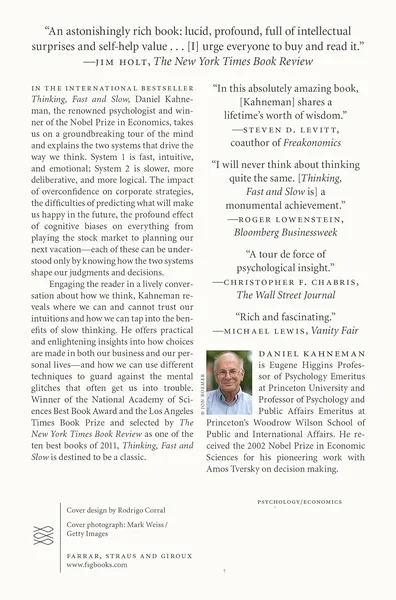
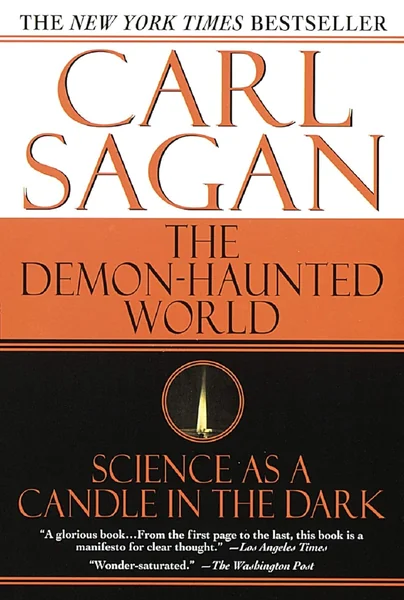
- Readers drawn to Don't Believe Everything You Think will find natural companions in several works on human reasoning and skepticism. Daniel Kahneman's Thinking, Fast and Slow covers the dual-process architecture behind cognitive bias in considerably greater depth. Carl Sagan's The Demon-Haunted World shares Kida's commitment to scientific thinking as a corrective to pseudoscience and faulty belief, with Sagan's characteristic eloquence. Thomas Gilovich's How We Know What Isn't So addresses similar terrain on illusory thinking, and David McRaney's You Are Not So Smart offers an accessible, example-driven tour of self-delusion. Kevin St. Clergy's Beyond Blind Blaming: Stop Solving the Wrong Problem extends the conversation into practical problem-solving and decision-making.
- Who should read this?
- Don't Believe Everything You Think was built for curious non-specialists: general readers who want a structured, research-backed account of why smart people hold demonstrably false beliefs. Skeptic communities, students in introductory college courses on critical thinking or research methods, and motivated general readers are the audiences the book is explicitly designed to serve. Those already well-versed in cognitive psychology or behavioral economics — particularly readers familiar with Daniel Kahneman, Richard Nisbett, or Michael Shermer — will find the coverage less novel, as each topic receives chapter-length rather than book-length treatment.
- About Thomas E. Kida
- Thomas E. Kida is a professor in the Isenberg School of Management at the University of Massachusetts at Amherst, where he specializes in critical thinking and decision-making. He has authored many articles on those subjects and is best known for Don't Believe Everything You Think, which examines six fundamental mistakes people make in thinking and advocates for skepticism and scientific reason.
- What are the main themes?
- Don't Believe Everything You Think is organized around the theme that faulty reasoning is not a personal failing but a structural feature of human cognition. The six core themes are: illusory pattern recognition and spurious associations, the limits of prediction, confirmation bias, cognitive simplification and framing effects, faulty memory, and the social dimension of thought — how peer dynamics and group expectations distort individual judgment. Underlying all of them is Kida's argument that the framework of scientific thinking offers a transferable corrective, not just a one-time fix.
- Is this book still relevant today?
- Nearly two decades after its 2006 publication, the questions Kida raises about belief formation, pseudoscience, and the limits of intuition have only grown more culturally pressing. The review notes that the book's combination of a clear framework, real-world examples, and an extensive bibliography makes it a durable entry point into the literature on human reasoning. While readers seeking the latest empirical findings may want to supplement it with more recent works, its structural framework for identifying cognitive errors remains applicable.
Summarize this book
Follow up
Synthesized from verified book data & published reviews · How we review
Press Enter to ask. Answers come from our editorial Q&A — start typing to see related questions.
Age & Reading Level
Recommended age
Adult
Reading level
Adult
who it suits
Skip if you are already well-versed in cognitive psychology or behavioral economics and are looking for advanced theoretical depth rather than a structured popular-science introduction.
Our Review
What the Book Actually Is and Argues
Structure and Scope
Strengths: Clarity and the Scientific Thinking Framework
Genuine Limitations and Who May Find It Frustrating
Who This Book Is For and Why It Still Resonates
Sources & Further Reading
The key facts and claims in this review are grounded in the retrieved, verified sources listed below.
- Cited in this review
- 1
- 2
- Further reading
- 3
- 4
- 5
metapsychology.net
- 6
- 7
librarything.com
- 8
- 9
Books like Don't Believe Everything You Think
Curated picks for readers who enjoyed Don't Believe Everything You Think, with our reasoning for each match.
If you liked Don't Believe Everything You Think