Mary Roach investigates the quest to replace failing organs with prosthetics, stem cells, and tissue. She travels from surgical theaters to laboratories to document regenerative medicine. Her work offers a grounded tour of medical progress and its limits.
Readers who are fascinated by the quest to replace failing organs with prosthetics, stem cells, and tissue will appreciate Mary Roach's grounded tour of these fields and their limits.
Worth it if
Worth reading if you prefer a structured survey of medical breakthroughs over a traditional narrative arc.
Skip if
Skip it if you are easily unsettled by graphic descriptions of surgical procedures and bodily modification.
Where reviewers agree and split
Readers rate it 4.6 on Amazon. The reviews we read that discuss it in depth split on some points:
Positive
BookPage · Press review: highlights the author's lively reporting and predicts delight for fans
Positive
Dear Author · Book blog: appreciates the book as a fun, marvel-worthy ride through science
Positive
Probinism · Book blog: praises the grounded, funny tour that clarifies medical progress
Mixed
Cbhd · Book blog: praises research but notes the book lacks moral wisdom
Overall verdicts are our summary of each review we read, from its headline, rating and conclusion.
What readers & critics say
BookPage praises Roach's lively reporting and predicts delight for fans, while Dear Author calls it a 'fun ride' through scientific marvels. Probinism highlights its grounded tour that clarifies medical progress, but Cbhd notes the book stops short of providing moral wisdom.
“reports with liveliness, detail and relatability”
Mary Roach’s Replaceable You: Adventures in Human Anatomy delivers a rigorous, often unsettling tour of prosthetic innovation, blending historical anecdotes with cutting-edge lab reporting. The book succeeds as a definitive, grounded survey of what medical science can actually achieve today, though it demands patience from readers who prefer a straightforward plot or those easily disturbed by clinical details of surgery. It is best suited for pragmatic audiences interested in the intersection of biology, engineering, and human resilience.
Is it worth reading?
It is highly recommended for readers fascinated by biology and engineering who want grounded facts rather than optimistic futurism. Critics praise Roach’s ability to translate complex biomedical concepts into accessible, often humorous prose while securing rare access to closed laboratories. However, it may frustrate those seeking a purely celebratory medical history or a cohesive story, as the text prioritizes a rigorous survey of technological limits over narrative momentum.
Similar books
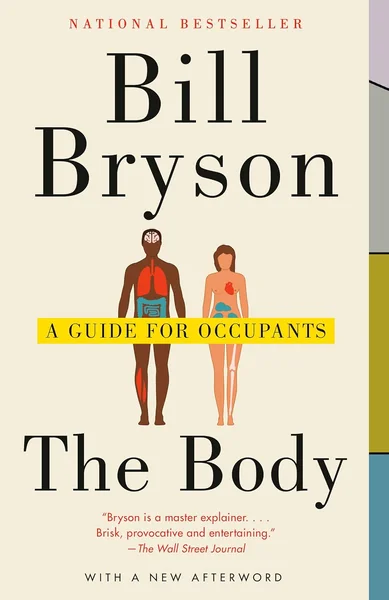
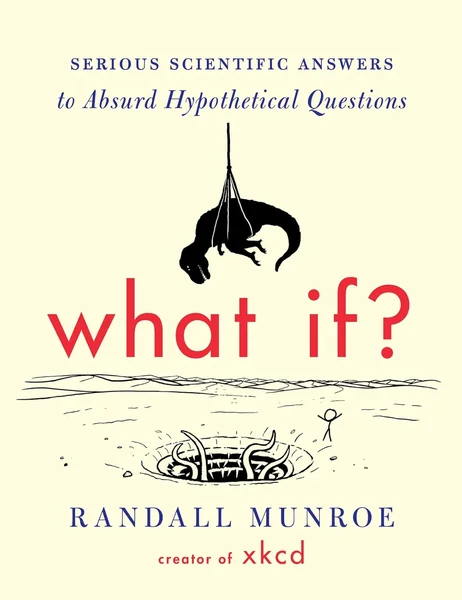
Readers who enjoy this informative overview of human physiology will likely appreciate Bill Bryson’s comprehensive head-to-body guide in The Body: A Guide for Occupants, Randall Munroe’s playful exploration of scientific hypotheticals in What If?, and Mark Miodownik’s examination of everyday materials in Stuff Matters. While Mary Roach’s previous works on cadavers and digestion share her signature reporting style, those titles are not currently linked in our catalog.
Who should read this?
This book is written for adults who are fascinated by the desire to substitute damaged organs with prosthetics, stem cells, and tissue. It strongly appeals to pragmatic readers interested in biology, engineering, and human resilience, as well as fans of rigorous, first-hand scientific reporting. It is less suited to readers seeking lighthearted popular science or those who prefer traditional storytelling over structured topic surveys.
What historical examples does it cover?
Roach traces anatomical replacement back to ancient surgical practices, detailing how Vedic surgeons reconstructed noses from facial skin and how early experiments used brass, frog skin, and petroleum by-products for implants. She examines the evolution of training models, explaining how doll-sized models eventually replaced human figures in surgeon training before progressing to highly realistic physiological simulators. These historical examples illustrate the persistent human drive to repair the body with whatever materials were available.
How is the book structured?
The text functions as a comprehensive survey that avoids a linear plot. Roach employs a conversational tone that frequently incorporates humor and self-deprecation, actively participating in her reporting by attempting novel techniques and observing surgeries firsthand. This structural approach balances technical explanations with human stories, though it lacks a cohesive plotline.
What are the main takeaways?
The central tension lies between the marvel of scientific advancement and the sobering reality of biological limits. Roach consistently argues that replacement devices rarely match the architectural brilliance of original human anatomy and that technological progress often advances via haphazard experimentation. The book emphasizes that wisdom is required to navigate new technologies, highlighting the tension between what medicine can do and what it should do.
Summarize this book
Is it worth reading?
Who should read this?
What historical examples does it cover?
How is the book structured?
What are the main takeaways?
Summarize this book
Mary Roach investigates the global quest to substitute prosthetics, lab-grown tissues, and advanced medical devices for the human body. She travels from surgical theaters in Boston to biomedical facilities in San Diego and outreach camps in Mongolia to document the realities of modern medicine. The book functions as a structured survey of medical innovation, tracing its history from ancient rhinoplasty techniques to modern 3D-printed organs while highlighting the engineering hurdles and ethical dimensions of the field.
Follow up
How long is it?
Does it have a plot?
Synthesized from verified book data & published reviews · How we review
Ask LuvemBooks
What would you like to know about Replaceable You: Adventures in Human Anatomy?
Answers come from our editorial notes on this book. If we haven't covered something, we'll say so.
Our Review
We review the evidence: reader verdicts, gathered and weighed with AI assistance and edited by LuvemBooks, rather than one reader's first-hand take.
Roach delivers a rigorous, often unsettling examination of regenerative medicine that rewards readers willing to navigate its graphic details.
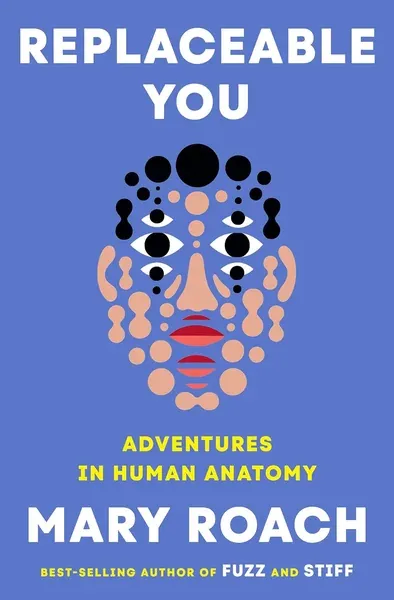
Replaceable You: Adventures in Human Anatomy by Mary Roach front cover
The Premise and Scope
Mary Roach explores the historical and contemporary efforts to replace failing human anatomy with artificial or lab-grown alternatives. The book functions as a comprehensive survey of regenerative medicine, prosthetics, and surgical innovation.
It covers everything from early rhinoplasty techniques to modern stem cell research and three-dimensional printed tissues. Roach organizes her investigations into separate chapters dedicated to specific organs and bodily systems.
She examines the realities of hip replacements, mechanical ventilation, and intestinal vaginoplasty. The narrative traces the evolution of medical manikins used to train surgeons.
Roach also details the logistical challenges of harvesting and transplanting tissue. Her scope extends to the commercial and ethical dimensions of the multi-billion-dollar medical device industry.
The text addresses the psychological impact of living with prosthetics and the identity shifts that accompany major surgeries. Readers will encounter detailed accounts of tissue rejection, infection risks, and the psychological toll of recovery.
Reporting and Narrative Style
Roach maintains her established reputation for translating complex scientific concepts into accessible prose. The publication BookPage notes that she explains biochemical processes for a lay reader with liveliness and detail.
She employs a conversational tone that frequently incorporates humor and self-deprecation. The reviewer behind DearAuthor observes that she secures access to laboratories and operating rooms that remain closed to most outsiders.
Roach actively participates in her reporting by observing surgeries and attempting experimental procedures. She describes the sensory experience of climbing into an iron lung and trying to implant hair on her own body.
The reviewer behind Probinism characterizes the resulting narrative as a grounded, funny, and sometimes unsettling tour of medical limits. The author avoids medical jargon by relying on clever everyday metaphors and historical trivia.
Her method involves interviewing surgeons, researchers, and patients to gather diverse perspectives. The book balances technical explanations with the human stories behind each medical breakthrough.
She travels to a legendary burn unit in Boston to observe surgical techniques firsthand. Roach also visits a stem cell hair nursery in a San Diego technology hub.
The text details her conversations with amputees and ostomates about their lived experiences. She spends time in a working iron lung from the nineteen fifties to understand historical ventilation methods.
Roach travels across Mongolia with cataract surgeons to document their outreach efforts. Her reporting style combines scientific rigor with an irrepressible curiosity about human ingenuity.
Historical Context and Medical Innovation
Roach traces the long history of anatomical replacement back to ancient surgical practices. She notes that Vedic surgeons reconstructed noses from adjacent facial skin centuries before modern plastic surgery existed.
The text details early experiments that involved sculpting noses from brass and borrowing skin from frogs. Roach also examines the use of jet canopies for crafting eye parts and petroleum by-products for breast implants.
These historical examples illustrate the persistent human drive to repair the body with available materials. The narrative shifts to the development of modern medical manikins and practice dummies.
Roach explains how anatomically correct doll-sized models replaced human figures in medical training before the twentieth century. She describes the progression toward highly realistic simulators that replicate human physiology.
The text highlights how these training tools have evolved alongside surgical techniques. Medical education has relied on these artificial stand-ins to refine physician skills in controlled environments.
Handling of Medical and Ethical Complexity
The text does not shy away from the graphic realities of surgical intervention and bodily modification. The reviewer behind CBHD points out that Roach translates complex ideas into accessible language while maintaining remarkable research tenacity.
She documents the corporate mistakes behind massive medical device recalls and their long-term patient consequences. The author examines the unregulated nature of certain experimental procedures and the patent conflicts surrounding them.
Roach highlights the tension between medical capability and patient quality of life. She argues that replacement devices rarely match the architectural brilliance of original human anatomy.
The narrative emphasizes that technological progress in anatomy often lurches forward through trial and error. The text acknowledges that wisdom is required to navigate new technologies beyond mere information.
Roach consistently returns to the distinction between what medicine can do and what it should do.
It is promising, imperfect, and deeply human. The text stands alongside Bill Bryson’s head-to-body tours as a comprehensive examination of human physiology.
OUR TAKE: Is Replaceable You Worth Reading?
Weighing these reviews, the book succeeds as a definitive guide to the current state of regenerative medicine. It appeals strongly to readers interested in the intersection of biology, engineering, and human resilience.
The text solves the problem of confused public expectations by showing how progress actually happens in human anatomy.
The central tension lies between the marvel of medical innovation and the sobering reality of biological limits. This balance points the book toward pragmatic readers who want grounded facts rather than optimistic futurism.
It may frustrate readers seeking a traditional narrative arc or a purely celebratory medical history. The book remains firmly anchored in the reality of human biology rather than speculative futurism.
Readers who appreciate Roach’s previous works on cadavers and digestion will find a familiar, rigorous companion here. The text reaches the New York Times bestseller list upon release, reflecting broad public interest.
Sources & Further Reading
The key facts and claims in this review are grounded in the retrieved, verified sources listed below.
Roach explains that the idea for her book arose after corresponding with a reader who was an elective amputee with spina bifida seeking to amputate a malfunctioning foot.
From our readers
Reader reviews
No LuvemBooks readers have answered yet.
Read it? Was it right for you?
Books like Replaceable You: Adventures in Human Anatomy
Curated picks for readers who enjoyed Replaceable You: Adventures in Human Anatomy, with our reasoning for each match.