7 min read
4.6
· 1,147 Amazon ratingsShare This Review

Our review
The Gift of Failure
The Gift of Failure by Jessica Lahey Review: A Blueprint for Stepping Back
Jessica Lahey's The Gift of Failure makes a research-backed, practically structured case that over-protective parenting undermines children's capacity for self-reliance — and offers targeted, concrete guidance for parents and educators who want to change course.
LuvemBooks Verdict
Best for
Parents of school-age children — especially those entering or navigating middle school — who suspect they may be over-involved and want structured, research-backed guidance on how to step back and let their children build genuine resilience.
Worth it if
You are a parent, teacher, or school counselor looking for practical, arena-by-arena strategies — covering homework, grades, social dynamics, and sports — that connect developmental research to everyday decisions at home and in the classroom.
Skip if
Readers seeking deep narrative immersion or granular psychological unpacking of parental anxiety may find that key anecdotes resolve too briskly and that some reassurances — such as being told a struggling child "will be fine" — feel too broad to shift deeply held anxieties.
What readers & critics say
The New York Times review (retrieved via nytimes.com) praised Lahey's prose as "gripping" while noting a recurring limitation: anecdotes tend to close too soon, and reassurances aimed at the most anxious parents risk feeling oversimplified. The review site grownandflown.com found that Lahey's descriptions of high-school freshmen "will ring true for every parent" and highlighted her practical three-goal framework, while learningandthebrain.com concluded that her advice, if followed, could help children "experience more failure, more learning, and ultimately more success."
“Lahey's prose here is gripping, yet the storytelling releases us too soon — we want to know exactly what Lahey said, how it felt, how Marianna's mother reacted.”
— nytimes.comAsk LuvemBooks
Was this helpful?
- Is it worth reading?
- For parents who suspect they are over-involved but aren't sure how to change, The Gift of Failure offers some of the most immediately actionable guidance in the parenting space — structured by real-life arenas like homework and report cards rather than abstract philosophy. Critics described Lahey's prose as "gripping" and praised it as "one of my new favorite parenting manuals" with "common-sense advice on how to stand back and let your children learn through their mistakes." The main caveat is that key anecdotes — such as the scene involving a student named Marianna — resolve too quickly, and broad reassurances like telling anxious parents a struggling child "will be fine" can feel oversimplified for the very audience the book is trying to reach. Readers who already instinctively reject helicopter parenting may find the book affirms what they already believe; those who want deeper psychological unpacking of parental anxiety may need to supplement it.
- Similar books
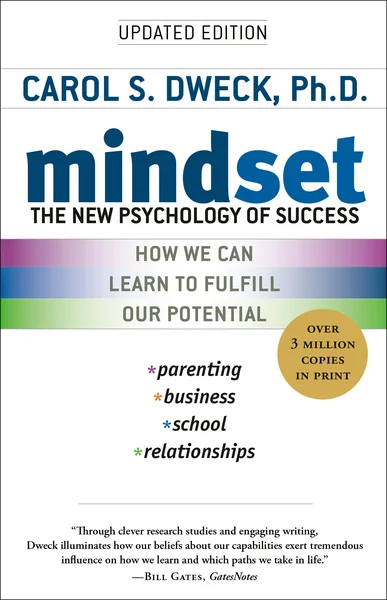
- Readers drawn to The Gift of Failure will find strong companions in several nearby titles. How to Raise an Adult by Julie Lythcott-Haims covers similar ground on the dangers of over-parenting and the importance of stepping back. Carol S. Dweck's Mindset: The New Psychology of Success provides the foundational research on growth mindset that underpins much of Lahey's argument about resilience and learning from failure. The Whole-Brain Child by Daniel J. Siegel and Untangled by Lisa Damour complement Lahey's developmental perspective, the former focusing on brain science and the latter on guiding teenage girls through key transitions. Last Child in the Woods by Richard Louv and The Explosive Child by Ross W. Greene round out the broader conversation about children's autonomy and emotional development.
- Who should read this?
- The book is most immediately useful for parents of school-age children — particularly those approaching or navigating middle school, which Lahey singles out as a defining window for building resilience. Teachers and school counselors will find the sections on homework, grades, and classroom dynamics directly applicable to the conversations they regularly have with parents. The publisher accurately positions it as essential reading for parents, educators, and psychologists, reflecting its genuine cross-disciplinary relevance. Readers who already instinctively reject helicopter parenting may find it affirms what they already believe; those who suspect they are over-involved but aren't sure how to change will find the most to act on.
- About Jessica Lahey
- Self-authorship — the stage of adult development where an individual has extended beyond the need to be socialized among their community and has developed their own identity, ideologies, and beliefs which they hold fast to — is a concept relevant to understanding the intellectual framework behind The Gift of Failure. Beyond what is captured in that developmental context, LuvemBooks' verified reference does not supply additional biographical detail about Jessica Lahey.
- What are the main themes?
- The book's central themes are over-protective parenting, childhood resilience, and the relationship between struggle and competence. Lahey argues that modern parents — by sheltering children from every stumble — undermine their children's capacity for self-reliance, producing what administrators at Stanford and Harvard have called "failure deprived" college students. Subsidiary themes include the school-parent relationship, the specific pressures of homework and grades, and the developmental importance of the middle school years. The book also engages with the broader American culture of anxious, interventionist parenting, though its argument is presented as applicable beyond the U.S. context.
- Does it address helicopter parenting directly?
- Helicopter parenting is the book's primary target. Lahey builds her argument around the observation that modern parents, by intervening at every difficulty, deprive children of the experiences they need to build genuine competence and confidence. A critic drew a memorable comparison: contemporary parenting, the piece noted, resembles teaching a teenager to drive in a car with dual controls, the adult perpetually ready to grab the wheel. Lahey's proposed corrective is that "parents will ultimately serve their children better by allowing them to stand on their own."
Summarize this book
Follow up
Synthesized from verified book data & published reviews · How we review
What would you like to know about The Gift of Failure?
Answers come from our editorial notes on this book. If we haven't covered something, we'll say so.
Readers often ask
Our Review
This review covers the book's content, premise and published critical reception, not a first-hand reading.
What the Book Actually Argues
Scope and Structure
Reception and Significance
Where the Book Falls Short
Who This Book Is For
Sources & Further Reading
The key facts and claims in this review are grounded in the retrieved, verified sources listed below.
- Cited in this review
- 1
- 2
- 3
- Further reading
- 4
- 5
jessicalahey.com
- 6
grownandflown.com
- 7
- 8
- 9
Age & Reading Level
Recommended age
Adult
who it suits
Skip if you are looking for deep narrative immersion or granular psychological unpacking of parental anxiety rather than structured practical guidance.
Reader reviews
Be one of the first readers to answer.
Read it? Was it right for you?
Books like The Gift of Failure
Curated picks for readers who enjoyed The Gift of Failure, with our reasoning for each match.
If you liked The Gift of Failure