BOOKS
Published

Read Time

7 min read

Curated & edited by

LuvemBooks Editorial

How we create our reviews →
Share This Review

Living In Spacetime: Where Science Meets Religion by Anderthal Kord Review: A Concise Bridge Between Science and Faith

Living In Spacetime: Where Science Meets Religion by Anderthal Kord is a 242-page Kindle book (published May 27, 2023) that sets out to explore where scientific understanding and religious belief intersect. Pitched at readers aged 9–18, it offers an accessible entry point into one of humanity's oldest debates.

LuvemBooks Verdict

Best for

Curious readers aged roughly 9–18 — and the families, students, or discussion groups around them — who want a single compact volume that opens the science-faith conversation as a synthesis rather than a battle.

Worth it if

You want an accessible, discussion-friendly on-ramp to the science-religion question at a youth reading level, with Kindle features like Word Wise and screen reader support easing the way.

Skip if

Skip it if you need scholarly depth in physics or theology, a committed argument from either camp, a print edition, or built-in reference aids like X-Ray — a 242-page synthesis can't supply those.

Age & Reading Level

Recommended age

Ages 8–12

Reading level

Middle grade

Best for: Ages 9+ — the stated 9–18 reading band is a comprehension floor: abstract ideas about cosmology and faith, plus the length of the text, suit confident middle-grade readers and up.

Skip if you want a rigorous scientific account or a doctrinally committed religious argument rather than an introductory middle-ground synthesis.

In This Review
  • What Works & What Doesn't
  • What the Book Sets Out to Do
  • The Conversation It Joins
  • A Youth-Accessible Format
  • Where It May Frustrate
  • Who It Is For

What Works & What Doesn't

What Works
  • Tackles the science-religion intersection as synthesis rather than conflict, a framing many readers actively seek
  • Stated reading age of 9–18 fills a genuine niche, since most science-and-faith titles target adults
  • Compact 242-page length suits its introductory, discussion-starter purpose
  • Kindle accessibility features include Word Wise, screen reader support, and enhanced typesetting
What Doesn't
  • A 242-page treatment cannot plumb the physics, theology, and philosophy the subject spans — depth-seekers will need to supplement
  • The middle-ground framing may frustrate readers wanting a rigorous scientific account or a doctrinally committed religious one
  • Listed as a Kindle edition, with no print format indicated for readers who prefer physical copies
  • X-Ray is not enabled, so there is no built-in reference layer for the many concepts and figures the topic touches
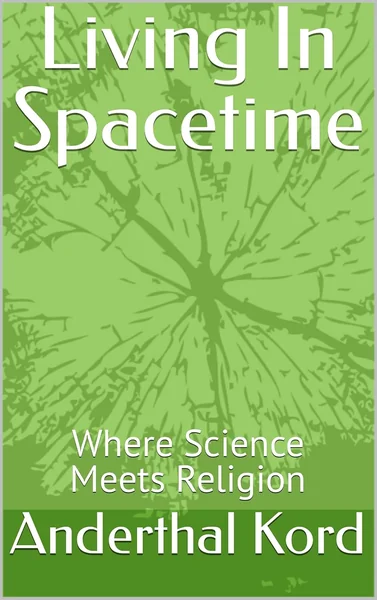
A short, youth-oriented Kindle title that takes on the science-versus-religion question, Living In Spacetime earns attention for the sheer ambition of its premise, though readers wanting scholarly depth should calibrate expectations.
Living In Spacetime: Where Science Meets Religion by Anderthal Kord front cover

What the Book Sets Out to Do

Living In Spacetime: Where Science Meets Religion, by Anderthal Kord, was published on May 27, 2023 as a Kindle edition running 242 pages. The subtitle states the agenda plainly: this is a book about the meeting point of science and religion, two frameworks often presented as rivals for explaining the universe. The title itself invokes spacetime — the four-dimensional fabric at the heart of modern physics — signaling that the book frames its inquiry in the vocabulary of contemporary cosmology rather than treating faith and physics as sealed compartments. Within that frame, Kord positions the book as a synthesis rather than a polemic: not an argument that one side must win, but an exploration of the territory where the two ways of knowing overlap.

The Conversation It Joins

The relationship between science and religion is one of the longest-running debates in intellectual history, stretching from Galileo's trial through Darwin's reception to present-day arguments over cosmology and consciousness. Popular science has frequently engaged the question — Carl Sagan's Cosmos and its 2014 successor series both drew commentary, from religious and secular quarters alike, about whether science programming inherently frames faith as an adversary. A book explicitly titled around reconciliation therefore steps into well-trodden but perennially contested ground. The enduring appetite for such works reflects a genuine readership: people who accept scientific method yet resist the conclusion that the universe is therefore stripped of meaning, and younger readers encountering the supposed conflict for the first time.

A Youth-Accessible Format

One distinctive feature of this edition is its stated reading age of 9 to 18, which places the book in unusual company: most science-and-religion titles target adult general readers or academic audiences. A synthesis aimed at younger readers fills a real niche, giving students and families a structured starting point for discussions that school curricula often sidestep. The Kindle edition supports that accessibility goal technically as well — Word Wise is enabled, which surfaces short definitions above difficult words for developing readers, and screen reader support, enhanced typesetting, and Page Flip are all included. At 242 pages and a 1.1 MB file size, it is a compact read rather than an encyclopedic treatment, a scale well suited to its audience.

Where It May Frustrate

The same compression that makes the book approachable also defines its ceiling. The science-religion dialogue spans physics, philosophy of religion, theology, and history; any 242-page treatment necessarily prioritizes breadth of invitation over depth of argument. Readers arriving with training in physics or theology — or expecting the apparatus of a university-press treatment, with extensive citation and engagement with the existing literature — should not expect this to function as a scholarly text. Its design intent is introductory and synthetic, and readers who want either a rigorous scientific account or a doctrinally specific religious one may find the middle-ground framing less satisfying than a committed argument from either camp.

Who It Is For

Living In Spacetime is best matched to curious younger readers, families, and discussion groups looking for a single, manageable volume that opens the science-faith conversation rather than closing it. It suits a reader who has encountered the claim that science and religion must conflict and wants a structured counter-perspective at an accessible reading level. Those seeking advanced cosmology, formal theology, or a definitive adjudication of the debate will need to supplement it with more specialized works — but as an on-ramp to one of culture's most consequential questions, the book's premise and youth-oriented positioning give it a clear and coherent purpose.

Sources & Further Reading

The key facts and claims in this review are grounded in the retrieved, verified sources listed below.

  1. Cited in this review
  2. 1
  3. Further reading
  4. 2