
8 min read
4.4
· 5,886 Amazon ratingsShare This Review
The Order of Time by Carlo Rovelli Review: A Lyrical, Challenging Meditation on Physics
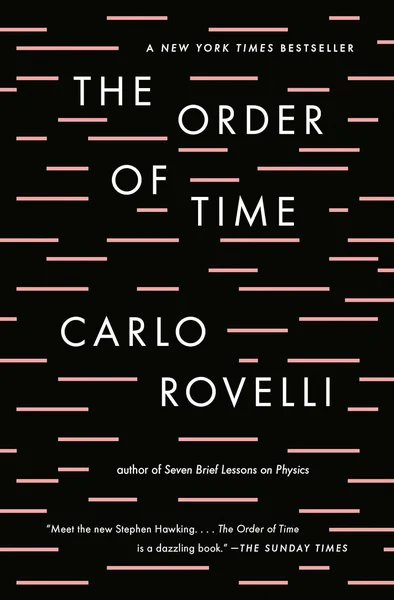
The Order of Time is Carlo Rovelli's concise exploration of what physics actually reveals about time — dismantling everyday intuitions about past, present, and future through relativity, thermodynamics, and loop quantum gravity. Named one of TIME magazine's Ten Best Nonfiction Books of the Decade, it is celebrated for its literary ambition and the depth of Rovelli's personal reflection, though critical coverage notes that those personal musings, while astute, do not make for an easy read. This review covers the book's content, structure, and published critical reception — not hands-on application.
LuvemBooks Verdict
Best for
Readers drawn to science writing that takes genuine literary and philosophical risk — particularly those who have enjoyed Rovelli's Seven Brief Lessons on Physics and want a longer, deeper reckoning with a single concept, or anyone curious about how modern physics fundamentally undermines our intuitive sense of time.
Worth it if
You are willing to sit with uncertainty and complexity, and you value a book that moves fluidly between rigorous physics — relativity, thermodynamics, loop quantum gravity — and the kind of philosophical and literary reflection that places Proust alongside Einstein.
Skip if
You are looking for a step-by-step conceptual primer on time with clear mathematical scaffolding, or you have no prior exposure to relativity and prefer expository popular science over meditative, digression-rich prose.
What readers & critics say
Kirkus Reviews acknowledges that Rovelli's personal musings are "astute and rewarding" but cautions that the book "do not make for an easy read," positioning it as much a work of philosophy as of physics. The Guardian praised it as a "dizzying, poetic work" that continues a tradition of jargon-free scientific writing from Galileo to Darwin, while mcneilly.com observed that the book reaches toward poetry precisely because "no prose can quite carry" the ideas Rovelli is trying to convey.
“Astute and rewarding but does not make for an easy read — as much a work of philosophy as of physics, full of insights for readers willing to work hard.”
— Kirkus Reviews“Continues a tradition of jargon-free scientific writing from Galileo to Darwin that disappeared in the academic specialisation of the last century.”
— The GuardianAsk LuvemBooks
Was this helpful?
- Is it worth reading?
- For readers drawn to science writing that takes literary and philosophical risk seriously, The Order of Time is widely considered essential — TIME magazine named it one of its Ten Best Nonfiction Books of the Decade, and The Sunday Times called it 'a dazzling book,' dubbing Rovelli 'the new Stephen Hawking.' The caveat, flagged plainly by Kirkus Reviews, is that Rovelli's personal musings, while astute and rewarding, do not make for an easy read — the meditative style demands patient engagement. Readers who want a brisk, step-by-step primer on time may find other treatments more accessible, but those willing to sit with complexity will find it richly rewarding.
- Similar books
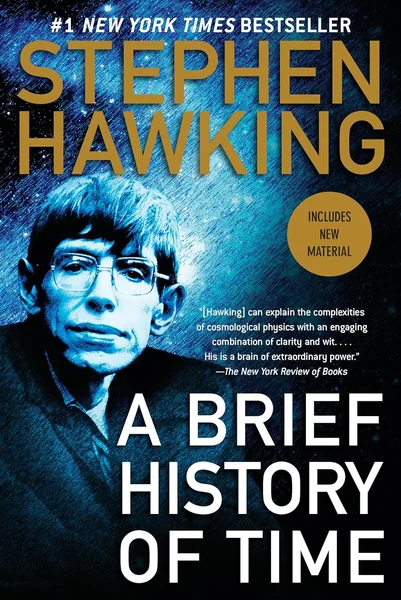
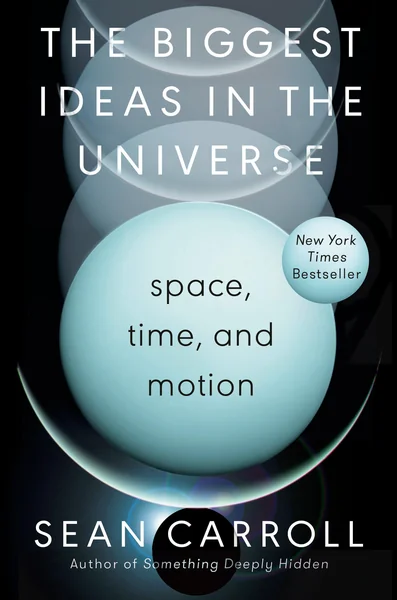
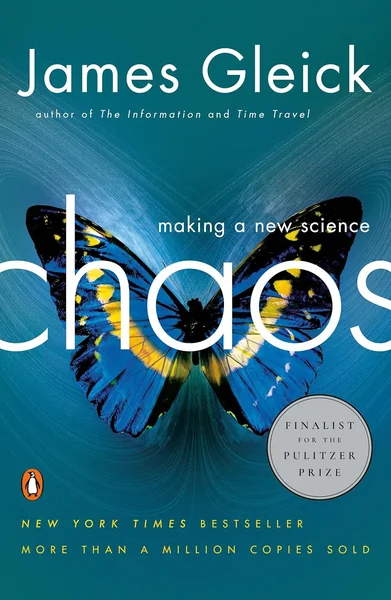
- Readers who enjoy The Order of Time will find strong companions in other landmark works of accessible physics writing. Stephen Hawking's A Brief History of Time is the most obvious predecessor — The Sunday Times positioned Rovelli as 'the new Stephen Hawking,' and the two books share an ambition to make frontier physics legible to general audiences. Sean Carroll's The Biggest Ideas in the Universe: Space, Time, and Motion covers overlapping territory with more mathematical scaffolding for readers who want deeper conceptual structure. James Gleick's Chaos: Making a New Science offers a similarly literary approach to a revolution in scientific thinking, and is a strong pick for readers who responded to Rovelli's blend of cultural texture and rigorous science. Rovelli's own Seven Brief Lessons on Physics and Helgoland round out the natural reading list for those wanting more from the same author, though these are not currently in the LuvemBooks catalogue.
- Who should read this?
- The Order of Time is designed for adult readers who are comfortable sitting with uncertainty and philosophical complexity — what critical coverage calls 'a deep, abstruse meditation.' It is a strong fit for anyone already curious about the nature of time, for readers who loved A Brief History of Time and want a more literary and personal treatment of similar territory, and for those who have read Rovelli's Seven Brief Lessons on Physics and want a longer, deeper dive into a single concept. It is less suited to readers seeking a step-by-step conceptual primer or those with no patience for literary and philosophical digression woven through their science.
- Tell me about the adaptation
- A film adaptation, freely inspired by The Order of Time, was directed by Liliana Cavani and released in 2023. Notably, it was developed in collaboration with Rovelli himself, giving the project direct authorial involvement. The film is described as freely inspired rather than a faithful scene-by-scene rendering of the book's arguments — it takes the book's themes as a departure point rather than a strict blueprint.
- What's the reading experience like?
- Critical coverage describes The Order of Time as a 'deep, abstruse meditation' — it is structured as an intellectual and even spiritual inquiry as much as a scientific one, weaving technical argument with philosophical digression, literary quotation (Proust, Anaximander, the Grateful Dead), and personal reflection. Kirkus Reviews noted plainly that while Rovelli's musings are 'astute and rewarding,' they 'do not make for an easy read.' The book's brevity is an asset for many readers, but its meditative pace means it rewards slow, deliberate engagement rather than rapid reading.
- How was it received critically?
- The Order of Time received widespread critical acclaim and significant recognition. TIME magazine named it one of its Ten Best Nonfiction Books of the Decade — a rare distinction for a work of popular physics. The Sunday Times called it 'a dazzling book' and dubbed Rovelli 'the new Stephen Hawking,' situating him within the lineage of physicists who write accessibly for general audiences. The Guardian praised the book's cultural texture and Rovelli's ability to make frontier physics vivid and concrete. The primary note of caution came from Kirkus Reviews, which acknowledged the book's rewards while warning that the meditative style does not make for an easy read.
Summarize this book
Follow up
Synthesized from verified book data & published reviews · How we review
Press Enter to ask. Answers come from our editorial Q&A — start typing to see related questions.
Age & Reading Level
Recommended age
Adult
Reading level
Adult
Skip if You want a step-by-step, expository primer on physics with no literary or philosophical digression.
Our Review
What the Book Actually Argues
Rovelli's Place in Science Writing
Strengths: Literary Ambition and Scientific Scope
Limitations: Accessibility and Demanding Reflection
Who This Book Is For
Sources & Further Reading
The key facts and claims in this review are grounded in the retrieved, verified sources listed below.
- Cited in this review
- 1
penguinrandomhouse.com
- 2
en.wikipedia.org
- 3
blog.12min.com
- Further reading
- 4
kirkusreviews.com
- 5
- 6
lifeclub.org
- 7
mcneilly.com
- 8
booksandnotes.substack.com
- 9
newbookrecommendation.com
Books like The Order of Time
Curated picks for readers who enjoyed The Order of Time, with our reasoning for each match.
If you liked The Order of Time
Why It’s Trending
Time Travel Fever on Netflix Is Sending Readers Back to Rovelli's Classic
With time travel content all over Netflix right now, readers are turning to The Order of Time to get the real physics behind the concept. Rovelli's accessible breakdown of what science actually says about time is a natural companion to all the on-screen mind-bending.