Published

Read Time

7 min read

Age & reading levelAges 8–12 · Middle grade
Reader rating

4.4

· 238 Amazon ratings
reader ratings, not a LuvemBooks score
Curated & edited by

LuvemBooks Editorial

How we create our reviews →
Share This Review
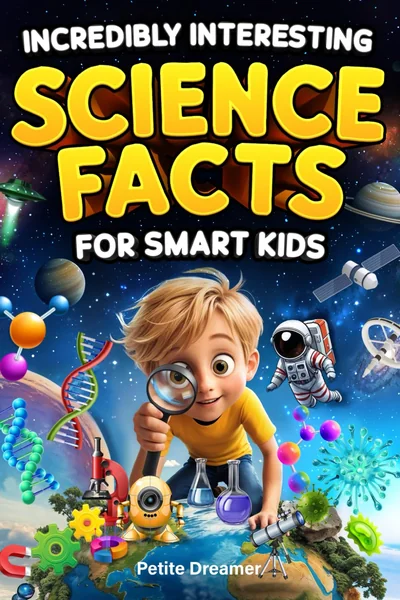
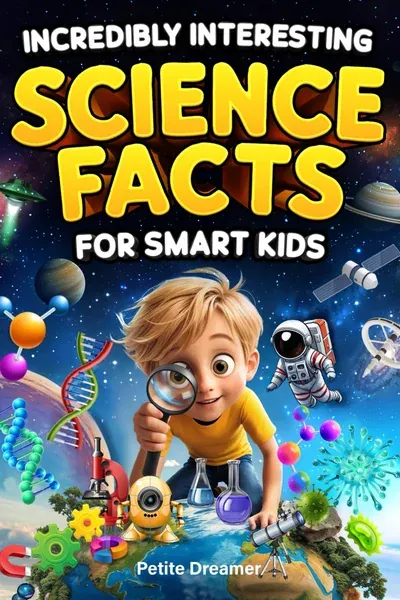
Incredibly Interesting Science Facts For Smart Kids: Think You Know Science? Think Again! — Here are 999+ Fascinating Science Facts: Mind-Blowing Discoveries & Inventions from Around the World by Petite Dreamer front cover

Our review

Incredibly Interesting Science Facts For Smart Kids by Petite Dreamer Review: A Wide-Ranging Trivia Trove for Curious Minds

Incredibly Interesting Science Facts For Smart Kids by Petite Dreamer packs 999+ science facts — spanning topics from the human body and space to the animal kingdom and world discoveries — into 133 pages aimed at readers aged 7 to 11. This review is based on the book's contents and structure as described by published sources, not hands-on use. For trivia-hungry kids who want to see the world differently, it offers a broad, accessible entry point into scientific curiosity.
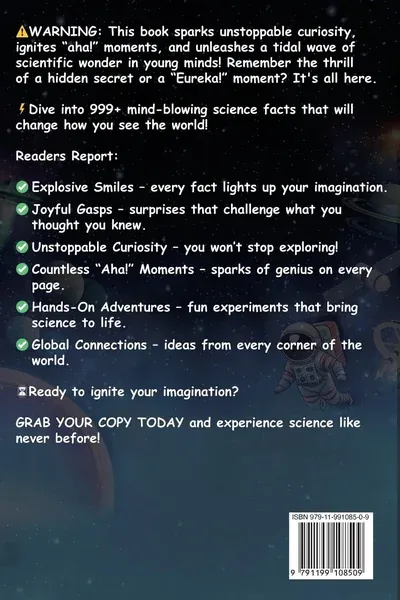
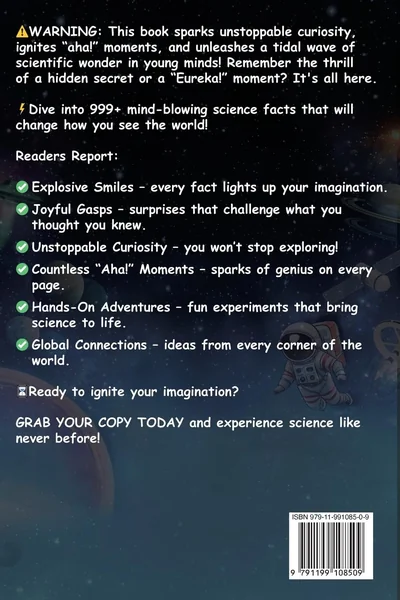
Back cover with warning text, reader testimonials with checkmarks, and call-to-action promoting science facts for children.Tap to enlarge

LuvemBooks Verdict

Best for

Curious children aged 7–11 who love collecting surprising facts to share, and parents or teachers looking for a low-stakes, high-variety way to spark science conversations at home or in the classroom.

Worth it if

Worth reading if you want a browsable, gift-friendly trivia reference that gives a curious 7-to-11-year-old hundreds of jumping-off points across animals, the human body, space, and inventions — and you're happy to pair it with deeper resources when a fact catches their interest.

Skip if

Skip it if you need substantive scientific explanation or fact-by-fact depth on any single topic, since 999+ entries compressed into 133 pages leaves almost no room for context or follow-up, and no independent critical reviews have assessed the accuracy of the entries.

4.4from 238 Amazon ratings— reader ratings, not a LuvemBooks score
Buy on Amazon
In This Review
  • What Works & What Doesn't
  • What the Book Is and What It Contains
  • Design Intent and Target Audience
  • Scope and Depth: The Core Trade-Off
  • Place in the Genre
  • Who Will Get the Most From It

What Works & What Doesn't

What Works
  • Broad topical scope covering animals, the human body, space, inventions, and more in a single volume
  • Targets the 7–11 age range with a question-and-challenge framing designed to spark curiosity
  • High fact count (999+) gives the book strong browsability and replay value as a reference
  • Self-published and independently produced, keeping the price point accessible for families and classrooms
What Doesn't
  • With 999+ facts compressed into 133 pages, individual topics receive only surface-level treatment — readers seeking depth on any single subject will need to look elsewhere
  • No named independent critical reviews are available to verify how accurately or age-appropriately the facts are presented in practice
This review covers the book's contents and reception as described by published sources; it does not reflect hands-on use or independent fact-checking of the entries.

What the Book Is and What It Contains

Incredibly Interesting Science Facts For Smart Kids is a non-fiction trivia reference published in May 2025 by Petite Dreamer, the same imprint credited as its author. Running to 133 pages in paperback, the book presents more than 999 science facts organised around the kind of questions its subtitle poses: Think You Know Science? Think Again! Topics span a wide swath of the natural and invented world — animal biology, the human body and brain, space and planets, and mind-blowing discoveries and inventions from around the world, as its full title signals. A sample entry noted in promotional material describes how cats possess an extra set of muscles in their paws that functions like an additional "toe," granting them grip and balance when climbing — the sort of counterintuitive, conversation-starting detail the book is built around.

Design Intent and Target Audience

The book is pitched at readers aged 7 to 11, and its structure reflects that audience. Rather than presenting science as a textbook discipline, it frames learning as a challenge — the title's direct address ("Think you know science?") positions each fact as a small revelation. The breadth of subject matter, from bugs and insects to sensory biology (including the human sense of smell and its remarkable range), is designed to give young readers repeated points of entry rather than a single sustained argument. As a browsable reference rather than a cover-to-cover read, it suits the short-attention sprint typical of middle-elementary readers.

Scope and Depth: The Core Trade-Off

The book's central structural choice — more than 999 facts in 133 pages — is also its most significant limitation as a learning tool. That ratio leaves very little room for explanation, context, or follow-up on any individual entry. A child captivated by a fact about feline anatomy or planetary science will find the book points outward rather than inward; it is designed to ignite questions, not answer them in full. Families and educators using it as a springboard to deeper research will get the most from it, while those expecting substantive scientific explanation may find the format frustrating. This scope-versus-depth tension is the honest trade-off any buyer should weigh.
Back cover with warning text, reader testimonials with checkmarks, and call-to-action promoting science facts for children.

Place in the Genre

Science trivia books for children are a crowded category, and Incredibly Interesting Science Facts For Smart Kids positions itself squarely within it — competing alongside well-established series from major publishers. What distinguishes it is straightforwardly its volume: the 999+ promise is a marketing differentiator. The book does not claim a curriculum alignment, a specific pedagogical framework, or endorsement from educators, and none has been documented. Its value, as the genre's conventions suggest, lies in informal, interest-led engagement rather than structured instruction.

Who Will Get the Most From It

For the right reader — a curious 7-to-11-year-old who delights in surprising facts and enjoys sharing them — this book is well-matched to its purpose. It works as a gift, a classroom addition, or a quiet-time browser. Parents and teachers looking for a low-stakes, high-variety way to get children talking about science will find the format does that job. Those seeking verified accuracy at a fact-by-fact level, or deeper dives into any one field, should treat this as a first step and pair it with more in-depth resources. Because no independent critical reviews have assessed the accuracy or pedagogical quality of the entries, that judgment remains with the adult purchasing it.

Age & Reading Level

Recommended age

Ages 8–12

Reading level

Middle grade

Best for: Ages 7+ — short, standalone entries and browsable format suit early-to-mid elementary readers; the 7–11 age band is the publisher's stated target.

Skip if You're looking for substantive scientific explanation or in-depth treatment of any single topic.

Sources & Further Reading

The key facts and claims in this review are grounded in the retrieved, verified sources listed below.

  1. 1