At a glance

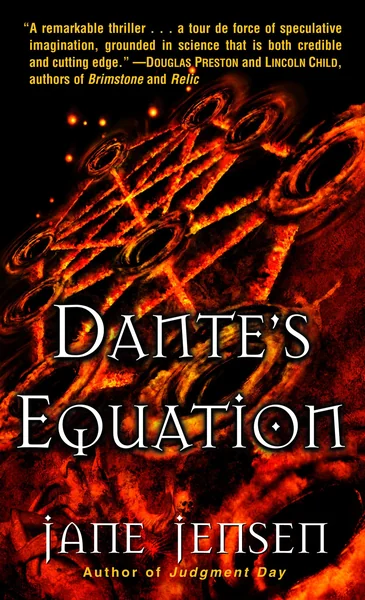
Dante's Equation
by Jane Jensen
LuvemBooks Verdict
Best for: Readers who prioritise ideas over character warmth and are drawn to ambitious speculative fiction that fuses Holocaust history, Kabbalistic mysticism, Torah-code scholarship, and multiverse physics into a single conceptual framework — the audience that already gravitates toward Philip K. Dick or early Neal Stephenson.
Worth it? Skip it? Read the full verdict →Ask LuvemBooks
Was this helpful?
- Is it worth reading?
- Dante's Equation rewards readers who come to fiction for ideas first and character warmth second. Its Philip K. Dick Award Special Citation signals recognized conceptual ambition, and John Case called it 'a combustible mixture of science and mysticism, a high-altitude thriller fizzing with intrigue.' However, Kirkus Reviews found the plot does not fully add up and described most of the ensemble as unsympathetic — and Jensen herself candidly described the book as a critical and commercial disappointment. It is worth reading for the right audience, but the Kirkus 'tough slog' verdict is a fair warning for general thriller readers.
- Similar books
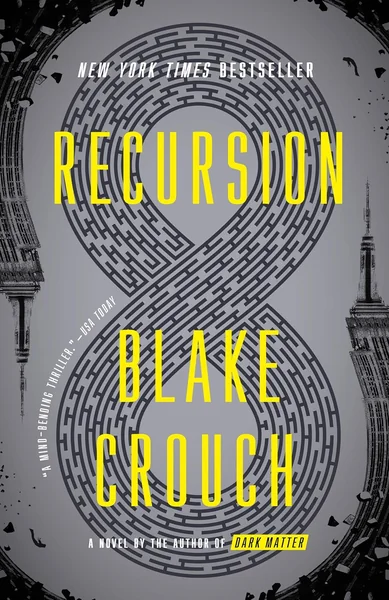
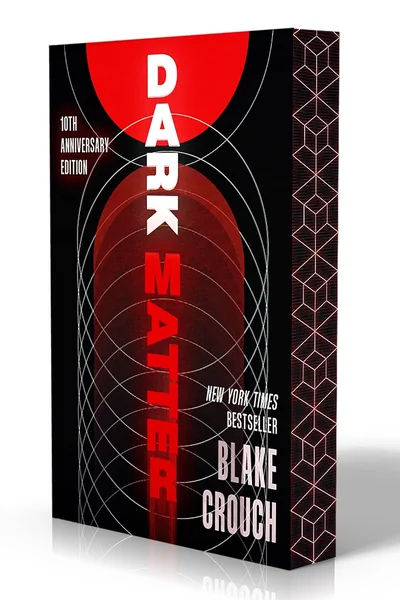
- Readers drawn to Dante's Equation's multiverse mechanics and high-concept speculation will find strong parallels in Blake Crouch's Recursion and Dark Matter, both of which pair propulsive thriller pacing with rigorous speculative premises. For science-driven wonder with a moral and philosophical dimension, Andy Weir's Project Hail Mary is a natural companion. Kazuo Ishiguro's Klara and the Sun offers a more literary but equally idea-first approach to big speculative questions. Jensen is also known as the creator of Gabriel Knight: Sins of the Fathers, which shares the novel's blend of occult research and investigative thriller structure, though that title is not currently in the LuvemBooks catalogue.
- Who should read this?
- Dante's Equation is designed for adult readers who prioritize ideas over character warmth — the audience that gravitates toward Philip K. Dick, early Neal Stephenson, or ambitious concept-driven SF. Its rare fusion of Holocaust history, Kabbalistic philosophy, and speculative multiverse physics gives it a distinct identity on the shelf. Readers who need airtight plotting or emotionally sympathetic protagonists should heed Kirkus Reviews' specific warning: most of the ensemble are unsympathetic and the plot mechanics do not fully cohere.
- About Jane Jensen
- Jane Jensen is an American video game designer and author.
- What are the main themes?
- The novel's central themes include the intersection of science and mysticism — specifically whether Kabbalistic cosmology and quantum physics describe the same underlying reality — and the moral geography of the soul, rendered through Kobinski's equation and the 'Dante's Wheel' diagram that maps each character's spiritual state to a distinct universe. Holocaust history and trauma are load-bearing: Kobinski's internment at Auschwitz is not backstory but the origin point of the entire plot. The novel also explores the ethics of dangerous knowledge, embodied by Calder Farris's mandate to acquire or suppress Kobinski's manuscript as a potential weapon.
- What is the Philip K. Dick Award?
- The Philip K. Dick Award is given annually to a distinguished science fiction work published in paperback original form in the United States; Dante's Equation received a Special Citation rather than the main award, a recognition that acknowledges exceptional conceptual ambition. The citation places the novel in the company of literary SF that takes serious intellectual risks, which aligns with the review's characterization of Jensen's premise as genuinely rare in its fusion of Kabbalistic mysticism, Torah-code scholarship, Holocaust history, and multiverse physics. Jensen herself, however, described the book as a critical and commercial disappointment despite the recognition.
Summarize this book
Follow up
Synthesized from verified book data & published reviews · How we review
Press Enter to ask. Answers come from our editorial Q&A — start typing to see related questions.
Age & Reading Level
Recommended age
Adult
Reading level
Adult
2 content notes · who it suits
Content to know about
Skip if you need airtight plot logic and emotionally warm, relatable characters to stay engaged across a multi-protagonist novel.
Editorial Review
Jane Jensen's science fiction adventure novel weaves Torah code, quantum physics, Holocaust history, and multiverse theory into an ambitious thriller that earned a Philip K. Dick Award Special Citation — even as Jensen herself described it as a critical and commercial disappointment.
Read the Full ReviewBooks like Dante's Equation
Curated picks for readers who enjoyed Dante's Equation, with our reasoning for each match.
If you liked Dante's Equation