A Generation of Sociopaths: How the Baby Boomers Betrayed America
by Bruce Cannon Gibney
At a glance
About the Author
Bruce Cannon Gibney1 book reviewed
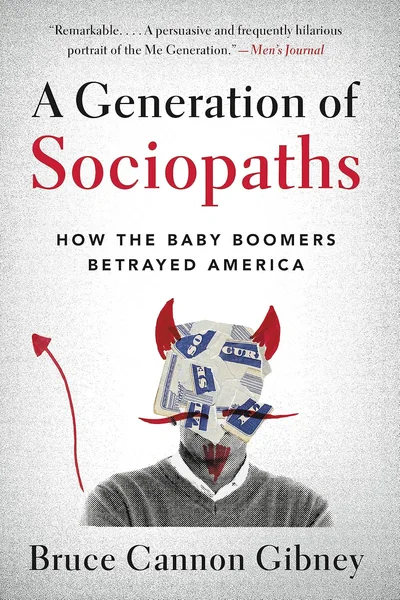
A Generation of Sociopaths
How the Baby Boomers Betrayed America
by Bruce Cannon Gibney
LuvemBooks Verdict
Best for: Readers — particularly younger generations — who want a data-driven, fiscally grounded polemic that names and quantifies how Boomer-era voting patterns shaped tax policy, entitlement structures, and public debt, and who are open to a cross-disciplinary argument that blends venture-capital quantitative thinking with social criticism.
Worth it? Skip it? Read the full verdict →Ask LuvemBooks
Was this helpful?
- Is it worth reading?
- For readers interested in American fiscal policy, generational politics, and the long-term consequences of entitlement and tax decisions, A Generation of Sociopaths offers a genuinely ambitious and data-grounded argument that Men's Journal called "remarkable." Gibney's cross-disciplinary approach — fusing investment-world quantitative rigor with social criticism — sets it apart from conventional generational commentary. The key caveat is that the book's central conceit, applying a clinical psychiatric diagnosis to an entire birth cohort, is inherently reductive; readers with backgrounds in sociology, psychology, or history may find the framework more rhetorically effective than analytically precise. Those seeking nuanced engagement with race, class, or regional stratification within the Boomer generation will encounter a recurring friction with the book's broad-brush framing.
- Similar books
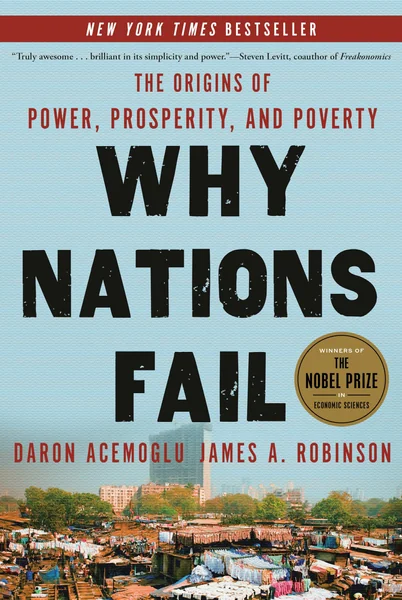
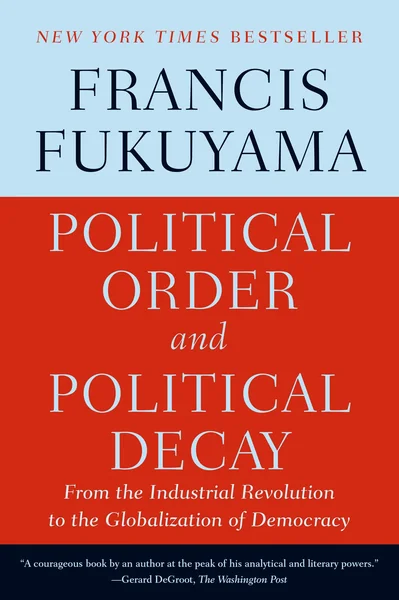
- Readers engaged by Gibney's argument about institutional decay and elite self-dealing will find strong companions in the curated titles below. Why Nations Fail by Daron Acemoglu and James A. Robinson examines how extractive political and economic institutions undermine long-term prosperity — a structural lens that complements Gibney's generational one. Francis Fukuyama's Political Order and Political Decay similarly traces how institutions deteriorate over time, offering a more historically sweeping framework. For a cultural-sociology perspective on civic disengagement that overlaps with Gibney's concerns, Robert D. Putnam's Bowling Alone is a natural pairing, and Christopher Lasch's The Revolt of the Elites covers elite withdrawal from shared institutions in ways that echo Gibney's critique. Neil Howe and William Strauss's The Fourth Turning offers an alternative generational framework, though its cyclical-history approach differs markedly from Gibney's data-driven indictment.
- Who should read this?
- A Generation of Sociopaths is best suited to general adult readers with an interest in American politics, fiscal policy, and generational economics who are willing to engage with a provocative and polemical argument. Its "wry, amusing style" makes it accessible beyond policy wonks, but readers who come in expecting academic precision — particularly in the book's application of psychiatric criteria to a birth cohort — may find the framework more rhetorical than rigorous. It is especially valuable for younger Americans curious about the structural roots of entitlement debt and public-institution decline, and for anyone looking for a data-grounded alternative to cultural hand-wringing about generational conflict.
- What are the main themes?
- The book's central themes are intergenerational economic justice, fiscal irresponsibility, and the corrupting dynamics of democratic self-interest. Gibney argues that Boomer voting patterns produced measurable harm to public institutions — reshaping tax policy, entitlement structures, and national debt in ways that benefited one generation at concrete cost to the next. Underlying these policy arguments is a psychological framework: Gibney uses DSM-V criteria for antisocial personality disorder to characterize the generation's collective behavior as lacking empathy, prudence, and respect for facts. A secondary but important theme, surfaced by published criticism, is the book's underexplored tension between generational diagnosis and the race- and class-stratified reality of who actually benefited from Boomer-era policies.
- Where should I start with Gibney?
- A Generation of Sociopaths is Gibney's most widely discussed work and the natural starting point for new readers — its argument is self-contained and its critical reception (including attention from Men's Journal and Fortune) makes it the most documented entry into his thinking. Readers who respond to his voice and analytical style may then turn to The Nonsense Factory, his follow-up examination of the American legal system, though that title is not currently in the LuvemBooks catalogue.
- How was it received?
- The book drew pointed attention across a range of outlets: Men's Journal called it "remarkable," Fortune labeled it "controversial," and critics noted it was written in a "wry, amusing style." Commentary at military-history.us described it as "at a minimum thought provoking" while conceding it would be controversial, and noted that the underlying fiscal crisis Gibney identifies is real regardless of generational blame. Published responses also pushed back on the generational frame, arguing that the behaviors Gibney identifies are better understood through the lens of race and class than through a birth-cohort diagnosis — a critique that points to a genuine architectural tension in the book.
Summarize this book
Follow up
Synthesized from verified book data & published reviews · How we review
Press Enter to ask. Answers come from our editorial Q&A — start typing to see related questions.
Age & Reading Level
Recommended age
Adult
Reading level
Adult
2 content notes · who it suits
Content to know about
Skip if you want a nuanced, academically rigorous analysis of race, class, and regional differences within the Boomer generation rather than a broad-brush generational indictment.
Editorial Review
A Generation of Sociopaths: How the Baby Boomers Betrayed America is a work of social and economic analysis by venture capitalist Bruce Cannon Gibney, arguing that the Baby Boomer generation systematically enriched itself at the expense of future Americans through self-serving policy choices. Called "remarkable" by Men's Journal and "controversial" by Fortune, it is among the more combative generational critiques in recent American political writing.
Read the Full ReviewBooks like A Generation of Sociopaths
Curated picks for readers who enjoyed A Generation of Sociopaths, with our reasoning for each match.
If you liked A Generation of Sociopaths