BOOKS
Published

Read Time

3 min read

Curated & edited by

LuvemBooks Editorial

How we create our reviews →
Share This Review

The Unowed Universe by Tobias M. Kohl Review: Ambitious Science-Grounded Philosophy for Today

The Unowed Universe: A 21st-Century Philosophy Grounded in Science by Tobias M. Kohl is a sweeping philosophical work published by Table Bot Editions in April 2026, in which Kohl — an independent researcher holding a PhD in molecular biology with a background in pharmaceutical R&D — constructs a science-informed metaphysical framework that engages the philosophy of science, naturalized Kantian epistemology, and broader questions about the nature of reality. At 692 pages, it is a demanding, book-length argument rather than a survey, designed for readers willing to follow a sustained and technically ambitious inquiry.

LuvemBooks Verdict

Best for

Readers with existing grounding in both philosophy (particularly Kantian epistemology and philosophy of science) and the physical sciences who are drawn to ambitious, system-building works that treat empirical findings — especially from physics and biology — as genuinely shaping philosophical conclusions rather than as illustration.

Worth it if

Worth engaging with if you're interested in what a scientifically disciplined, cross-traditional philosophical framework looks like when built from outside the professional academy — particularly around the question of what Kantian epistemology can survive contact with modern physics.

Skip if

Skip it if you're a general reader without background in philosophy or the physical sciences, a specialist philosopher expecting deep engagement with the granular state of professional debates, or a digital reader who depends on Kindle accessibility features like Word Wise or X-Ray.

No substantive critical reviews of this specific title were found in the retrieved sources. Associated material on PhilArchive confirms the book's core thesis — the naturalization of Kantian epistemology developed in Chapter 4 — and notes that the philosophical argumentation was developed through iterative dialogue with an AI assistant, a methodology the author acknowledges openly.

Sources: PhilArchive
In This Review
  • What Works & What Doesn't
  • What the Book Is and What It Argues
  • An Unusual Author Profile
  • Scope, Structure, and Engagement with Existing Debates
  • Genuine Strengths
  • Limitations and Who May Struggle

What Works & What Doesn't

What Works
  • Constructs a genuinely science-informed philosophical framework, engaging empirical findings — such as general relativity's refutation of Kantian a priori geometry — as substantive inputs rather than decorations
  • Cross-traditional scope engages both analytic and continental philosophy, allowing access to a wider range of conceptual resources than most contemporary works in either lineage
  • At 692 pages, the book develops its argument at full length, building a sustained philosophical system rather than making only isolated interventions
  • The author's PhD background in molecular biology and pharmaceutical R&D brings an empirically trained perspective rarely found in philosophical treatments of metaphysics and epistemology
  • Transparent about its methodology, including the use of AI-assisted philosophical dialogue in developing its arguments
What Doesn't
  • Demands significant prior background in both philosophy and the physical sciences — general readers or those new to either field will find the argument difficult to follow
  • Published outside the mainstream academic apparatus by an independent researcher at his own imprint, which may prompt specialist readers to scrutinize the depth of engagement with professional philosophical literature
  • The Kindle Print Replica format does not support enhanced typesetting, Word Wise, X-Ray, or Page Flip, limiting accessibility and navigability for digital readers
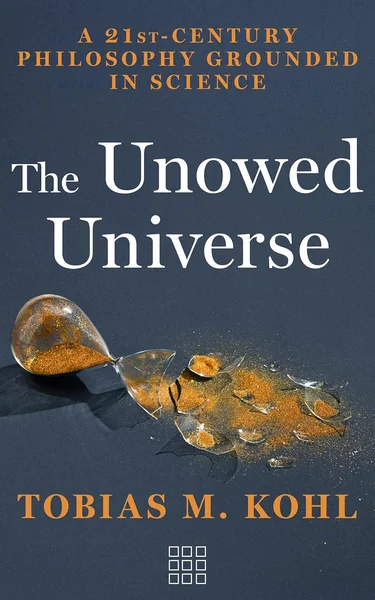
A serious, sprawling philosophical treatise, The Unowed Universe brings a natural-scientist's rigour to questions that have divided analytic and continental traditions for generations.
The Unowed Universe: A 21st-Century Philosophy Grounded in Science by Tobias M. Kohl front cover

What the Book Is and What It Argues

The Unowed Universe: A 21st-Century Philosophy Grounded in Science is Tobias M. Kohl's attempt to build a coherent philosophical system fitted to what twenty-first-century physics and biology actually tell us about reality. Kohl's central ambition, as reflected in work associated with the book on PhilArchive, is to naturalize Kantian epistemology — to rescue certain Kantian commitments about the structure of knowledge while reconciling them with the hard empirical facts that have overturned others. The book's treatment of Kant is illustrative: it takes seriously the historical damage done to Kant's a priori geometry by Einstein's general relativity — which showed that space curves in the presence of mass and energy, making geometry empirical rather than innate — and uses that episode as a foundation for rethinking what a scientifically defensible philosophy can look like. Chapter 4 is specifically noted, in associated scholarship, as developing this naturalization thesis at length.

An Unusual Author Profile

Kohl is not a professional academic philosopher. He holds a doctoral degree in molecular biology and has worked in pharmaceutical R&D, and he self-identifies as an independent researcher. This biographical fact is directly relevant to the book's character: its philosophical positions emerge from someone trained to weigh empirical evidence and to follow scientific argument wherever it leads, rather than from someone primarily socialized within philosophy's internal debates. The book is published by Table Bot Editions, Kohl's own imprint, and associated papers on PhilArchive note that some of his philosophical argumentation was developed through iterative dialogue with an AI assistant — a methodology the author acknowledges openly, and one that itself raises questions about the future of collaborative intellectual work.

Scope, Structure, and Engagement with Existing Debates

At 692 pages, The Unowed Universe is a substantial undertaking. The scope is genuinely broad: the book engages philosophy of science, metaphysics, and epistemology, and it positions itself explicitly in dialogue with both analytic and continental traditions rather than planting its flag exclusively in either camp. This cross-traditional reach is relatively rare — most contemporary anglophone philosophy stays firmly within one lineage — and it allows Kohl to draw on a wider range of conceptual resources. The sustained length also means the book can develop its arguments in stages rather than relying on compression, which suits the ambition of constructing an entire philosophical framework rather than making a single targeted intervention.

Genuine Strengths

The book's most distinctive strength is its commitment to keeping scientific results genuinely in view, rather than treating them as occasional ornaments to an argument that proceeds independently. The treatment of general relativity and Kantian geometry exemplifies this: rather than dismissing Kant or simply defending him, Kohl uses physics as a diagnostic tool to identify what in Kant can be salvaged and what cannot. This approach — taking the science seriously enough to let it reshape philosophical conclusions — distinguishes the work from philosophy that invokes scientific terminology without engaging scientific content. Readers in philosophy of science, and scientists drawn to foundational questions, are the audience most likely to find this synthesis rewarding.

Limitations and Who May Struggle

A work of this length, written outside the mainstream academic publishing apparatus and developed partly through AI-assisted dialogue, will inevitably face questions about the depth and consistency of its engagement with the professional literature in philosophy. Readers who are specialist philosophers in metaphysics or epistemology may find points where the book's engagement with existing scholarship does not fully reckon with the granular state of those debates. Additionally, the 692-page scope and the technical demands of moving between philosophy of science, Kantian epistemology, and broader metaphysics means this is not a text for general readers looking for an accessible introduction to these topics. Those without some background in both philosophy and the physical sciences will find the argument difficult to follow, and the Print Replica Kindle format — which does not support enhanced typesetting or Word Wise — adds a further friction for digital readers who rely on those accessibility features.

Sources & Further Reading

The key facts and claims in this review are grounded in the retrieved, verified sources listed below.

  1. 1

    edinburghuniversitypress.com

  2. 2
  3. 3