
8 min read
4.4
· 4,216 Amazon ratingsShare This Review
The Second Mountain by David Brooks Review: A Stirring Case for Commitment
David Brooks's The Second Mountain argues that a meaningful life is built not on individual achievement but on four commitments — to spouse and family, vocation, philosophy or faith, and community. Critical coverage called this map for "escaping the prison of self" stirring.
LuvemBooks Verdict
Best for
Readers at or past a "first mountain" reckoning — the achievement that didn't satisfy or the life event that broke a plan open — who are receptive to a serious, story-built moral argument that commitment, not freedom, is the missing ingredient.
Worth it if
It's worth reading if you're open to a sermon-inflected blend of self-help and social critique whose memorable two-mountain metaphor and four concrete commitments — family, vocation, faith or philosophy, community — offer a genuine framework rather than quick fixes.
Skip if
Evidence-minded readers wanting data-driven proof, or secular readers after a brisk, step-by-step how-to, should skip it — the case rests on narrative and moral reasoning in a spiritual vocabulary of surrender, sin, and vocation that is more inspirational than actionable.
What readers & critics say
Kirkus Reviews frames the book as Brooks's "blueprint for moral transformation" against the hyperindividualism he links to loneliness and tribalism, while The Guardian notes it builds its case through stories of people who committed to a spouse, community, faith, or philosophy — even reading his reparations stance through that moral lens. Bookmarks is more divided, flagging a "judgmental and preachy" tone alongside "potentially life-changing lessons," and a StoryGraph reader found it engaging but felt it "could probably have been a long form essay rather than a book."
“The book builds its case through stories of people who took the key step toward the second mountain, which is commitment.”
— The Guardian“He sets out to create a blueprint for moral transformation by eschewing the hyperindividualism we are taught to champion as children.”
— Kirkus ReviewsAge & Reading Level
Recommended age
Adult
Reading level
Adult
2 content notes · who it suits
Content to know about
Skip if you want a data-driven, step-by-step self-help manual rather than a story-built moral argument.
In This Review
- What Works & What Doesn't
- The Two-Mountain Metaphor
- The Four Commitments
- Social Commentary, Not Just Self-Help
- Strengths and Limitations
- Who It Is For
What Works & What Doesn't
What Works
- A clear, memorable two-mountain metaphor organizes the whole argument about fulfillment versus meaning
- Structured around four concrete commitments — spouse and family, vocation, philosophy or faith, and community
- Builds its case through real-life stories of committed lives rather than pure abstraction, per The Guardian
- Doubles as substantive social commentary on hyper-individualism and the torn social fabric
- Critics called it stirring and, in a separate notice, Brooks's best book yet
What Doesn't
- Argument rests on stories and moral reasoning rather than data, which may under-persuade evidence-minded readers
- Blends sermon, self-help, and social criticism; readers wanting a single, practical register may find it uneven
- The vocabulary of surrender, sin, and vocation asks openness to spiritual framing that secular readers may not share
- Less a step-by-step manual than a moral case — readers after quick, actionable techniques may find it inspirational but not actionable
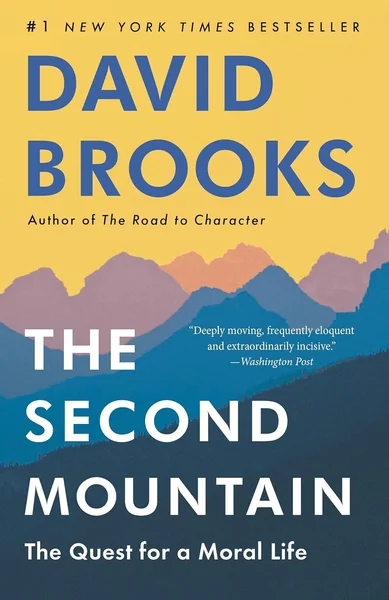
The Two-Mountain Metaphor
The Four Commitments
Social Commentary, Not Just Self-Help
Strengths and Limitations
Who It Is For
Frequently Asked Questions
Sources & Further Reading
The key facts and claims in this review are grounded in the retrieved, verified sources listed below.
- Cited in this review
- 1
publishersweekly.com
- 2
- 3
barnesandnoble.com
- Further reading
- 4
- 5
- 6
spectrummagazine.org
- 7
beta.thestorygraph.com
- 8
penguinrandomhouse.com
Related Reviews
Reviews of books we picked for readers who enjoyed The Second Mountain.
Reader Comments
No comments yet
Be the first to share your thoughts!