9 min read
4.8
· 36,592 Amazon ratingsShare This Review
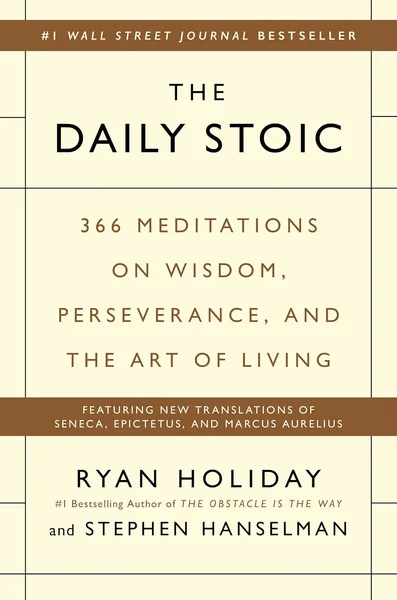
The Daily Stoic by Ryan Holiday & Stephen Hanselman Review: A Year of Ancient Wisdom, Modernly Translated
The Daily Stoic: 366 Meditations on Wisdom, Perseverance, and the Art of Living is a rigorously structured daily devotional that brings Stoic philosophy into the rhythms of contemporary life, debuting on both the USA Today and Wall Street Journal bestseller lists — the latter ranking it as high as #2 overall and keeping it there for eleven weeks — and has since sold more than two million copies.
 Tap to enlarge
LuvemBooks Verdict
Best for
Practically minded readers who want a structured, year-long introduction to Stoic philosophy — applied daily to questions of resilience, decision-making, and self-discipline — without needing any prior grounding in ancient thought.
Worth it if
You want a daily discipline rather than a cover-to-cover read, and you're drawn to the idea of encountering one focused Stoic idea each morning across an entire calendar year.
Skip if
You're already well-versed in primary Stoic texts such as the Meditations, Discourses, or Moral Letters — the one-page-per-day format won't offer the sustained philosophical depth you're likely looking for.
What readers & critics say
According to Wikipedia, the book debuted simultaneously on the USA Today and Wall Street Journal bestseller lists, ranking as high as #2 on the WSJ list across an eleven-week run, and has since sold over two million copies. Gregg Borodaty's book review blog places it firmly in a "Must Read" category, describing it as a tool for the pursuit of self-mastery, perseverance, and wisdom.
Sources: Wikipedia, greggborodaty.comAsk LuvemBooks
Was this helpful?
- Is it worth reading?
- For readers who want a structured, year-long introduction to Stoic philosophy applied to daily life, The Daily Stoic offers a well-designed and commercially proven framework — it debuted simultaneously on the USA Today and Wall Street Journal bestseller lists, ranked as high as #2 on the WSJ list across an eleven-week run, and has crossed two million copies sold. Gregory Hays, the translator of The Modern Library's edition of Marcus Aurelius' Meditations, called it 'a generous gift of guidance on modern living culled from a canon of wisdom hatched long ago' — an endorsement with real scholarly weight. The honest caveat is that the one-page-per-day format intentionally limits depth: readers seeking sustained philosophical argumentation, or those already fluent in primary Stoic texts like the Discourses or Moral Letters, may find the commentary layer less revelatory than newcomers will.
- Similar books
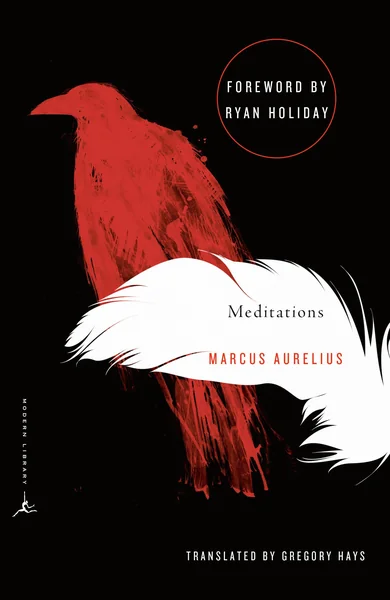
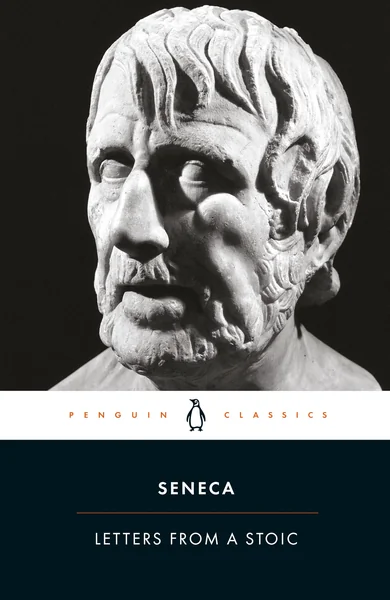
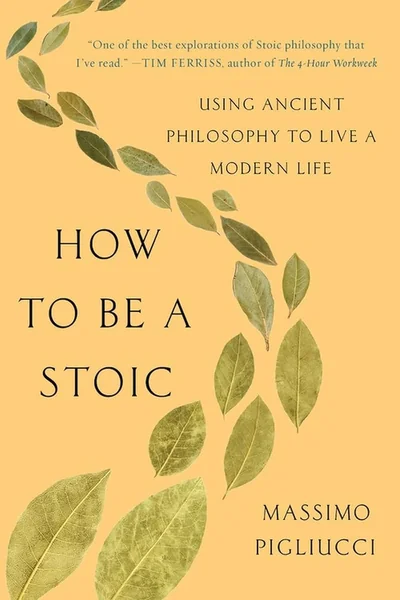
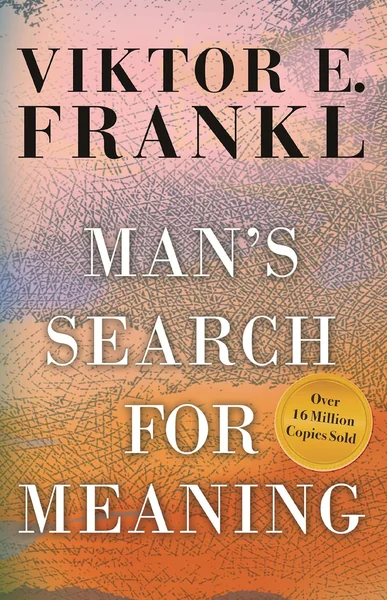
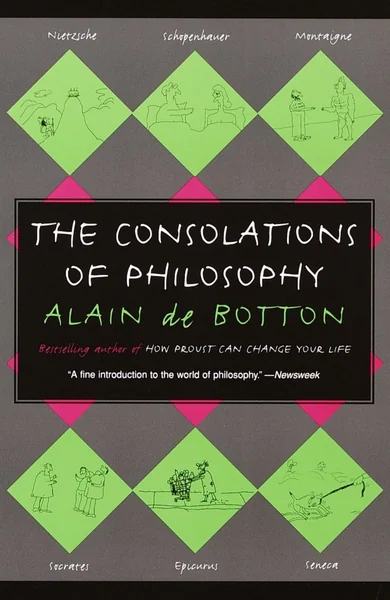
- Readers drawn to The Daily Stoic will find natural companions in the primary Stoic texts it draws from: Marcus Aurelius' Meditations and Seneca's Letters from a Stoic are the two most direct sources — reading them alongside or after Holiday and Hanselman deepens the ideas introduced in the daily entries. For a more structured modern treatment of Stoic practice, Massimo Pigliucci's How to Be a Stoic: Using Ancient Philosophy to Live a Modern Life offers a philosophically rigorous companion volume. Viktor E. Frankl's Man's Search for Meaning shares The Daily Stoic's concern with resilience, meaning-making, and self-governance under adversity, while Alain De Botton's The Consolations of Philosophy offers another accessible bridge between ancient wisdom and contemporary life.
- Who should read this?
- The Daily Stoic is aimed at practically minded readers who want a structured, year-long engagement with ancient philosophy applied to modern decision-making, resilience, and self-governance — not at the academic, but at someone seeking a daily discipline. The publisher's own framing is deliberately eclectic, citing historical practitioners as distant as George Washington and Frederick the Great alongside contemporary Super Bowl-winning coaches and CEOs. It is particularly well-suited to readers who have dipped into Stoicism without a framework for sustained engagement, as well as to those who have never encountered it at all. Deeply experienced readers of primary Stoic texts may find it more useful as a daily ritual companion than as a source of new philosophical insight.
- What are the main themes?
- The Daily Stoic is organized thematically across twelve months, with its sustained focus on wisdom, perseverance, self-discipline, and mindfulness as applied to contemporary life. The book treats Stoicism not as an academic discipline but as a practical framework for modern decision-making and self-governance, drawing on a wide roster of thinkers — from the emperor-philosopher Marcus Aurelius and the statesman-playwright Seneca to the slave-turned-philosopher Epictetus and lesser-known voices like Musonius Rufus and Cleanthes. Recurring Stoic concerns — the dichotomy of control, the value of reason over passion, resilience in the face of adversity — thread through the year's entries in a sequence designed to build on one another rather than present ideas in random order.
- What's the reading experience like?
- Reading The Daily Stoic as intended means committing to a single page each morning: one translated quotation from a Stoic philosopher, followed by a short meditation connecting that idea to daily life. The entries resolve quickly by design, and the thematic organization across months means ideas build on one another rather than arriving as random aphorisms. Readers who attempt to read it cover-to-cover will find the short-form entries resist sustained argumentation — the format rewards patience and daily ritual over binge reading. An audiobook edition, notably published by Tim Ferriss, is also available for those who prefer audio.
- How was it received?
- The Daily Stoic debuted simultaneously on the USA Today and Wall Street Journal bestseller lists, ranking as high as #2 overall on the WSJ list and holding a position there for eleven weeks — a strong commercial debut for a philosophy-rooted title. It has since sold more than two million copies, demonstrating rare staying power. Gregory Hays, the translator of The Modern Library's edition of Marcus Aurelius' Meditations, called it 'a generous gift of guidance on modern living culled from a canon of wisdom hatched long ago' — praise that carries scholarly credibility. The book was also covered by the New York Times, the Huffington Post, Business Insider, and The Guardian, reflecting broad cultural reach beyond the philosophy niche.
Summarize this book
Follow up
Synthesized from verified book data & published reviews · How we review
Press Enter to ask. Answers come from our editorial Q&A — start typing to see related questions.
Age & Reading Level
Recommended age
Adult
Reading level
Adult
who it suits
Skip if you're looking for sustained philosophical argumentation or a scholarly treatment of Stoic thought rather than a brief daily meditation format.
Our Review
What the Book Actually Is
Its Place in the Stoicism Revival
What It Does Well
Who May Find It Limiting
Who This Book Is For
Sources & Further Reading
The key facts and claims in this review are grounded in the retrieved, verified sources listed below.
- Cited in this review
- 1
en.wikipedia.org
- 2
- Further reading
- 3
- 4
- 5
- 6
- 7
Books like The Daily Stoic
Curated picks for readers who enjoyed The Daily Stoic, with our reasoning for each match.
If you liked The Daily Stoic