
9 min read
Share This Review
Mimesis as Make-Believe by Kendall Walton Review: A Landmark Work in Analytic Aesthetics
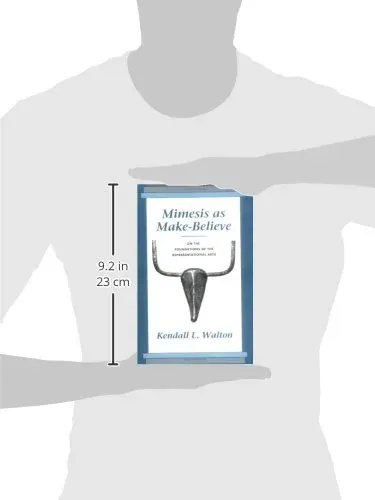
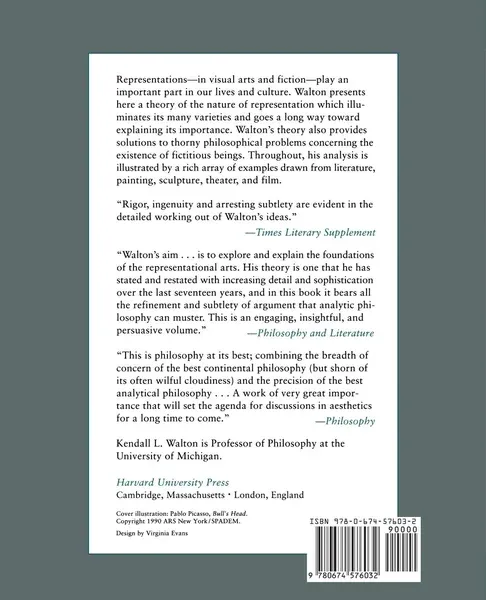
Kendall Walton's Mimesis as Make-Believe: On the Foundations of the Representational Arts is a major work of analytic philosophy of art, originally published by Harvard University Press in 1990 and later issued in a reprint paperback edition. By grounding the theory of representation in the logic of children's make-believe, Walton constructs a unified framework that spans literature, painting, sculpture, theater, and film — making it essential reading for philosophers of art, aestheticians, and theorists of fiction.
 Tap to enlarge
LuvemBooks Verdict
Best for
Philosophers and advanced graduate students working in analytic aesthetics, philosophy of mind, or philosophy of language who need a rigorous, unified theoretical account of representation across the arts.
Worth it if
You are prepared to engage with dense, systematically argued analytic philosophy and want a single framework that addresses fiction, depiction, the ontology of fictional entities, and emotional response to art in one coherent sweep.
Skip if
You are a general reader, an undergraduate new to philosophy of art, or a humanities scholar (in film studies, literary theory, or art history) who is not yet comfortable with analytic methodology and its highly technical vocabulary — the investment required to unlock the payoffs is substantial.
What readers & critics say
David Novitz, writing in Philosophy and Literature (as summarised on muse.jhu.edu), describes the theory as bearing "all the refinement and subtlety of argument that analytic philosophy can muster," noting that Walton's aim is to explore and explain the foundations of the representational arts. First Person Scholar notes the broad applicability of the make-believe framework, observing that it opens productive new lenses even beyond the arts Walton explicitly addresses.
Sources: muse.jhu.edu (Philosophy and Literature, David Novitz), firstpersonscholar.comLook inside the book
Preview the actual pages, via Google BooksIn This Review
- What Works & What Doesn't
- What the Book Actually Argues
- Scope and Ambition Across the Arts
- Philosophical Precision and a Distinctive Technical Vocabulary
- Significance in the Field
- Who This Book Is For
What Works & What Doesn't
What Works
- Constructs a unified theory of representation spanning literature, painting, sculpture, theater, and film from a single, coherent foundational analogy
- Addresses a broad range of fundamental questions — fiction vs. Nonfiction, depiction vs. Description, ontology of fictional entities — within one framework
- Walton's careful, explicit management of his own technical vocabulary reduces the ambiguity common in aesthetics
- Published and kept in print by Harvard University Press, reflecting its sustained standing as a reference point in analytic aesthetics
What Doesn't
- Walton's highly technical use of terms like 'representation' diverges from ordinary usage in ways that require significant investment from readers outside analytic philosophy
- The book's density and systematic argumentation make it unsuitable as an entry point for general readers or students new to philosophy of art
What the Book Actually Argues
Scope and Ambition Across the Arts
Philosophical Precision and a Distinctive Technical Vocabulary
Significance in the Field
Who This Book Is For
Frequently Asked Questions
Sources & Further Reading
The key facts and claims in this review are grounded in the retrieved, verified sources listed below.
- Cited in this review
- 1
- 2
- Further reading
- 3
hup.harvard.edu
- 4
- 5
- 6
firstpersonscholar.com
- 7
Related Reviews
Reviews of books we picked for readers who enjoyed Mimesis and Make-Believe.



Reader Comments
No comments yet
Be the first to share your thoughts!