At a glance
LuvemBooks Verdict
Best for: Dog owners and training enthusiasts who want to understand the underlying communication dynamics of the human-canine relationship — particularly the role their own primate instincts play in confusing or frustrating their dog — rather than those seeking a step-by-step obedience drill program.
Worth it? Skip it? Read the full verdict →Ask LuvemBooks
Was this helpful?
- Is it worth reading?
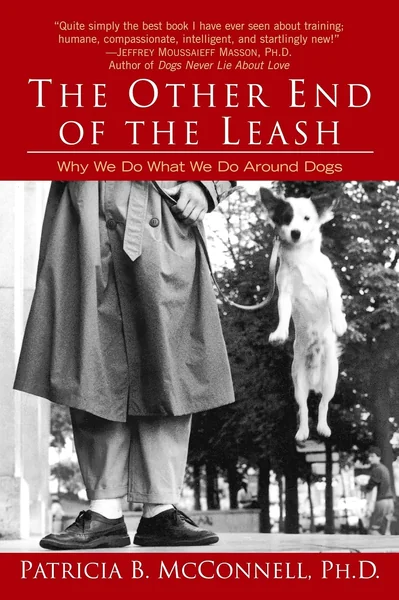
- For dog owners who want to understand why their dog responds the way it does — rather than just learning a sequence of commands — The Other End of the Leash is one of the most enduringly recommended titles in canine behavior writing. Its recognition as a Dog World Top 12 Training and Behavior Book in 2010, years after its initial publication, points to sustained relevance rather than a brief bestseller spike, and dog training educators have cited it as a text they routinely recommend to students in beginner obedience classes. The main caveat is that readers seeking a step-by-step obedience manual may find the book's broader focus on relationship dynamics a mismatch for their immediate needs.
- Similar books
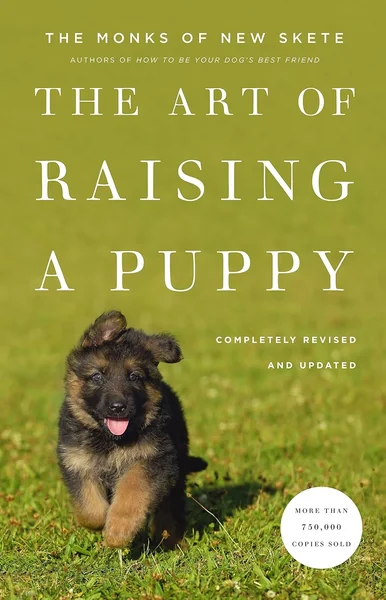
- Readers who enjoy The Other End of the Leash tend to gravitate toward books that blend behavioral science with practical guidance. Zak George's Dog Training Revolution by Zak George and Dina Roth Port offers a modern, force-free training approach that shares McConnell's skepticism of dominance-based methods. The Art of Raising a Puppy by the Monks of New Skete takes a relationship-centered view of early canine development. Alexandra Horowitz's Inside of a Dog: What Dogs See, Smell, and Know covers similar ground on how dogs perceive the world from a scientific perspective. For readers whose interest extends to feline behavior, Cat Sense by John Bradshaw and Think Like a Cat by Pam Johnson-Bennett apply comparable science-grounded frameworks to cats.
- Who should read this?
- The Other End of the Leash is best suited to dog owners — whether first-time or experienced — who want a deeper understanding of the communication dynamics underlying their relationship with their dog, rather than a recipe-style training manual. It is particularly valuable for owners who have tried conventional training and found things still going wrong, since McConnell's lens on human behavior as the variable often surfaces answers that purely dog-focused approaches miss. Dog training students and educators have also cited it as a recommended text, pointing to its utility beyond casual readership.
- About Patricia B. McConnell
- Patricia Bean McConnell, Ph.D., CAAB Emeritus is an ethologist who consulted with pet dog and cat owners for over thirty years regarding serious behavioral problems. She has given seminars on companion animal behavior both domestically and internationally, and has written several books on training and behavior relating to dogs.
- What are the book's key arguments?
- McConnell's central argument is that primates and canids evolved fundamentally different communication systems, and that this mismatch is the root cause of most human-dog misunderstandings. She illustrates this concretely: the human embrace, offered as affection, can feel threatening to a dog because wrapping limbs around another animal carries a different meaning in canine communication. She advocates games of fetch over rough-and-tumble wrestling as safer forms of play, and argues pointedly against dominance-based training, which she contends misreads both dog psychology and the training relationship. She is equally direct in criticizing puppy mills, calling them "dog factories" that produce damaged animals — positions she takes without hedging.
- Is this a training manual or a theory book?
- The Other End of the Leash sits closer to the conceptual end of the spectrum than a step-by-step training manual — its emphasis is on understanding the relationship and its underlying communication dynamics rather than drilling specific commands. That said, it is not purely abstract: McConnell offers concrete practical guidance throughout, such as recommending fetch over wrestling and explaining how to send clearer signals to a dog. Readers who want a narrow, command-by-command training program are advised to pair it with a more technique-focused resource.
Summarize this book
Follow up
Synthesized from verified book data & published reviews · How we review
Press Enter to ask. Answers come from our editorial Q&A — start typing to see related questions.
Age & Reading Level
Recommended age
Adult
Reading level
Adult
who it suits
Skip if you want a step-by-step obedience training manual with drill-by-drill command instruction.
Editorial Review
Patricia B. McConnell's The Other End of the Leash reframes the human-dog relationship by turning the analytical lens on human behavior rather than canine behavior alone, offering dog owners a rigorously credentialed, anecdote-rich guide to understanding why the signals they send are so often misread by the animals they love.
Read the Full ReviewBooks like The Other End of the Leash
Curated picks for readers who enjoyed The Other End of the Leash, with our reasoning for each match.
If you liked The Other End of the Leash