Patricia Bean McConnell, Ph.D, CAAB Emeritus is an ethologist who consulted with pet dog and cat owners for over thirty years regarding serious behavioral problems, has given seminars on companion animal behavior both domestically and internationally, and has written several books on training and behavior relating to their dogs.
McConnell highlights research showing that tail wagging is lateralized according to emotional state. Dogs wag with a bias toward the right side when experiencing positive approach emotions toward owners, but bias toward the left when feeling anxiety or withdrawal from unfamiliar dogs.
Looming over dogs triggers defensive reactions
McConnell explains that leaning forward with weight shifted over a dog is perceived as looming, an assertive or threatening posture in canine body language. Humans frequently do this unconsciously when trying to be affectionate, creating stress rather than comfort.
Dogs prioritize visual signals over verbal cues
McConnell points out that while humans are vocal primates obsessed with talking, dogs are visual communicators who prioritize physical body language over spoken words. In experiments pitting visual signals against acoustic ones, dogs consistently follow the visual cue.
The 'guilty look' is appeasement behavior
McConnell cites research showing that a dog's classic 'guilty expression' is not an admission of wrongdoing, but an appeasement gesture triggered by the owner's angry voice and body language. Dogs exhibit the exact same guilty look when scolded even if they never touched the forbidden treat.
Trauma and PTSD manifest similarly across species
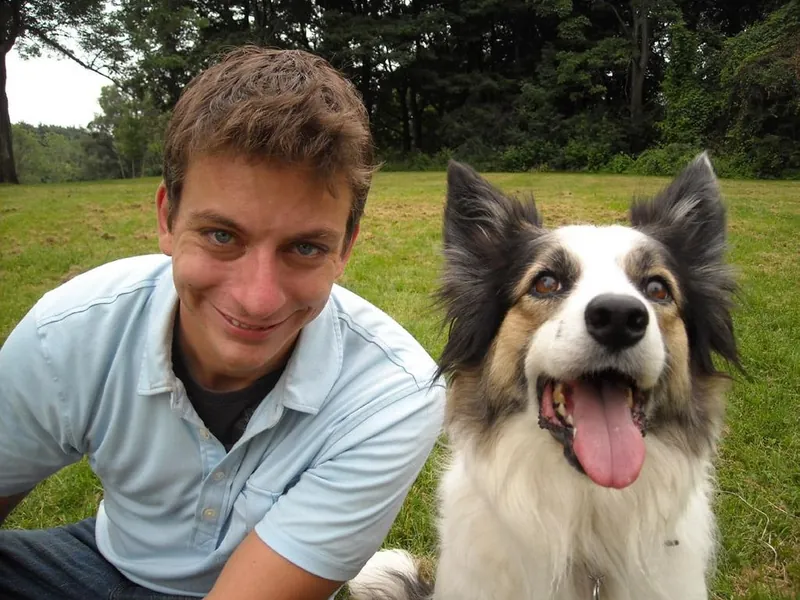
McConnell explains that psychological trauma overwhelms the nervous system and alters brain physiology in dogs just as it does in humans. She describes how rehabilitating her rescue border collie Will helped her confront and understand her own trauma.
In order
Patricia B. McConnell books in order
7 books; 1 reviewed on LuvemBooks. Dates and covers from Amazon.
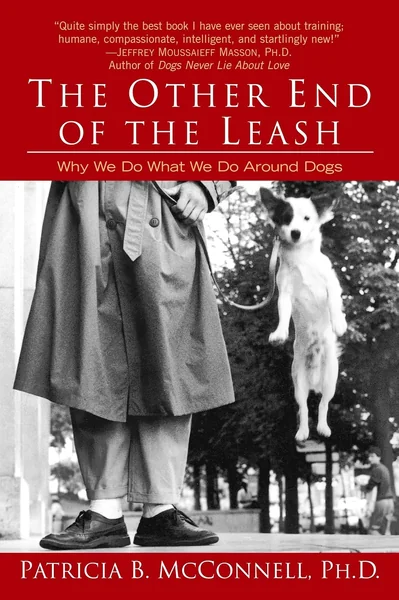
Patricia B. McConnell, Ph.D., draws on decades of professional ethology and applied animal behavior to write books that translate scientific research into practical guidance for dog owners. In The Other End of the Leash, she examines the often-overlooked role that human body language and primate instincts play in shaping how dogs respond to us — a perspective grounded in her fieldwork rather than generic training advice. LuvemBooks has reviewed one of her titles, which carries an Amazon reader rating of 4.7/5 from over 3,000 ratings.
Where should I start?
The Other End of the Leash is the natural starting point for anyone new to McConnell's work. It introduces her central argument — that understanding our own primate instincts and body language is just as important as understanding the dog — and sets the intellectual framework that runs through her other writing. With an Amazon reader rating of 4.7/5 from over 3,300 ratings, it has clearly resonated with a wide audience of dog owners.
What's their writing style?
McConnell writes with the authority of a working scientist but the warmth of someone who has genuinely loved dogs her entire life. She regularly uses anecdotes drawn from her own consulting practice and life on a Wisconsin farm to ground abstract behavioral concepts in concrete, recognizable situations. Her tone is conversational without being simplistic — she doesn't shy away from the science, but she explains it in a way that makes it feel immediately useful rather than academic.
Books we've reviewed
LuvemBooks has reviewed one book by Patricia B. McConnell: The Other End of the Leash: Why We Do What We Do Around Dogs, a foundational work that reframes dog training by examining the instinctive behaviors humans bring to their interactions with dogs, holding an Amazon reader rating of 4.7/5 from over 3,300 ratings.
What genre do they write?
McConnell writes primarily in the pet care and animal behavior space, but her books sit closer to popular science than to conventional dog training manuals. She draws on ethology, evolutionary biology, and behavioral science to explore the relationship between humans and dogs, making her work relevant to readers who enjoy understanding the reasoning behind practical advice rather than simply following a step-by-step program.
What should I read after The Other End of the Leash?
After The Other End of the Leash, the most natural next step within McConnell's own catalog is For the Love of a Dog, which takes a deeper look at the emotional lives of dogs and the science of how they experience feelings. If you want to branch out to other authors, Alexandra Horowitz's Inside of a Dog and Sophia Yin's How to Behave So Your Dog Behaves cover complementary ground from slightly different angles.
Who is Patricia B. McConnell?
Where should I start?
What's their writing style?
Books we've reviewed
What genre do they write?
What should I read after The Other End of the Leash?
Who is Patricia B. McConnell?
Patricia B. McConnell, Ph.D., CAAB Emeritus, is an American ethologist who spent over thirty years consulting with pet owners on serious dog and cat behavioral problems. She has lectured on companion animal behavior both domestically and internationally, and is the author of several books on dog training and behavior, including her notable work For the Love of a Dog. She is widely respected in the animal behavior community for bringing an evidence-based, ethological lens to everyday pet ownership.
Follow up
What does CAAB Emeritus mean?
What is Patricia McConnell best known for?
Synthesized from verified book data & published reviews · How we review
Press Enter to ask. Answers come from our editorial Q&A — start typing to see related questions.