The Art of Raising a Puppy
A guide from the Monks of New Skete on raising puppies through attentive relationship-building, covering developmental stages, socialization, and foundational training.
Read our full reviewAt a glance
Be one of the first readers to answer.
Read it? Was it right for you?
The Art of Raising a Puppy
LuvemBooks Verdict
Best for: New puppy owners who want more than a training checklist — readers willing to engage with both the practical techniques and the philosophical dimensions of building a genuine relationship with a dog.
Worth it? Skip it? Read the full verdict →Ask LuvemBooks
Was this helpful?
- Is it worth reading?
- For new puppy owners — and for experienced dog enthusiasts willing to engage with both the practical and philosophical dimensions of raising a dog — The Art of Raising a Puppy is widely regarded as one of the most valuable resources available. One reader with over forty years of experience with dogs reported that the book still delivered information, tips, and insights they hadn't previously encountered, suggesting it rewards seasoned owners as much as first-timers. Those seeking a quick-reference or strictly technique-driven format may find the book's reflective, discursive tone more demanding than anticipated, and owners of small or toy breeds should note that the Monks' deep specialization in German Shepherds means some examples skew toward large working dogs.
- Similar books
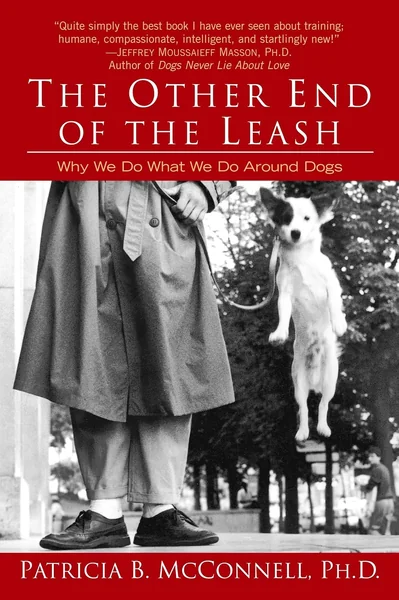
- Readers drawn to The Art of Raising a Puppy will find strong companions in several other titles. Patricia B. McConnell's The Other End of the Leash similarly grounds dog training in an understanding of dogs as distinct creatures with their own nature, blending behavioral science with a thoughtful owner-animal relationship ethic. For a more modern, technique-forward approach, Zak George's Dog Training Revolution by Zak George and Dina Roth Port offers a positive-reinforcement-focused method with a contemporary voice. The Simple Guide to Getting Active with Your Dog by Margaret H. Bonham rounds out the picture for owners looking to build a lifestyle — not just a training routine — around their dog. The Monks' companion volume, How to Be Your Dog's Best Friend, is a natural next read for those who want to deepen the philosophy introduced in this title.
- Who should read this?
- The Art of Raising a Puppy is best suited to new puppy owners who want more than a training checklist — specifically, those willing to engage with both the practical and philosophical dimensions of bringing a dog into a household. It is also valuable for experienced dog owners looking to deepen their understanding; one reader with over forty years of experience with dogs still found new insights in the text. Readers who appreciate a guide that frames puppy-raising as an act of relationship — calling on patience, kindness, compassion, discipline, and powers of observation — will find its tone particularly rewarding. Those who prefer a quick-reference format or strictly technique-driven instruction may find the book's reflective, discursive style a less comfortable fit.
- About Monks of New Skete
- New Skete is the collective term for two Orthodox Christian monastic communities located in Cambridge, New York: the Monks of New Skete, a men's monastery founded in 1966, and the Nuns of New Skete, a women's monastery founded in 1969.
- What are the main themes?
- The central theme of The Art of Raising a Puppy is the human-animal bond as a relationship that demands active cultivation — not just technique. The Monks frame puppy-raising as an act that calls on the owner's patience, kindness, compassion, discipline, and powers of observation. A second major theme is the importance of early socialization, with the book emphasizing that experiences during a puppy's formative months are foundational to developing healthy, confident behavior. Running throughout is a commitment to understanding dogs as distinct creatures with their own nature — the Monks consistently resist anthropomorphizing dogs, grounding every recommendation in that orientation.
- What practical tools does it include?
- Beyond its philosophical framework, The Art of Raising a Puppy functions as a working manual equipped with concrete resources. It includes a structured puppy aptitude test — a diagnostic tool designed to help owners assess and understand their specific dog's temperament rather than applying a generic approach — as well as a bibliography for further reference. The book's organization walks owners sequentially through a puppy's most formative months, and the 2011 revised edition adds expanded guidance on shelter and rescue adoption, urban dog-raising, and current canine health practices.
Summarize this book
Follow up
Synthesized from verified book data & published reviews · How we review
Press Enter to ask. Answers come from our editorial Q&A — start typing to see related questions.
Editorial Review
The Art of Raising a Puppy (revised edition, 2011, Little, Brown and Company) is a practical and philosophically grounded guide to puppy development from the Monks of New Skete — long-time breeders of German Shepherds and trainers of dogs of all breeds — and remains one of the most widely recommended dog-rearing books available, distinguished by its blend of behavioral guidance and a deeper ethic of compassionate relationship-building.
Read the Full ReviewReader reviews
No reader reviews yet
Read it? Be the first to say what you thought.
Books like The Art of Raising a Puppy
Curated picks for readers who enjoyed The Art of Raising a Puppy, with our reasoning for each match.
If you liked The Art of Raising a Puppy