7 min read
Share This Review

Our review
Guide to a Well-Behaved Parrot
Guide to a Well-Behaved Parrot by MattieSue Athan Review: A Foundational Reference for Companion Parrot Owners
MattieSue Athan's Guide to a Well-Behaved Parrot is a practical, psychology-grounded reference guide for companion parrot owners — covering behavior management, common problem behaviors, nutrition, and companionship — with reader commentary consistently describing it as essential reading in its field. This review is based on published sources and documented reception; it does not reflect hands-on use or testing.
LuvemBooks Verdict
Best for
Companion parrot owners at any experience level who want to understand why their bird behaves the way it does and need targeted, psychology-grounded strategies for tackling screaming, biting, or feather-chewing.
Worth it if
You live with a companion parrot and want a structured, returnable reference that grounds behavioral correction in how parrots actually think rather than in rote command drills.
Skip if
You need deep guidance on aviary management, species-specific husbandry, breeding situations, or health-driven behavioral changes that require veterinary assessment rather than training techniques.
What readers & critics say
Reader commentary on Thriftbooks consistently describes the guide as "absolutely essential for anyone who has a companion parrot," praising Athan's practical, experience-based advice and calling it equally useful as a starting point for new owners or a refresher for experienced ones. Publisher and retailer copy retrieved from AbeBooks and campusstore.miamioh.edu confirms the book's organizing focus on parrot psychology, environment-shaping, and positive reinforcement across its expanded third edition.
Sources: Thriftbooks, AbeBooks, Miami University Campus StoreAsk LuvemBooks
Was this helpful?
- Is it worth reading?
- For companion parrot owners, reader commentary consistently describes Guide to a Well-Behaved Parrot as 'absolutely essential for anyone who has a companion parrot or is contemplating getting one.' Its psychology-grounded framework distinguishes it from simple trick-training manuals, and it directly addresses the three most commonly reported problem behaviors with specific, actionable guidance. The structural integrity provided by bibliographical references and an index makes it a resource owners can return to repeatedly. The main structural limitation is scope: owners of aviary birds or those seeking deep species-specific guidance may find it narrower than needed.
- Similar books
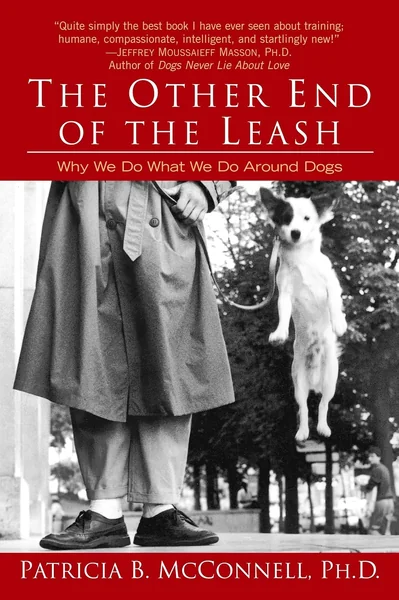
- Readers who find Guide to a Well-Behaved Parrot valuable may also want to explore Barbara Heidenreich's The Parrot Problem Solver, which similarly focuses on resolving difficult parrot behaviors. Gary A. Gallerstein's The Complete Pet Bird Owner's Handbook offers a broader species and care scope for bird owners wanting wider coverage. For those whose companion parrot happens to be a cockatiel, Mary Gorman's The Cockatiel Handbook provides species-specific depth. Patricia B. McConnell's The Other End of the Leash applies a comparable behavior-science and animal-psychology framework to dogs, making it a natural read for multi-pet households or owners interested in the broader science of companion animal behavior.
- Who should read this?
- Guide to a Well-Behaved Parrot is written for companion parrot owners at any experience level — both those new to parrots and experienced owners seeking a structured refresher. It is particularly well-suited to owners committed to relationship-based care rather than purely corrective training, and to anyone living with a parrot exhibiting screaming, biting, or feather-chewing. Those seeking guidance on aviary birds, breeding situations, or deep species-specific contexts will find the scope narrower than they need.
- Which problem behaviors does it cover?
- The book directly addresses the three most commonly reported companion parrot problem behaviors: screaming, biting, and feather-chewing. Each is covered with structured remediation guidance grounded in Athan's behavioral science framework. Reader commentary on Thriftbooks notes it 'offers solutions for biting, screaming, and just about every problem one may encounter,' suggesting coverage extends beyond these three to a broader range of behavioral challenges.
- How does it approach parrot psychology?
- Athan's framework treats parrot psychology as the foundation for all behavior management, explicitly acknowledging that parrots are fundamentally different from domestic mammals — animals whose behaviors 'stem from millions of years of evolution.' Rather than prescribing commands to drill, the book equips owners with a conceptual understanding of what drives parrot conduct. Readers on Thriftbooks note that Athan captures 'some very subtle concepts relating to parrot psychology,' distinguishing the guide from simpler trick-training manuals.
- What else has this author written?
- MattieSue Athan is also the author of Parrots: A Complete Pet Owner's Manual and co-author of The African Grey Parrot Handbook, both published by Barron's. She is noted as a widely respected expert in parrot care who also contributes regularly to bird-care periodicals, giving her published body of work considerable breadth across both general parrot care and species-specific guidance.
Summarize this book
Follow up
Synthesized from verified book data & published reviews · How we review
What would you like to know about Guide to a Well-Behaved Parrot?
Answers come from our editorial notes on this book. If we haven't covered something, we'll say so.
Readers often ask
Our Review
We review the evidence: published critics, reader verdicts and BookTube reviews, gathered and weighed with AI assistance and edited by LuvemBooks, rather than one reader's first-hand take.
What the Book Actually Is and Covers
The Core Argument: Parrot Psychology First
Strengths: Practical, Experience-Backed Guidance
Honest Limitations and Scope Considerations
Who This Book Is For
Sources & Further Reading
The key facts and claims in this review are grounded in the retrieved, verified sources listed below.
- Cited in this review
- 1
campusstore.miamioh.edu
- 2
- 3
- Further reading
- 4
- 5
thriftbooks.com
- 6
montclairbookcenter.com
Age & Reading Level
Recommended age
Adult
who it suits
Skip if you're seeking species-specific guidance on aviary, breeding, or a particular parrot species in depth.
Reader reviews
Be one of the first readers to answer.
Read it? Was it right for you?
Books like Guide to a Well-Behaved Parrot
Curated picks for readers who enjoyed Guide to a Well-Behaved Parrot, with our reasoning for each match.
If you liked Guide to a Well-Behaved Parrot