Skip to content
Reviewed

Read Time

8 min read

Our age bandAdult
Reader rating
4.1 · 8,142 Amazon ratings, as of Nov 2026
reader ratings, not a LuvemBooks score
Curated & edited by

LuvemBooks Editorial

How we create our reviews →
Share This Review
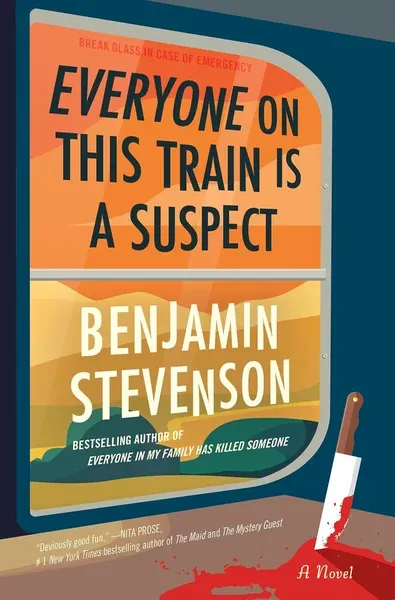
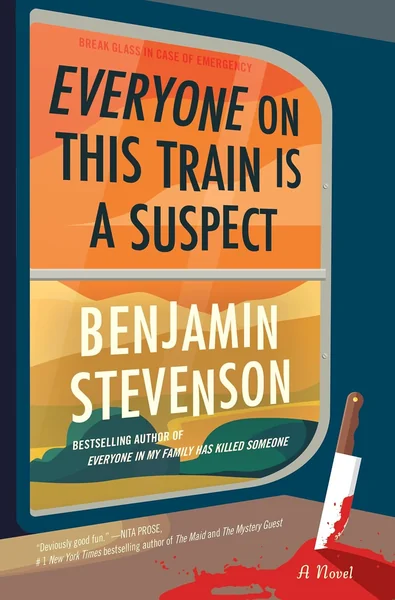
Everyone on This Train Is a Suspect: A Locked Room Murder Mystery Aboard a Train (The Ernest Cunningham Mysteries, 2) by Benjamin Stevenson front cover

Our review

Everyone on This Train Is a Suspect

Everyone on This Train Is a Suspect Review: A Witty Locked-Room Whodunit

Benjamin Stevenson's second Ernest Cunningham mystery drops a witty, fourth-wall-breaking narrator into a Golden Age-style locked-room murder aboard the Ghan train. Stevenson blends sharp industry satire with a fair-play puzzle, delivering a highly entertaining genre deconstruction that rewards cozy mystery fans.

Our age band: Adult

LuvemBooks Verdict

Best for

Fans of genre-deconstructing humor and conversational narration who enjoy meta-fictional puzzles grounded in vivid Australian settings.

Worth it if

Worth reading if you appreciate conversational narration and don't mind a plot that prioritizes clever misdirection over strict logical deduction.

Skip if

Skip it if you expect a traditional, immersive whodunit and find logically strained clues distracting.

Where reviewers agree and split

Readers rate it 4.1 on Amazon. The reviews we read that discuss it in depth agree:

  • Positive

    Kirkus Reviews · Press review: highly recommends the clever meta-pastiche mystery

  • Positive

    Shelf Reflection · Book blog: strongly recommends the witty and enjoyable mystery series

  • Positive

    Debbish · Book blog: loved the book despite minor logical leaps

  • Positive

    The AU Review · Book blog: excellent locked-room mystery with satisfying ending

  • Positive

    Bookends · Book blog: enjoyed the clever writing and old-school mystery feel

Overall verdicts are our summary of each review we read, from its headline, rating and conclusion.

Kirkus Reviews and BookBrowse praise the novel as a fiendishly fun, supercharged meta-pastiche that delivers clever misdirections and a witty locked-room puzzle. While The AU Review celebrates its satisfying resolution, Debbish notes that the logic occasionally strains credulity, calling the killer’s reveal a leap.

“No, it’s not for everyone—but if you want to read a supercharged meta-pastiche like this, this is exactly the one to read.”

— Kirkus Reviews
Sources: Kirkus Reviews, BookBrowse, The AU Review, Debbish
4.1from 8,142 Amazon ratings, as of Nov 2026— reader ratings, not a LuvemBooks score

Ask LuvemBooks

Was this helpful?

Benjamin Stevenson's Everyone on This Train Is a Suspect drops a witty, conversational narrator into a Golden Age-style locked-room murder aboard the Ghan train. Stevenson blends sharp industry satire with a structured puzzle, delivering a highly entertaining genre deconstruction. Worth it for readers who appreciate playful humor and don't mind a plot that prioritizes clever misdirection.
Is it worth reading?
Kirkus Reviews highly recommends the clever meta-pastiche mystery, while Shelf Reflection strongly praises the witty and enjoyable series. Debbish and The AU Review also note its excellent locked-room execution and satisfying ending. The book delivers for fans of genre-deconstructing humor, though reviewers note the final reveal relies on clues that some found logically strained.
Similar books
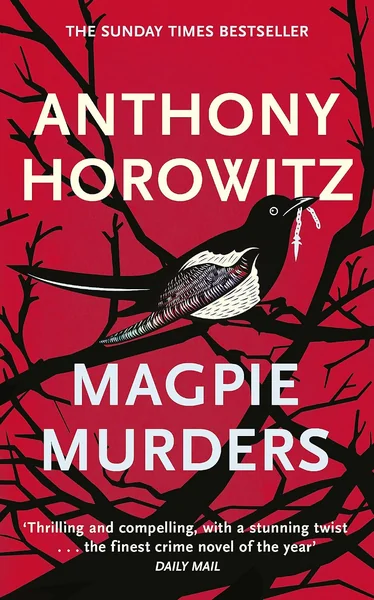
Readers who enjoy Stevenson's conversational style and meta-mystery structure will likely appreciate Everyone in My Family Has Killed Someone by the same author. Fans of locked-room puzzles with a literary focus might also enjoy Murder at the Grand Alpine Hotel by Lucy Foley and Agatha Christie, or Magpie Murders by Anthony Horowitz. For classic Golden Age influences, Death on the Nile and And Then There Were None by Agatha Christie provide the foundational tropes Stevenson playfully deconstructs.
Who should read this?
The book is best suited for readers who enjoy conversational narration and puzzles grounded in vivid Australian settings. It also appeals to readers who appreciate conversational narration and don't mind a narrative that favors surprise.
About Benjamin Stevenson
Benjamin Stevenson is an award-winning stand-up comedian and USA Today and million-copy best-selling author of mystery novels. He wrote his first novel at 17, later working as a comedian and at Curtis Brown Literary Agency before becoming a full-time novelist. His fiction is known for closed-circle mysteries that engage with golden age mystery tropes.
What are the main themes?
The novel operates as a deliberate homage to Golden Age mysteries, specifically the works of Agatha Christie and Arthur Conan Doyle. Ernest explicitly outlines the rules of the genre to contrast tidy classic expectations with the messy reality of the modern publishing industry. The narrative is packed with commentary on industry standards, professional hurdles, and the relationship between author and plot.
How does this compare to the first book?
This is the second entry in the Ernest Cunningham Mysteries. The series benefits significantly from reading the books in order. However, the standalone mystery structure allows new readers to jump in without feeling lost, provided they are comfortable with a conversational, fourth-wall-breaking narrator.
Summarize this book

Summarize this book

Ernest Cunningham, a non-fiction author specializing in Golden Age mysteries, attends a literary festival aboard the Ghan train. When one of the attending authors is murdered, the remaining writers become amateur detectives in a classic locked-room mystery. Ernest narrates the story directly, treating the unfolding crime as material for his own writing.

Follow up

How is the narration?
How is the plot structured?

Synthesized from verified book data & published reviews · How we review

Ask LuvemBooks

What would you like to know about Everyone on This Train Is a Suspect?

Answers come from our editorial notes on this book. If we haven't covered something, we'll say so.

Readers often ask

Our Review

We review the evidence: reader verdicts, gathered and weighed with AI assistance and edited by LuvemBooks, rather than one reader's first-hand take.
A second entry in the Ernest Cunningham series that trades a snowy mountain resort for the Australian outback, this novel delivers a highly conversational, rule-bending mystery that rewards genre fans even if its fair-play clues occasionally stretch credulity.
Everyone on This Train Is a Suspect: A Locked Room Murder Mystery Aboard a Train (The Ernest Cunningham Mysteries, 2) by Benjamin Stevenson front cover

What the Book Actually Is

Benjamin Stevenson’s second installment in the Ernest Cunningham Mysteries centers on Ernest, a non-fiction author specializing in Golden Age detective fiction. Ernest finds himself invited to the Australian Mystery Writers' Society crime-writing festival, which is taking place aboard the Ghan.
The famous train travels between Darwin and Adelaide, carrying a unique literary gathering. He is hoping the journey will provide inspiration for his long-awaited second fiction book, though he is currently struggling with writer’s block.
The festival program features a who’s who of the crime writing world, including a debut writer, a forensic science writer, a blockbuster writer, a legal thriller writer, a literary writer, and a psychological suspense writer. When one of these attendees is murdered, the remaining authors quickly transform into five amateur detectives.
The premise operates as a classic locked room mystery, except the room is a moving train crossing the continent. Ernest narrates the story in the first person, constantly breaking the fourth wall to address the reader directly.
His conversational tone establishes the book as a genre deconstruction as much as a traditional whodunit.

Place in the Genre and Cultural Moment

The novel functions as a deliberate homage to Golden Age mysteries, specifically the works of Agatha Christie and Arthur Conan Doyle. Ernest explicitly outlines the rules of the genre he studies: the narrator must be honest, there can be no supernatural elements, and all clues must be available to the reader.
Stevenson uses these constraints to contrast the tidy expectations of classic detective fiction with the messy reality of the modern publishing industry. The narrative is packed with commentary on literary snobbery and the pressures of agents.
Critics at The Aure Review have drawn comparisons to the cozy, character-driven mysteries of Richard Osman and Anthony Horowitz. The series has gained significant traction, with the first novel currently being adapted into a major HBO television series.
This cultural momentum positions Stevenson as a prominent voice in contemporary humorous crime fiction.

What the Book Is Designed to Deliver

Stevenson structures the novel to deliver a sharp, meta-fictional experience that keeps readers engaged through humor and self-awareness. Ernest treats the unfolding murder as material for his writing, creating a book within a book dynamic that blurs the line between the author and the plot.
This structure invites readers to scrutinize the clues alongside the narrator. The text includes a running tally of how many times each suspect’s name is mentioned, a playful nod to fair-play mystery conventions.
The journey also serves as a vehicle for exploring Australian geography and culture, with notable stops at Katherine Gorge, Alice Springs, and the opal mining town of Coober Pedy. This setting grounds the high-concept mystery in a vivid, real-world landscape.
Ernest’s voice is the primary engine of the book, and his perspective is highlighted early on: So I'm writing again. Which is good news, I suppose, for those wanting a second book, but more unfortunate for the people who had to die so I could write it.
This opening line encapsulates the dark humor and self-referential tone that permeates the narrative.

Genuine Limitations and Points of Contention

While the novel is widely praised for its voice and structure, certain elements of the plot have drawn criticism for straining logical consistency. Listeners found the large cast of authors difficult to track without a physical copy.
The series also benefits significantly from reading the books in order. Readers who approach the book expecting a strictly traditional fair-play puzzle may find the meta-commentary and genre-bending elements distracting.

OUR TAKE: Is It Worth Reading?

Weighing the critical reception reveals a book that succeeds brilliantly for its intended audience while leaving some traditionalists unsatisfied. The primary tension reviewers circle is whether the book’s meta-commentary acts as a gift to genre enthusiasts or a trap for traditionalists.
This duality points the novel toward fans of Richard Osman and Anthony Horowitz, while steering away from readers who prioritize strict logical deduction over stylistic flair. Readers who enjoy cozy mysteries and character-driven puzzles will find the novel highly entertaining.
Conversely, the book may frustrate those who prefer immersive storytelling without fourth-wall breaks. The novel is best approached as a playful, meta-fictional adventure rather than a rigorous deduction exercise.

Sources & Further Reading

The key facts and claims in this review are grounded in the retrieved, verified sources listed below.

  1. Cited in this review
  2. 1
  3. Further reading
  4. 2
  5. 3
  6. 4
  7. 5
  8. 6
  9. 7
  10. 8
  11. 9
  12. 10

    kirkusreviews.com

  13. 11

    bookbrowse.com

Age & Reading Level

Our age band

Adult

Our age band groups books for browsing; it isn't an age a review gave.

From our readers

Reader reviews

No LuvemBooks readers have answered yet.

Read it? Was it right for you?

Books like Everyone on This Train Is a Suspect

Curated picks for readers who enjoyed Everyone on This Train Is a Suspect, with our reasoning for each match.

Discussion

Reader comments