This review is based on published critical sources and the book's verified contents; it does not reflect hands-on reading.
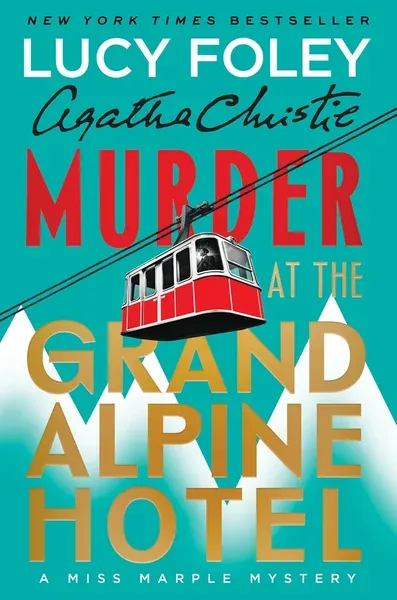
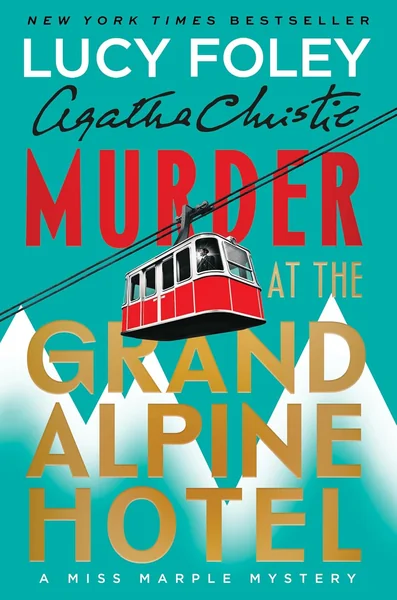
Murder at the Grand Alpine Hotel: The New Miss Marple Mystery – A Classic Whodunit of Deception and Suspense in an Isolated Alpine Retreat by Lucy Foley, Agatha Christie front cover
What the Book Is and How It Opens
Murder at the Grand Alpine Hotel: The New Miss Marple Mystery – A Classic Whodunit of Deception and Suspense in an Isolated Alpine Retreat is a novel published by William Morrow in September 2026. Written by Lucy Foley under authorized licence from the Christie estate, it is, as NPR reported, the first authorized Miss Marple novel in fifty years.
The story is set in 1950. Miss Jane Marple and her recently widowed friend Dolly Bantry — who memorably discovered the body in the library in Christie's 1942 original — are vacationing at a grand hotel high in the Swiss Alps when a corpse turns up in a gondola on its first morning run, and an accident promptly seals the hotel off from the outside world.
Foley's Structural Choices and Their Consequences
Foley makes one significant formal departure from Christie's single-perspective tradition: the narrative is divided among four rotating narrators. Those are Catherine Narracott, the much younger wife of ambitious Tory MP Anthony Narracott; Bruno Crane, Anthony's wartime comrade who arrives bent on mischief; Hollywood actress Sylvia Sinclair; and Diana Glass, Mrs. Bantry's companion who originally suggested the Alpine trip.
Kirkus Reviews found that the rapid shifts among these leading suspects come at a cost, noting they "sadly upstage Miss Marple, who'd be the first to note she's not one to take charge." The multi-narrator structure is a signature of Foley's own contemporary thrillers, and its transplantation into the more classic idiom produces a tonal friction that readers steeped in Christie will feel.
The Mystery's Genuine Strengths
Where the book earns its keep is in its plotting. Kirkus Reviews, reviewing ahead of publication, concluded that readers who reach the ending "will discover that the mystery has been adroitly plotted and intricately clued, with a solution that will surprise many of them."
That is a meaningful concession from a skeptical notice. The review explicitly invokes Raymond Chandler's famous dictum — that the ideal mystery is one worth reading even if the ending were missing — as a foil, suggesting this novel makes the opposite case: the destination justifies the journey, and the clue architecture rewards attentive readers.
Continuity With Christie's World
Foley demonstrates genuine familiarity with Christie's existing geography. As Kirkus Reviews notes, Christie herself had already moved Miss Marple well beyond her home village of Much Benham — to London, to the Caribbean — so an Alpine setting is not inherently a betrayal of the character's established range.
The inclusion of Dolly Bantry, a Christie original with a specific and memorable history, anchors the book in the canonical world. That grounding gives the novel a sense of continuity with the source material, even as Foley's own stylistic preferences press against it.
Who This Book Is For — and Who May Struggle
Devoted Christie purists face the sharpest challenge here. Kirkus Reviews characterizes certain elements as likely to leave Christie fans "gaping" — the choice of a chilly mountaintop holiday for Miss Marple and Mrs. Bantry among them, and the way the murder victim, Anthony Narracott, is dispatched in a manner the review calls predictable.
Readers who arrive already comfortable with Foley's multi-narrator, ensemble-suspect style — developed across her own standalone thrillers — will be better positioned to meet the book on its own terms. For that audience, the isolated Alpine setting, the period atmosphere of 1950, and a genuinely surprising final reveal make Murder at the Grand Alpine Hotel a worthwhile, if complicated, addition to the Marple legacy.