
9 min read
4.3
· 18 Amazon ratingsShare This Review
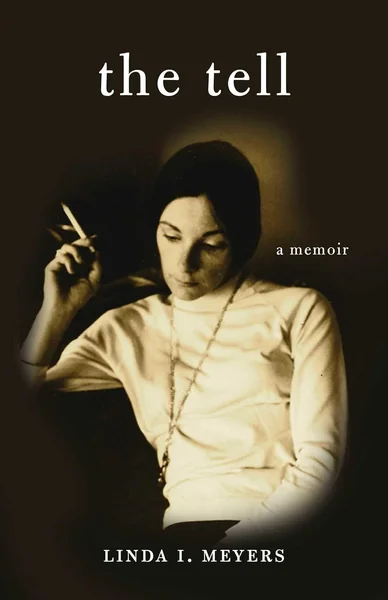
The Tell: A Memoir by Linda I. Meyers Review: A Raw, Resilient Journey Through Family Secrets
Linda I. Meyers's debut memoir, published by She Writes Press on June 5, 2018, traces her path from a chaotic Brooklyn childhood—shaped by a mobster-adjacent father, a suicidal mother, and the restrictive culture of the 1940s and '50s—to her eventual life as a psychologist and psychoanalyst. Structured as a series of standalone essays, the book excavates multigenerational family dysfunction with what Kirkus Reviews calls "edgy, masterful prose" and earns its place as a frank, humor-laced account of emancipation and self-realization.
LuvemBooks Verdict
Best for
Readers drawn to Jewish-American family memoir and mid-twentieth-century social history — particularly those who appreciate non-linear, essay-based structures that build emotional truth gradually rather than driving toward a single narrative climax.
Worth it if
Worth it if you're interested in a psychoanalytically informed, historically grounded memoir that balances irony and humor with genuine grief, anchored in the specific world of Brooklyn's Jewish immigrant community and mid-century American womanhood.
Skip if
Skip it if you need a tightly chronological autobiography — the associative, back-and-forth movement between time periods and the standalone essay format produce some repetition and uneven pacing that may frustrate readers expecting a sustained narrative arc.
What readers & critics say
Kirkus Reviews awarded The Tell its verified "Get It" verdict, calling it "a touching, angry, humorous, and engaging account of a turbulent life" and praising the "edgy, masterful prose, sprinkled with the Yiddish expressions of Meyers' youth," while noting that the non-linear structure produces some repetition. Foreword Reviews found the historical atmosphere "immersive" and praised how the memoir's engagement with memory's fallibility adds depth rather than detracting from the narrative, and Readers Favorite described it as "a gripping memoir in expert hands, a heartrending, yet sobering tale written with psychological and emotional acuity."
“A touching, angry, humorous, and engaging account of a turbulent life.”
— Kirkus Reviews“Edgy, masterful prose gradually peels away the layers of hurt, confusion, and guilt.”
— Kirkus ReviewsAge & Reading Level
Recommended age
Adult
Reading level
Adult
3 content notes · who it suits
Content to know about
Best for: Adults — centres on parental suicide, mob-adjacent violence, and mid-century domestic trauma, with a psychoanalytic register best suited to mature readers.
Skip if you want a tightly plotted, chronological autobiography with clear narrative momentum.
The Tell: A Memoir by Linda I. Meyers is Trending
No Clear Trending Trigger Found for The Tell by Linda I. Meyers
There's no confirmed news right now tying The Tell directly to a recent event, adaptation, or viral moment. The available signals don't connect to this memoir specifically, so we can't pinpoint a clear reason for a spike in interest.
The search results available don't turn up anything that directly links Linda I. Meyers's memoir The Tell to a current trending moment. The results reference similarly titled TV series like Tell Me Lies and Tell Me a Story, but neither is connected to this book. A roundup of 2026 TV adaptations also doesn't mention The Tell.
That said, this memoir has real staying power on its own merits. It's a frank, essay-driven account of growing up in mid-century Brooklyn with a larger-than-life, mob-adjacent father and a mother struggling with mental illness — and Meyers brings a psychologist's eye to all of it without losing the humor or the raw honesty. Kirkus called the prose 'edgy' and 'masterful,' and that reputation quietly keeps readers finding it.
If you came across a recommendation for this one recently, it may have surfaced through a reader community, a library list, or word of mouth rather than a splashy news hook. Either way, it's worth your time if you like memoirs that go deep on family dysfunction and hard-won self-awareness.
In This Review
- What Works & What Doesn't
- What the Memoir Actually Covers
- Structure and Style
- Significance and Reception
- Genuine Strengths
- Who Will Connect With It — and What to Expect
What Works & What Doesn't
What Works
- Kirkus Reviews awards it a 'Get It' verdict, praising the 'edgy, masterful prose' that gradually exposes the layers of a turbulent life
- Rich historical specificity — Brownsville's Jewish immigrant community, the Amboy Dukes, Murder Inc., and the Catskills bungalow colony circuit — grounds personal narrative in documented social landscape
- Tonal range is genuinely accomplished: the memoir sustains irony, humor, grief, and anger without letting any one register dominate
- Meyers's background as a psychologist and psychoanalyst lends the book an intellectual architecture that elevates it beyond straightforward personal confession
- Blurb contributors from the memoir community praise both the prose craft and emotional depth, citing its 'cutting humor and an ear for dialogue'
What Doesn't
- The non-linear, essay-based structure produces some repetition, as Kirkus Reviews notes — readers who prefer a tightly chronological narrative may find the back-and-forth movement demanding
- As a standalone essay collection rather than a unified narrative arc, the book's pacing is uneven in places, with some sections functioning more as discrete vignettes than as building blocks of a sustained through-line
What the Memoir Actually Covers
Structure and Style
Significance and Reception
Genuine Strengths
Who Will Connect With It — and What to Expect
Frequently Asked Questions
Sources & Further Reading
The key facts and claims in this review are grounded in the retrieved, verified sources listed below.
- Cited in this review
- 1
kirkusreviews.com
- 2
forewordreviews.com
- Further reading
- 3
thetellamemoir.com
- 4
readersfavorite.com
- 5
powells.com
- 6
simonandschuster.com
- 7
barnesandnoble.com
Related Reviews
Reviews of books we picked for readers who enjoyed The Tell.

Reader Comments
No comments yet
Be the first to share your thoughts!