
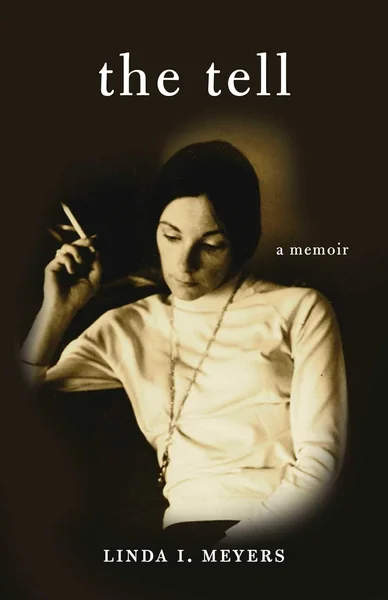
At a glance
LuvemBooks Verdict
Best for: Readers drawn to Jewish-American family memoir and mid-twentieth-century social history — particularly those who appreciate non-linear, essay-based structures that build emotional truth gradually rather than driving toward a single narrative climax.
Worth it? Skip it? Read the full verdict →Ask LuvemBooks
Was this helpful?
- Is it worth reading?
- For readers drawn to Jewish-American family memoir, mid-century social history told through personal testimony, or narratives of women navigating patriarchal constraint, The Tell delivers a genuinely distinctive experience. Kirkus Reviews' 'Get It' verdict underscores the book's literary seriousness, and blurb contributor Mindy Lewis — author of Life Inside: A Memoir — calls it 'a gripping read from a damn good writer,' crediting Meyers's 'cutting humor and an ear for dialogue.' The key caveat is structural: the non-linear, essay-based format means the book rewards patience over the desire for a tightly plotted chronological arc.
- Similar books
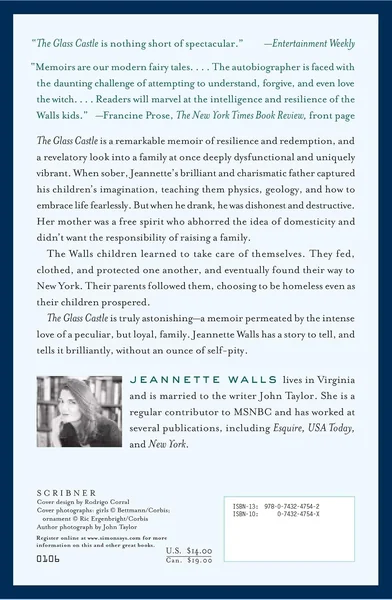
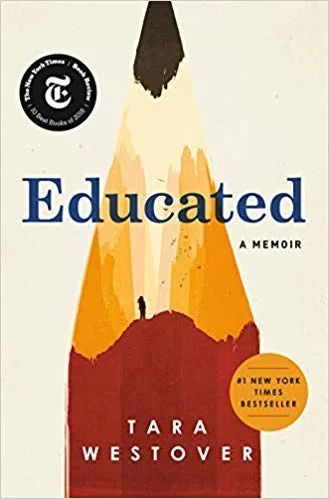
- Readers who respond to The Tell's combination of chaotic family inheritance and hard-won self-knowledge will find strong companions in Tara Westover's Educated, which traces a similarly dramatic path from a dysfunctional family to intellectual self-realization, and Jeannette Walls's The Glass Castle, another unflinching memoir of a turbulent childhood with larger-than-life parents. For memoirs grounded in a specific cultural milieu and voice, Jennifer Grey's Out of the Corner and Al Pacino's Sonny Boy both offer vivid mid-century New York perspectives shaped by family and community. Alexandra Stein's Inside Out provides a psychologically rigorous examination of inherited dysfunction that echoes Meyers's own clinical lens.
- Who should read this?
- The Tell is best suited to adult readers with an appetite for Jewish-American family memoir, mid-century social history — Brownsville as a Jewish immigrant enclave, the Catskills bungalow colony circuit, the shadow of Murder Inc. — and narratives of women navigating mid-century patriarchal constraint. Meyers's psychoanalytic background gives the book an intellectual register that will appeal to readers who want more than catharsis from memoir. The essay format is ideal for readers who prefer emotional truth to accumulate across discrete, standalone pieces rather than through a single, tightly plotted chronological arc.
- About Linda I. Meyers
- Linda I. Meyers is a clinical psychologist and psychoanalyst based in New York City and Princeton, NJ, who trained at the Graduate School of Applied and Professional Psychology at Rutgers University. She has published in professional journals and academic books. The Tell is her first published memoir; two chapters appeared in literary journals in 2016, including 'The Flowers,' which was recognized as a top-five finalist.
- What are the main themes?
- The Tell is organized around interlocking themes: the meaning of being wanted (Meyers was conceived as a draft-deferment strategy to keep her father Gerry out of World War II), the transmission of dysfunction across generations, and the possibility of emancipation from a troubled inheritance. Running through the essays are also the specific constraints placed on women in the forties and fifties, the texture of Jewish immigrant Brooklyn, and the psychological act of constructing a coherent self from a fractured past — a process Meyers explicitly parallels to psychoanalytic practice.
- What is the writing style like?
- Kirkus Reviews describes the prose as 'edgy' and 'masterful,' praising the way it 'gradually peels away the layers of hurt, confusion, and guilt' while being 'sprinkled with the Yiddish expressions of Meyers' youth.' The writing sustains a wide tonal range — irony, humor, grief, and anger — without allowing any single register to dominate, a balance blurb contributor Mindy Greenstein, PhD, describes as 'a vivid portrait of resilience.' The psychoanalytic background Meyers brings as a trained clinician gives the prose an intellectual precision that distinguishes it from more straightforwardly emotional memoir writing.
Summarize this book
Follow up
Synthesized from verified book data & published reviews · How we review
Press Enter to ask. Answers come from our editorial Q&A — start typing to see related questions.
Age & Reading Level
Recommended age
Adult
Reading level
Adult
3 content notes · who it suits
Content to know about
Best for: Adults — centres on parental suicide, mob-adjacent violence, and mid-century domestic trauma, with a psychoanalytic register best suited to mature readers.
Skip if you want a tightly plotted, chronological autobiography with clear narrative momentum.
Editorial Review
Linda I. Meyers's debut memoir, published by She Writes Press on June 5, 2018, traces her path from a chaotic Brooklyn childhood—shaped by a mobster-adjacent father, a suicidal mother, and the restrictive culture of the 1940s and '50s—to her eventual life as a psychologist and psychoanalyst.…
Read the Full ReviewBooks like The Tell
Curated picks for readers who enjoyed The Tell, with our reasoning for each match.
If you liked The Tell

Why It’s Trending
No Clear Trending Trigger Found for The Tell by Linda I. Meyers
There's no confirmed news right now tying The Tell directly to a recent event, adaptation, or viral moment. The available signals don't connect to this memoir specifically, so we can't pinpoint a clear reason for a spike in interest.