We review the evidence: reader verdicts, gathered and weighed with AI assistance and edited by LuvemBooks, rather than one reader's first-hand take.
James Rebanks trades his familiar English fells for a solitary Norwegian archipelago in a reflective nature memoir that rewards patience with profound insights into tradition and human connection.
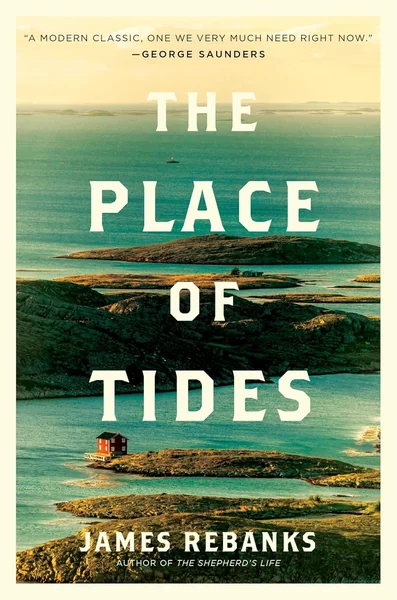
The Place of Tides: A Transformative Nature Memoir of Isolation, Forgiveness, and Self-Discovery on a Remote Norwegian Island by James Rebanks front cover
The Place of Tides by James Rebanks Review: A Remote Norwegian Island Memoir
James Rebanks leaves his English farm for a tiny Norwegian archipelago to learn the ancient trade of eiderdown gathering from a septuagenarian "duck woman." This reflective nature memoir trades pastoral familiarity for a meditation on tradition, isolation, and human connection.
The Premise and Setting
James Rebanks departs the Lake District for Fjærøy, a tiny, usually uninhabited island in the Vega archipelago just below the Arctic Circle. He travels there from April to July to apprentice under Anna Måsøy, one of Norway’s last "duck women."
Måsøy practices a centuries-old tradition of gathering the down of wild eider ducks that nest on the rocky outcrop. Rebanks begins the journey carrying "Everything I knew about Norway could have been written on the side of a cinnamon bun."
He quickly learns to build stone huts to protect nesting birds from eagles, otters, and mink. The work involves cleaning the precious down the birds leave behind after hatching their ducklings.
This cycle has continued since the Viking era, though the island's eider population has dwindled from 1,300 in 1900 to just over 120 today. Rebanks observes the harsh realities of Arctic life alongside the beauty of the endless summer light.
He documents the meticulous process required to harvest the feathered gold without disturbing the nesting grounds. The narrative chronicles the seasonal shift from bitter winter isolation to the bustling activity of the breeding season.
Strengths and Craft
The Guardian notes that Rebanks captures Måsøy's resilience, describing her as an unbreakable septuagenarian who maintains a traditional way of life while modern Norway views it as archaic. BookBrowse highlights the narrative's emotional weight, quoting Richard Flanagan who calls it "A fable-like tale, as beautiful and elusive as the idea of home and self it seeks to recover."
Nordic Prairie Life observes that the book serves as a thoughtful meditation on how the land shapes us and how we shape it in return. Miranda's Notebook emphasizes that Rebanks learns a universal lesson in humility through Måsøy's determination to care for a small piece of land.
The author describes her heroism as a small kind of heroism, but it was the most powerful kind. The memoir's pacing and flow receive mixed assessments, with some praising its steady progression though others find it more reflective.
The prose balances scientific observation of the ducks with broader reflections on cultural preservation.
Limitations and Critiques
The Guardian criticizes Rebanks for undermining Måsøy’s narrative with a "half-hearted through-line" about his own personal failings. The reviewer argues that Rebanks embarked on the trip to regain "hope and self-belief" after realizing he was a "poor husband, father, brother, and son."
This self-reflection is described as well-meaning but never fully explained. A recurring tension exists between the memoir's focus on ancient ecological stewardship and the author's internal search for redemption.
Readers expecting the dense agricultural chronicles of his previous bestsellers may find the narrative scope surprisingly inward, as critics note the memoir prioritizes personal introspection over concrete ecological analysis. The book does not offer easy answers or prescriptive solutions for the environmental challenges facing the archipelago.
The memoir prioritizes personal introspection over rigorous ecological analysis.
Our Take: Is It Worth Reading?
Weighing these reviews, the book succeeds as a quiet meditation on humility rather than a comprehensive ecological study or a rugged survival guide. The tension between Rebanks' initial desire for escape and his eventual realization that no man is an island defines the memoir's emotional core.
It points toward readers who appreciate reflective nature writing and those interested in the intersection of folklore and environmental conservation. Those who prefer the tightly focused agricultural history of his earlier works might find the narrative drifts too far into personal introspection.
The Place of Tides operates closer to the meditative pacing of Recipes and Roots than to the historical chronicles of his Lake District books. It rewards readers who value atmospheric observation over plot-driven progression.
The memoir ultimately asks readers to consider how small acts of care can ripple across generations.