8 min read
4.5
· 1,542 Amazon ratingsShare This Review
The Land and Its People by David Sedaris Review: A Sharp, Bittersweet Return to Form
The Land and Its People is David Sedaris's essay collection — an instant #1 New York Times bestseller — gathering 28 short pieces drawn from his life with husband Hugh, his siblings, his friends, and his perpetual travels through New York, England, and beyond. Critical coverage (starred review) called the essays "among the best of his career," while Kirkus (starred review) hailed it as "a welcome return to form for the much-awarded and much-loved humorist," adding that "Sedaris remains a national treasure." This review is based on published sources and the audiobook's verified content; it does not reflect hands-on use or listening.
LuvemBooks Verdict
Best for
Loyal Sedaris readers — especially those who have followed him from Me Talk Pretty One Day through Happy-Go-Lucky — who want to spend time with his particular brand of acerbic tenderness on aging, partnership, and family, ideally via the self-narrated audiobook.
Worth it if
You value Sedaris for his honesty as much as his comedy, and are happy to let the uneven shorter pieces slide in exchange for the essays where his digressive warmth and genuine feeling land — as the strongest here reportedly do.
Skip if
Readers new to Sedaris who expect consistent depth across all 28 pieces, or longtime fans who found his touring-life anecdote material already running thin in recent collections, may find the slighter entries frustrating.
What readers & critics say
Critical coverage (starred review) called the essays "among the best of his career," while critical coverage (starred review) described the book as "a welcome return to form" and named Sedaris "a national treasure," pointing to an unusually strong critical consensus as reported by bookbrowse.com and davidsedarisbooks.com. The New York Times, whose own review page was retrieved, situates the collection around Sedaris's portrayal of aging's indignities rendered with wit and honesty, while The Guardian's review — also retrieved — finds the strongest sections to be his close observations of people, even as it notes a "slight sense of weariness" when the formula repeats.
“I don't read Sedaris for the laughs, although he makes me laugh: I read him for his honesty.”
— The New York Times“The strongest sections aren't riffs on modern life but observations about people — Sedaris at his shrewdest and most powerful.”
— The GuardianAsk LuvemBooks
Was this helpful?
- Is it worth reading?
- For readers already invested in Sedaris, the critical consensus is strongly affirmative: Publishers Weekly (starred review) called these essays "among the best of his career," and Kirkus (starred review) hailed the book as a welcome return to form. The New York Times praises Sedaris's honesty as the collection's distinguishing quality, citing his portrayal of aging's indignities rendered "with wit and heart." The caveat, noted candidly by at least one prominent critic, is that some essays lean on anecdotes "too thin for their weight" compared to earlier collections — so readers expecting consistent depth across all 28 pieces may find the experience uneven.
- Similar books
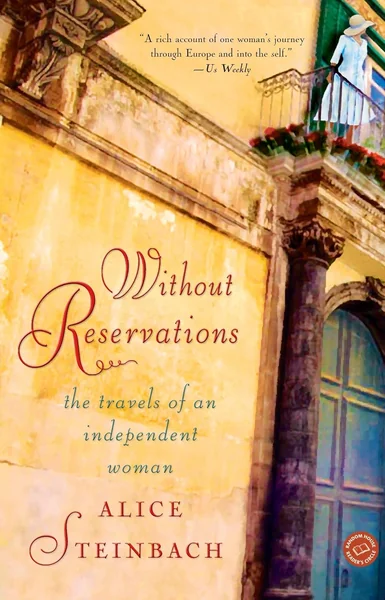
- Readers drawn to Sedaris's blend of travel observation and personal essay will find kindred pleasures in several titles curated below. Alice Steinbach's Without Reservations: The Travels of an Independent Woman shares Sedaris's habit of finding meaning in transient encounters abroad. Rachel Friedman's The Good Girl's Guide to Getting Lost captures the same spirit of self-discovery through unexpected travel. For a more visually expansive travel memoir, Fabiana Capuano and Brant Huddleston's Far and Wild: A Travel Memoir offers a companion in wanderlust. Sedaris fans who enjoy the memoir-inflected personal essay format may also appreciate Ina Garten's Be Ready When the Luck Happens, which shares his quality of honesty about life's accumulations.
- Who should read this?
- The Land and Its People is best suited to readers already fond of Sedaris's voice — those who have followed him through earlier collections like Me Talk Pretty One Day or Happy-Go-Lucky will find the return to form most meaningful. Personal essayists, fans of acerbic humor grounded in genuine feeling, and listeners who prefer audiobooks narrated by the author are the core audience. Readers drawn to themes of aging, long-term partnership, and the comedy of ordinary human encounters will also find plenty to hold them — provided they accept that a 28-essay collection will have a range of ambition.
- Tell me about the audiobook
- The unabridged audiobook of The Land and Its People runs 7 hours and 26 minutes and is narrated by Sedaris himself, released by Little, Brown & Company on May 26, 2026. Sedaris has long been regarded as an unusually effective reader of his own work — his live touring life is central to how the essays come into being — making the self-narrated format especially well matched to his comedic timing and delivery. The edition is Whispersync for Voice ready, allowing readers to switch seamlessly between the audio and text versions.
- How was it received by critics?
- The Land and Its People landed as an instant #1 New York Times bestseller and earned starred reviews from both Publishers Weekly — which called these essays "among the best of his career" — and Kirkus, which hailed it as "a welcome return to form" and named Sedaris "a national treasure." The New York Times praised his portrayal of aging's indignities rendered "with wit and heart," situating honesty as the collection's distinguishing quality. The main dissenting note comes from at least one prominent critic who finds some essays "increasingly shticky" and reliant on anecdotes "too thin for their weight" compared to earlier collections — though even that critic acknowledges the book is "still good" when it's working.
- How does this compare to earlier Sedaris collections?
- Critical coverage frames The Land and Its People as a return to the form of Sedaris's most celebrated work — a catalogue that includes Me Talk Pretty One Day, When You Are Engulfed in Flames, and Happy-Go-Lucky, against which fifteen previous books provide the measuring stick. The BookBrowse summary notes that Sedaris's hallmark technique — a "laconic delivery" that lures readers into thinking a subject is unremarkable before delivering "a knotty twist or spicy dash" — is present and working here. The caveat is that some critics find the touring-life vignettes thinner than the best of his earlier output, suggesting the collection's highs are high but its lows are more pronounced than in his strongest books.
Summarize this book

Follow up
Synthesized from verified book data & published reviews · How we review
Press Enter to ask. Answers come from our editorial Q&A — start typing to see related questions.
Age & Reading Level
Recommended age
Adult
Reading level
Adult
Skip if you want a tightly structured narrative memoir rather than a collection of short, self-contained personal essays
Our Review

What the Collection Actually Contains
Reception and Place in the Sedaris Canon
The Audiobook as Intended Experience
Genuine Strengths: Honesty and the Knotty Twist
A Real Limitation: Thinness and Familiar Shtick
Sources & Further Reading
The key facts and claims in this review are grounded in the retrieved, verified sources listed below.
- Cited in this review
- 1
barnesandnoble.com
- 2
lindentreebooks.com
- 3
- Further reading
- 4
- 5
- 6
- 7
davidsedarisbooks.com
- 8
- 9
bookreporter.com
- 10
waterstreetbooks.com
- 11
shakespeareandcompany.com
Books like The Land and Its People
Curated picks for readers who enjoyed The Land and Its People, with our reasoning for each match.
If you liked The Land and Its People