8 min read
4.5
· 2,892 Amazon ratingsShare This Review

Our review
The Land and Its People
The Land and Its People by David Sedaris Review: A Sharp, Tender Return to Form
The Land and Its People is David Sedaris's 14th essay collection, published by Little, Brown and Company on May 26, 2026, gathering 28 pieces on travel, friendship, aging, and mortality. An instant #1 New York Times bestseller, it earned starred reviews from both Kirkus and Publishers Weekly, with Kirkus calling it "a welcome return to form for the much-awarded and much-loved humorist."
LuvemBooks Verdict
Best for
Longtime Sedaris readers — particularly those who found his two most recent grief-heavy collections emotionally draining — who are ready to welcome back his acerbic, travel-fuelled comic voice now sharpened by a harder-won awareness of mortality.
Worth it if
Worth reading if you have followed Sedaris across multiple collections and want to see his signature wit — the daily absurdities, the quirky friendships, the relentless walking — restored to something closer to its earlier register while carrying the weight of age and loss.
Skip if
Skip it if you are new to Sedaris and looking for his single best entry point, or if you have little patience for the self-aware comedy of wealth and the thinner anecdotes that touring-circuit encounters can produce — unevenness that The Guardian's review specifically flags.
What readers & critics say
Kirkus awarded a starred review, calling the collection "a welcome return to form" and Sedaris "a national treasure," singling out the emotional depth of individual essays after two grief-shadowed volumes. The Guardian offered the most measured assessment, finding some pieces "reliant on anecdotes too thin for their weight" and suggesting that, after nine previous volumes, an editor might have drawn a red line through the thinner material — while still acknowledging that useable new territory remains.
“A welcome return to form for the much-awarded and much-loved humorist — Sedaris remains a national treasure.”
— Kirkus Reviews“Some essays are increasingly shticky and reliant on anecdotes too thin for their weight — there is still lots of useable stuff, as well as some an editor could have put a red line through.”
— The GuardianAsk LuvemBooks
Was this helpful?
- Is it worth reading?
- For longtime Sedaris readers, LuvemBooks finds The Land and Its People genuinely rewarding: Kirkus calls it 'a welcome return to form,' and the collection carries what Literary Hub describes as the weight of 'a publishing event.' The humor is restored to something closer to its earlier register — dry, observational, and occasionally piercing — now laced with a harder-won awareness of mortality. The caveat, as The Guardian notes, is real unevenness: some essays lean on anecdotes too thin for their weight, and material generated from Sedaris's touring schedule can feel narrower in scope.
- Similar books
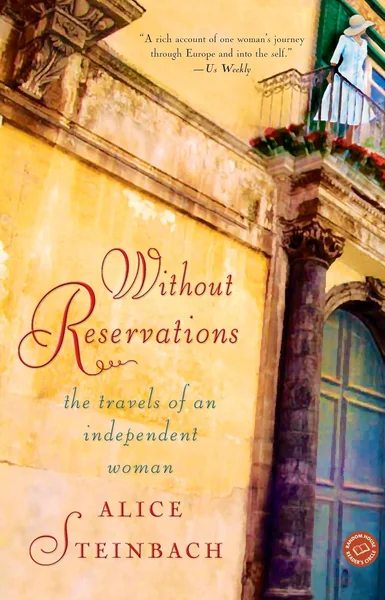
- Readers drawn to The Land and Its People for its blend of personal observation, wit, and travel will find kindred spirit in several titles. Matthew McConaughey's Greenlights shares the memoir-adjacent essay format and a self-aware authorial voice, while Ina Garten's Be Ready When the Luck Happens: A Memoir offers warmth, candor, and a similarly devoted readership. For the travel dimension specifically, Alice Steinbach's Without Reservations: The Travels of an Independent Woman provides a comparably observant, essayistic take on journeying through the world. Matthew Perry's Friends, Lovers, and the Big Terrible Thing: A Memoir shares the emotional register of Sedaris's grief-inflected pieces, balancing humor with harder personal truths. Sedaris's own earlier collections — Me Talk Pretty One Day and Calypso — remain touchstones for anyone wanting to trace his arc, though they are not currently in the LuvemBooks catalogue.
- Who should read this?
- The Land and Its People is best suited to longtime Sedaris fans who have followed him through Me Talk Pretty One Day, Dress Your Family in Corduroy and Denim, and the more somber Calypso and Happy-Go-Lucky — those readers will find the tonal return to form most rewarding. Essay lovers who enjoy acerbic observation balanced with unexpected tenderness, and readers with an appetite for travel writing inflected by mortality and self-deprecating humor, are also well served. The Guardian's caveat stands: those coming to Sedaris fresh, or readers who prefer their essay collections rigorously edited and tonally consistent, may find the unevenness a barrier.
- What are the main themes?
- The collection orbits four primary concerns: the peculiarities and textures of travel (Guatemala, Vatican City, Kenya, and dozens of touring stops in between), the slow arithmetic of aging and what Sedaris calls 'the hard part of getting old — the part where everything irritates you,' friendship and the mortality of those one loves (he scrolls his address book counting those he couldn't bear to outlive, realizing how many are already gone), and family — particularly his mother, rendered with rare emotional poignancy in 'Cool Mom,' and his sister Gretchen, who appears in a $2,400 cashmere cape purchased during a cancer scare. The cumulative effect, as LuvemBooks reads the critical consensus, is a portrait of a writer mapping what territory remains.
- Where should I start with Sedaris?
- LuvemBooks assesses The Land and Its People as not quite the ideal single entry point into Sedaris's work — The Guardian finds it 'glitchier' than earlier collections for readers who are not already devotees. The review identifies Me Talk Pretty One Day and Dress Your Family in Corduroy and Denim as the canonical starting points, representing Sedaris at his most consistently acclaimed. For readers who want to track his evolution through grief and back toward comic form, the recommended arc runs from those early collections through Calypso (2018) and Happy-Go-Lucky (2022) before arriving at this volume.
- How was it received by critics?
- Reception has been strongly positive at the trade level, with starred reviews from both Kirkus and Publishers Weekly — Kirkus framing it as 'a welcome return to form for the much-awarded and much-loved humorist' and Publishers Weekly calling the essays 'among the best of his career.' Literary Hub described a new Sedaris collection as 'a publishing event,' and Garden & Gun praised the writing as 'dry, sharp, and delightfully observant.' The Guardian offers the most measured assessment, citing essays reliant on anecdotes 'too thin for their weight' and noting the experience can feel 'glitchier' than earlier collections for non-devotees. The book debuted as an instant #1 New York Times bestseller, confirming the enduring scale of Sedaris's readership.
Summarize this book
Follow up
Synthesized from verified book data & published reviews · How we review
What would you like to know about The Land and Its People?
Answers come from our editorial notes on this book. If we haven't covered something, we'll say so.
Readers often ask
Our Review
What the Collection Actually Contains
Significance and Place in Sedaris's Career
Where the Collection Genuinely Excels
The Honest Limitations
Who This Book Is For
Sources & Further Reading
The key facts and claims in this review are grounded in the retrieved, verified sources listed below.
- Cited in this review
- 1
- 2
- Further reading
- 3
- 4
hachettebookgroup.com
- 5
kirkusreviews.com
- 6
ivereadthis.com
- 7
- 8
- 9
shakespeareandcompany.com
Age & Reading Level
Recommended age
Adult
2 content notes · who it suits
Content to know about
Skip if you want a tonally consistent, tightly edited essay collection rather than a wide-ranging and occasionally uneven one.
Reader reviews
Be one of the first readers to answer.
Read it? Was it right for you?
Books like The Land and Its People
Curated picks for readers who enjoyed The Land and Its People, with our reasoning for each match.
More by David Sedaris


If you liked The Land and Its People