8 min read
4.5
· 12,629 Amazon ratingsShare This Review

Our review
A Stolen Life
A Stolen Life by Jaycee Dugard Review: A Courageous, Unflinching Survivor's Memoir
A Stolen Life is Jaycee Dugard's firsthand memoir of being kidnapped at age eleven in 1991 and held captive by Phillip and Nancy Garrido for more than eighteen years — published by Simon & Schuster on July 12, 2011, and an instant #1 New York Times bestseller. Written entirely in Dugard's own words, the book is a documented account of survival, psychological endurance, and the slow reclaiming of self, drawing critical praise from major outlets including The New York Times and Los Angeles Times. This review covers the book's content, structure, and reception as documented by published sources, not hands-on use or reading.
 Tap to enlarge
LuvemBooks Verdict
Best for
Readers drawn to survivor memoirs and the psychology of resilience under extreme conditions — particularly those who followed Dugard's case through news coverage and want the interiority, continuity, and systemic accountability that reporting could never provide.
Worth it if
You value unmediated, first-person testimony over polished narrative craft, and are prepared to sit with the full, unsparing weight of prolonged trauma in exchange for a singular account of survival and transformation.
Skip if
Skip it if you are sensitive to graphic accounts of captivity and sexual abuse, or if you expect the propulsive momentum of a professionally shaped narrative — the memoir's raw, unfiltered voice gives it moral authority but also produces genuinely uneven passages.
What readers & critics say
The New York Times review (retrieved via nytimes.com) called the book "brave, dignified and painstakingly honest," judging that its best passages outweigh the weaker ones while candidly noting unevenness in the handwritten journal sections. The Hollywood Reporter praised the prose's "immediacy and emotional intensity" despite its lack of polish, and described Dugard as "a remarkable person not just because she survived."
“Brave, dignified and painstakingly honest — the best parts are good enough to outweigh the rest.”
— nytimes.comAsk LuvemBooks
Was this helpful?
- Is it worth reading?
- For readers drawn to survivor memoirs, the psychology of resilience under extreme conditions, or systemic accountability, LuvemBooks considers A Stolen Life essential reading. The New York Times' Janet Maslin judged that 'the best parts of A Stolen Life are good enough to outweigh' its rougher passages, and the Los Angeles Times framed it as a document of transformation — from terror to strength. The memoir's value lies in its unfiltered interiority: what no news report covering Dugard's case could provide, the book delivers in full. That said, the prose is acknowledged to be uneven in places, and the subject matter — prolonged captivity, abuse, and psychological trauma — is severe and unsoftened.
- Similar books
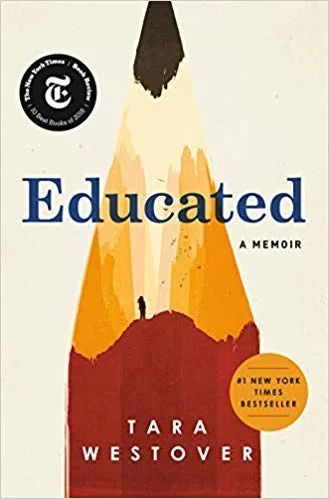
- Readers drawn to A Stolen Life often find strong resonance with other unflinching survivor memoirs. Tara Westover's Educated: A Memoir explores isolation, psychological control, and the painstaking reconstruction of identity after a deeply abnormal upbringing — sharing the raw, first-person authority of Dugard's account. Alexandra Stein's Inside Out: A Memoir of Entering examines coercive control and psychological captivity from the inside, making it a natural companion for readers interested in the mechanisms of captivity Dugard describes. Dave Pelzer's A Child Called It and Tina Turner's I, Tina: What's Love Got to Do with It? round out a broader reading list of resilience narratives rooted in harrowing personal experience.
- Who should read this?
- A Stolen Life is best suited to adult readers drawn to survivor memoirs, the psychology of resilience under extreme conditions, or the systemic failures — specifically parole oversight — that allowed Dugard's eighteen-year captivity to continue. It will also resonate strongly with readers who followed the case through news coverage and want the depth and interiority that journalism could not provide. LuvemBooks cautions that this is not the right book for readers seeking a softened account or a polished, propulsive narrative — the subject matter is severe and the prose is uneven in places, both of which are intrinsic to its unfiltered authenticity.
- What are the content warnings?
- A Stolen Life contains detailed accounts of prolonged kidnapping and physical captivity, sexual abuse (including during childhood captivity), and severe psychological trauma sustained over eighteen years. Dugard does not soften these experiences — the memoir is unflinching by design, and its moral weight comes directly from that honesty. Readers with sensitivity to these themes, or those seeking a redemptive arc unmarred by darkness, should approach with care.
- Where should I start with Jaycee Dugard?
- A Stolen Life is the natural starting point — it is the foundational document, covering the eighteen years of captivity itself, and it was written first. Dugard's follow-up, Freedom: My Book of Firsts (2016), deals with her life after captivity and is best approached after reading A Stolen Life, since it builds directly on the story established in the first memoir.
Summarize this book
Follow up
Synthesized from verified book data & published reviews · How we review
Press Enter to ask. Answers come from our editorial Q&A — start typing to see related questions.
Our Review
What the Memoir Contains and How It Is Structured
Significance: Why This Book Matters
Critical Reception and Documented Strengths
Genuine Limitations and Who May Struggle With It
Who This Book Is For and Its Lasting Place
Sources & Further Reading
The key facts and claims in this review are grounded in the retrieved, verified sources listed below.
- Cited in this review
- 1
hollywoodreporter.com
- Further reading
- 2
en.wikipedia.org
- 3
- 4
whenishouldbestudying.com
- 5
- 6
- 7
- 8
books.google.com
- 9
barnesandnoble.com
Age & Reading Level
Recommended age
Adult
Reading level
Adult
3 content notes · who it suits
Content to know about
Best for: Adults — severe and unsoftened content including prolonged captivity, childhood sexual abuse, and psychological trauma makes this unsuitable for younger readers.
Skip if you're looking for a polished, propulsive narrative or a redemptive account that does not dwell on the darkness of what Dugard experienced.
Reader reviews
Be one of the first readers to answer.
Read it? Was it right for you?
Books like A Stolen Life
Curated picks for readers who enjoyed A Stolen Life, with our reasoning for each match.

If you liked A Stolen Life