9 min read
4.4
· 3,627 Amazon ratingsShare This Review

Our review
The Extraordinary Life of an Ordinary Man
The Extraordinary Life of an Ordinary Man by Paul Newman Review: Raw, Candid Memoir of a Hollywood Icon
The Extraordinary Life of an Ordinary Man is a New York Times bestseller and one of the most unflinching celebrity memoirs in recent memory — assembled from transcripts of conversations Newman recorded between 1986 and 1991 with his close friend and screenwriter Stewart Stern, supplemented by interviews with family, friends, and collaborators, and shaped posthumously into book form by editor David Rosenthal. This review is based on published sources and the public record; it does not reflect hands-on use or reading.
LuvemBooks Verdict
Best for
Readers drawn to psychologically honest portraits of public figures — particularly fans of mid-twentieth-century Hollywood, the method-acting generation, or anyone curious about the private contradictions behind one of cinema's most iconic faces.
Worth it if
You want candid, unguarded self-reckoning from a major star — covering addiction, self-doubt, and personal failure — rather than a polished, celebratory career retrospective.
Skip if
You prefer a traditionally crafted, single-voice autobiography with a clear narrative arc — the assembled, multi-perspective oral-history format, shaped by an editor rather than by Newman himself, may feel uneven or incomplete.
What readers & critics say
The Guardian called it "a painfully revealing memoir" that "lays bare a candid, complicated star," while bookmarks.reviews — drawing on 16 book reviews for an overall Positive rating — noted the book is "necessarily incomplete, even speculative — a found object of sorts," and flagged that readers familiar with the documentary series The Last Movie Stars may find it suffers in comparison. The New York Times reviewer admitted reading it "with a sinking heart," questioning whether the published book was the one Newman himself had envisioned from those recorded conversations.
“A painfully revealing memoir… lays bare a candid, complicated star.”
— The GuardianAsk LuvemBooks
Was this helpful?
- Is it worth reading?
- For readers drawn to candid, psychologically honest accounts of public figures, The Extraordinary Life of an Ordinary Man delivers something genuinely uncommon in the celebrity memoir genre. Newman addresses alcohol abuse, self-doubt, and personal failures with frankness that critics described as 'brutally frank' and 'painfully revealing,' and the multi-voice structure — with contributions from major directors and Newman's own daughters — gives the book historical depth and familial authenticity. The caveat is structural: because the book is a posthumously assembled oral history rather than a narrative Newman himself authored, pacing and editorial decisions rest with editor David Rosenthal, and readers who prefer a traditionally crafted autobiography may find the reconstructed format uneven in places.
- Similar books
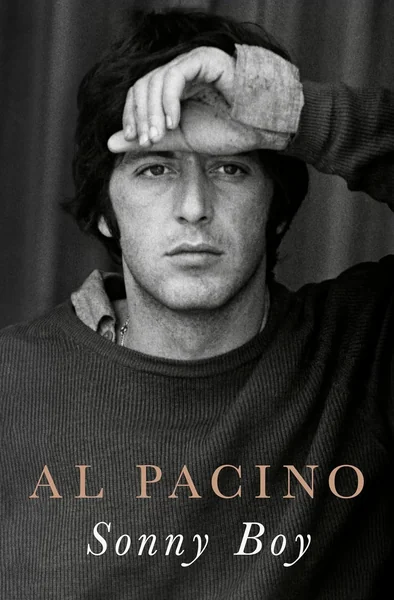
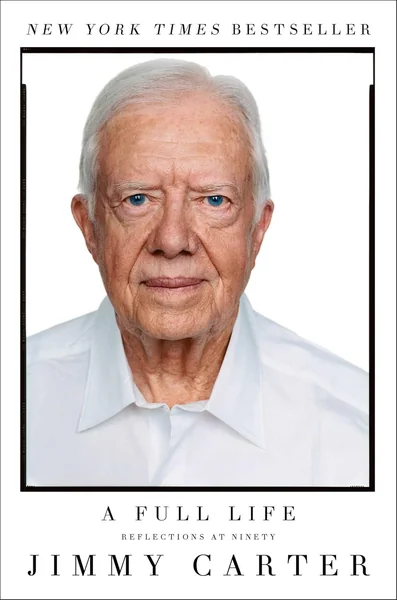
- Readers who respond to the candor and psychological honesty of The Extraordinary Life of an Ordinary Man will find kindred spirits in several other memoirs by major cultural figures. Al Pacino's Sonny Boy offers a similarly unguarded self-portrait from an actor of the same generation and acting tradition. Jennifer Grey's Out of the Corner and Michael J. Fox's No Time Like the Future both bring a frank reckoning with personal struggle to the celebrity memoir form. For a memoir that shares the posthumous and reflective weight, Jimmy Carter's A Full Life: Reflections at Ninety covers a long public life with comparable candor about failure and legacy. When Breath Becomes Air by Paul Kalanithi, while not a celebrity memoir, shares the introspective gravity and the awareness of mortality that gives Newman's book much of its power.
- Who should read this?
- The Extraordinary Life of an Ordinary Man is designed for readers drawn to candid, psychologically honest accounts of public figures rather than hagiographic career retrospectives. Its appeal extends well beyond fans of Newman's films — anyone interested in mid-twentieth-century Hollywood, the method-acting generation, or the intersection of fame, self-doubt, and private suffering will find significant material here. The breadth of contributors, from major directors such as Robert Altman and Elia Kazan to Newman's own daughters Melissa Newman and Clea Newman Soderlund, makes it a document of an era as much as of a single life.
- How honest is Newman about his darker side?
- Unusually so, by the standards of celebrity memoir. Newman addresses his alcohol abuse directly — Joanne Woodward is quoted in the book observing that he found a kind of peace in being 'dead drunk' — and reflects on personal failures, self-doubt, and difficult relationships with both his mother and father throughout his childhood. Critics described the book as 'a brutally frank reflection on a life filled with self-doubt' and noted that even in his early Hollywood years Newman acknowledged he 'didn't know enough about my own feelings to start examining them.' That thread of self-awareness runs throughout the entire memoir.
- How does the oral-history format affect the reading experience?
- The multi-voice construction gives the book what Sally Field, one of its contributors, described as the feeling of 'eavesdropping on a dinner party filled with friends and colleagues all listening to and talking about the man sitting at the head of the table' — a mosaic quality that critics widely cited as one of its genuine pleasures. The trade-off is that narrative shape and pacing rest with editor David Rosenthal rather than with Newman himself, meaning the book reads as a reconstructed oral history rather than a crafted literary autobiography. Readers who prefer a single, continuous authorial voice may find the assembled structure uneven in places.
- Which famous names contribute to the book?
- The memoir draws on interviews Stewart Stern conducted with an exceptionally wide circle of Newman's collaborators and contemporaries. On the acting side, contributors include Tom Cruise, Patricia Neal, Eva Marie Saint, and Sally Field. The directorial roster covers John Huston, Robert Altman, Sidney Lumet, Elia Kazan, George Roy Hill, and Martin Ritt. Newman's own daughters Melissa Newman and Clea Newman Soderlund contribute a foreword and afterword respectively, grounding the book in family perspective alongside its Hollywood and industry voices.
Summarize this book
Follow up
Synthesized from verified book data & published reviews · How we review
What would you like to know about The Extraordinary Life of an Ordinary Man?
Answers come from our editorial notes on this book. If we haven't covered something, we'll say so.
Readers often ask
Our Review
We review the evidence: published critics, reader verdicts and BookTube reviews, gathered and weighed with AI assistance and edited by LuvemBooks, rather than one reader's first-hand take.
What This Book Actually Is — and How It Came Together
The Scope and Substance of Newman's Self-Portrait
Candor as the Book's Defining Quality
The Oral-History Structure — Strength and Limitation
Who This Book Is For
Sources & Further Reading
The key facts and claims in this review are grounded in the retrieved, verified sources listed below.
- Cited in this review
- 1
- 2
- 3
- Further reading
- 4
penguin.co.uk
- 5
kirkusreviews.com
- 6
- 7
- 8
- 9
- 10
- 11
Age & Reading Level
Recommended age
Adult
3 content notes · who it suits
Content to know about
Skip if you want a traditionally crafted autobiography written in a single continuous voice by its subject.
Reader reviews
Be one of the first readers to answer.
Read it? Was it right for you?
Books like The Extraordinary Life of an Ordinary Man
Curated picks for readers who enjoyed The Extraordinary Life of an Ordinary Man, with our reasoning for each match.
If you liked The Extraordinary Life of an Ordinary Man