
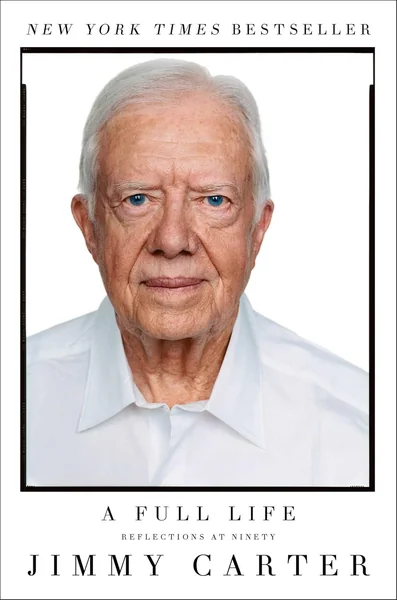
At a glance
LuvemBooks Verdict
Best for: Readers new to Jimmy Carter's extensive bibliography who want a single, accessible volume spanning his full life — from rural Georgia poverty to the presidency, Nobel Prize, and decades of humanitarian work through The Carter Center.
Worth it? Skip it? Read the full verdict →Ask LuvemBooks
Was this helpful?
- Is it worth reading?
- A Full Life rewards Carter admirers and readers new to his story, offering a warm, accessible overview of an extraordinary American arc — from rural Georgia poverty to the presidency and a Nobel Peace Prize. The memoir's frank organization of presidential challenges and its coverage of The Carter Center's humanitarian mission give it genuine reflective value, and Booklist praised it for revealing candid private thoughts across Carter's career. That said, Publishers Weekly called it 'largely a superficial treatment of events and personalities covered elsewhere in more depth, including by the former president himself,' so readers seeking rigorous policy detail or deep personal excavation may come away wanting more.
- Similar books
- Readers drawn to A Full Life may also want to explore other works connected to Carter and his era. Carter's own Our Endangered Values: America's Moral Crisis and An Hour Before Daylight: Memories of a Rural Boyhood offer deeper dives into, respectively, his moral and political convictions and his Georgia childhood — both covering ground that A Full Life treats more briefly. For readers interested in the broader social history of the American South that shaped Carter's world, Nicholas Lemann's The Promised Land: The Great Black Migration and How It Changed America provides essential context. Note that none of these titles are currently in the LuvemBooks catalogue, so they are suggested as further reading rather than linked reviews.
- Who should read this?
- A Full Life is designed for readers who want an accessible, single-volume introduction to Jimmy Carter's life and values rather than a deep policy analysis or exhaustive political history. It particularly suits those new to Carter's bibliography, admirers of his humanitarian legacy through The Carter Center, and general readers drawn to American political memoir. Readers already familiar with Carter's earlier, more focused works — such as An Hour Before Daylight: Memoirs of a Rural Boyhood — may find the memoir covers familiar ground with less rigor, and those seeking granular detail on episodes like the Camp David Accords will need to look elsewhere.
- About Jimmy Carter
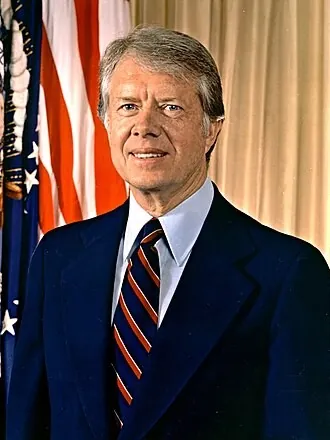
- Jimmy Carter was the 39th President of the United States, serving from 1977 to 1981.
- Why is this book trending?
- A Full Life: Reflections at Ninety is seeing renewed readership following the death of Jimmy Carter on December 29, 2024, at age 100. His passing has prompted readers to revisit his memoir for a closer look at the man behind the presidency, and his reflections on leadership, faith, and service carry particular resonance now that he is gone. The book offers one of the most direct windows into Carter's own voice and values across a life of remarkable scope.
- Where should I start with Jimmy Carter's books?
- A Full Life: Reflections at Ninety is the natural entry point for readers new to Carter's extensive bibliography — it covers his full arc from rural Georgia to the presidency and beyond in a single accessible volume. From there, An Hour Before Daylight: Memories of a Rural Boyhood offers a richer, more detailed account of his formative years in Georgia, while Keeping Faith provides a deeper treatment of his White House years. LuvemBooks notes that A Full Life itself is best understood as a capstone that points readers toward those earlier, more focused works for the depth it intentionally foregoes.
Summarize this book
Follow up
Synthesized from verified book data & published reviews · How we review
Press Enter to ask. Answers come from our editorial Q&A — start typing to see related questions.
Age & Reading Level
Recommended age
Adult
Reading level
Adult
1 content note · who it suits
Content to know about
Skip if you want a detailed, policy-deep account of Carter's presidency or the Camp David Accords
Editorial Review
Jimmy Carter's A Full Life: Reflections at Ninety is a New York Times bestselling memoir that traces the 39th President's journey from rural Georgia to the White House and beyond — candid in spirit, but critics note it skims the surface of a life that deserves deeper excavation.
Read the Full ReviewBooks like A Full Life
Curated picks for readers who enjoyed A Full Life, with our reasoning for each match.
If you liked A Full Life

Why It’s Trending
Jimmy Carter's Memoir Back in the Spotlight After His Passing
Jimmy Carter passed away in December 2024, and readers have been returning to his memoir ever since. A Full Life offers a personal look at one of America's most quietly admired presidents — and right now, people want to understand the man behind the legacy.