Skip to content
Reviewed

Read Time

8 min read

Our age bandAdult
Reader rating
4.8 · 568 Amazon ratings, as of Nov 2026
reader ratings, not a LuvemBooks score
Curated & edited by

LuvemBooks Editorial

How we create our reviews →
Share This Review
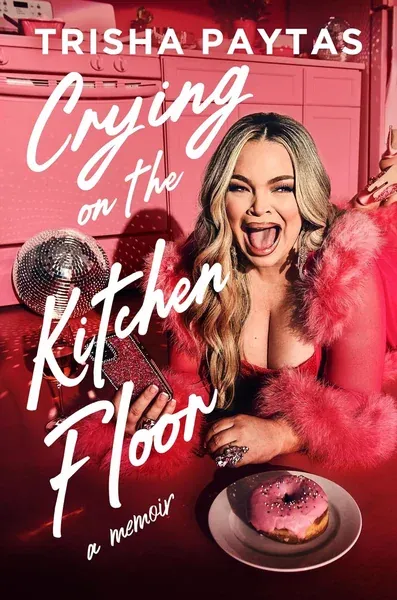
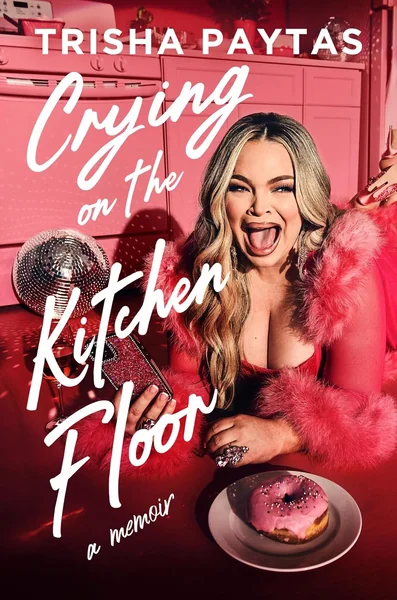
Crying on the Kitchen Floor: A Memoir by Trisha Paytas front cover

Review

Crying on the Kitchen Floor

Crying on the Kitchen Floor by Trisha Paytas Review: A Pioneering Influencer’s Memoir

Trisha Paytas recounts her journey from suburban Illinois to becoming one of the internet’s earliest influencers, detailing her relentless pursuit of fame, mental health struggles, and eventual path to peace. The memoir balances candid confession with sardonic humor, offering an unvarnished look at life in the digital spotlight.

Our age band: Adultsubstance abuse · sexual assault allegations

LuvemBooks Verdict

Best for

Readers who want an unvarnished look at life in the digital spotlight will appreciate how this candid confession balances sardonic humor with a raw account of a relentless pursuit of fame and an eventual path to peace.

Worth it if

Worth reading if you want a raw, unvarnished look at the birth of modern influencer culture and the personal cost of viral fame.

Skip if

Skip it if you expect polished literary prose or a structured chronological account, as the episodic format and casual syntax may feel unpolished and disorienting.

Where reviewers agree and split

Readers rate it 4.8 on Amazon. The reviews we read that discuss it in depth split on some points:

  • Positive

    Kirkus Reviews · Press review: delightful and conversational memoir for dedicated fans

  • Positive

    torreypinesfalconer.com · Book blog: highly rated memoir offering graceful reflection and hope

  • Mixed

    The Cavalier Daily · Book blog: captivating and entertaining despite simple, sometimes cringeworthy prose

    Overall verdicts are our summary of each review we read, from its headline, rating and conclusion.

    Kirkus Reviews and Torreypinesfalconer praise the memoir's conversational, confessional tone as a refreshing asset that captures Paytas's authentic voice, while The Cavalier Daily notes the simple, unvaried prose occasionally verges on cringeworthy but ultimately balances spectacle with surprising profundity.

    “conversational and refreshingly confessional”

    — Kirkus Reviews
    Sources: Kirkus Reviews, Torreypinesfalconer, The Cavalier Daily
    4.8from 568 Amazon ratings, as of Nov 2026— reader ratings, not a LuvemBooks score

    Ask LuvemBooks

    Was this helpful?

    Trisha Paytas’s Crying on the Kitchen Floor offers an unvarnished, conversational account of her rise from a quiet Illinois upbringing to a foundational figure in digital media. While the episodic pacing and casual syntax may feel unpolished to readers expecting traditional literary memoirs, the book delivers a candid, sardonic look at the toll of online notoriety and the eventual path to finding peace. It is best suited for dedicated fans and those interested in the history of creator culture, provided they are comfortable with raw confession over refined prose.
    Is it worth reading?
    The book is worth reading for those seeking a candid memoir about digital life. Critics praise its conversational tone and sardonic self-deprecation, with Booklist awarding it a starred review for its riveting stories. However, readers expecting refined writing or a linear timeline should approach it with adjusted expectations.
    Similar books
    Readers who enjoy candid creator memoirs will likely appreciate Famesick by Lena Dunham and Greenlights by Matthew McConaughey for their unfiltered looks at fame and public life. Those interested in the intersection of trauma and resilience might also connect with The Glass Castle by Jeannette Walls or You with the Sad Eyes by Christina Applegate.
    Who should read this?
    This memoir is best suited for dedicated fans of Trisha Paytas, readers interested in the history of social media and digital media, and those who enjoy candid, conversational non-fiction. It appeals strongly to audiences who want a raw look at the struggles of online notoriety and the evolution of web celebrity.
    What age is it for?
    The content advisory recommends it for ages 18 and up, as the raw confessional style and mature themes are not suited for younger readers.
    How does the book handle mental health?
    Paytas frames her battles with mental illness not as a plea for sympathy, but as a testament to survival. She discusses her diagnosis in 2019 and how therapy and looking inward helped her find peace away from external validation.
    What is the narrative structure like?
    The narrative relies on short scenes, frequently jumping across time periods without smooth transitions. Some passages focus extensively on past online conflicts, which can make the middle sections feel dense with pop culture references.
    How is the kitchen floor incident addressed?
    Paytas reclaims the infamous kitchen floor crying incident that fueled viral memes by transforming that moment of humiliation into a deliberate chapter title. She uses the episode to illustrate her early search for validation and how she eventually overcame the public scrutiny.
    Summarize this book

    Summarize this book

    Trisha Paytas traces her trajectory from a quiet northern Illinois upbringing to becoming a prominent figure in online celebrity culture. The memoir details her relentless drive for fame, early YouTube and MySpace ventures, television appearances, and her evolution into a mainstream podcasting personality. It covers her struggles with borderline personality disorder, substance abuse, and her eventual transition to a grounded life as a married mother of three.

    Follow up

    How is the pacing and structure?
    What is the writing style like?

    Synthesized from verified book data & published reviews · How we review

    Ask LuvemBooks

    What would you like to know about Crying on the Kitchen Floor?

    Answers come from our editorial notes on this book. If we haven't covered something, we'll say so.

    Readers often ask

    Editorial Review

    We review the evidence: reader verdicts, gathered and weighed with AI assistance and edited by LuvemBooks, rather than one reader's first-hand take.
    Trisha Paytas’s debut memoir delivers a candid, often hilarious account of her rise through the digital landscape, though readers seeking polished literary prose may find the writing style uneven.
    Crying on the Kitchen Floor: A Memoir by Trisha Paytas front cover
    Crying on the Kitchen Floor: A Memoir by Trisha Paytas front cover

    The Premise and Early Digital Landscape

    Trisha Paytas traces her trajectory from a quiet upbringing in northern Illinois to becoming a foundational figure in online celebrity culture. She began posting personal videos to YouTube in 2007, just two years after the platform launched.
    The memoir details her relentless drive to see her name in the lights, a desire that pushed her into the seedy streets of Hollywood as a teenager. Paytas recounts her early networking efforts, reality television appearances, and music video cameos.
    She also addresses her mother’s infidelity and several sexual assault allegations against schoolteachers. These formative experiences are presented as the catalysts for her later search for validation and identity.
    The narrative follows her evolution through MySpace, viral controversies, and her transition into a mainstream podcasting personality. She describes her time on the "Frenemies" podcast with Ethan Klein before their public falling out.
    The text covers her extensive music career and her numerous reality television cameos. Paytas details her struggles with substance abuse as a method to numb her depression.
    She writes about stripping and sex work to make quick cash during difficult periods. The memoir concludes with her current life as a married mother of three.
    She reflects on finding peace by looking inward rather than seeking external validation.

    Strengths in Voice and Confessional Style

    Critics have highlighted the memoir’s conversational tone as its primary asset. Kirkus Reviews describes the storytelling as "conversational and refreshingly confessional."
    The Cavalier Daily notes that Paytas writes exactly as she speaks, utilizing acronyms and parenthetical asides to create an authentic atmosphere. Torreypinesfalconer.com observes that this approach makes the book feel like listening to the author directly.
    Booklist awarded the work a starred review, calling it jam-packed with riveting stories without feeling rushed. Kirkus calls the volume an "unfettered delight for Paytas fans."
    Readers familiar with her online history will find the text serves as a deep dive into decades of internet culture. The memoir does not shy away from her struggles with borderline personality disorder, which she was not diagnosed with until 2019.
    Paytas frames these battles not as a plea for sympathy, but as a testament to survival. Torreypinesfalconer.com emphasizes that the author owns her past scandals with graceful reflection.
    The text reclaims the infamous kitchen floor crying incident that fueled early internet memes. Paytas transforms that moment of humiliation into a deliberate chapter title.
    The memoir balances graphic disclosures with sardonic self-deprecation. The Cavalier Daily praises this humor as a necessary reprieve from her tragic history.

    Limitations in Prose and Pacing

    The memoir’s commitment to a casual, unvarnished style presents notable limitations for some audiences. The Cavalier Daily points out that the prose is "simple, straightforward and unvaried."
    Legare Sowder writes that the text occasionally "verges on cringeworthy" due to awkward implementations of Gen Z slang. Kirkus Reviews agrees that the writing is "devilishly indiscreet," which may alienate readers expecting a more traditional memoir structure.
    The pacing relies heavily on a series of rapid-fire vignettes rather than a deeply reflective narrative arc. Some passages focus extensively on past internet feuds, such as her time on the "Frenemies" podcast with Ethan Klein.
    This focus can make the middle sections feel dense with pop culture references. The book does not offer extensive literary polish, prioritizing raw confession over refined prose.
    The narrative frequently jumps between different eras of her career without smooth transitions. Readers expecting a structured chronological account may find the episodic format disorienting.
    The text relies heavily on the reader already knowing the context of her viral moments. Those unfamiliar with her YouTube history may struggle to follow certain anecdotes.
    The memoir prioritizes spectacle over deep introspection in many chapters.

    Is Crying on the Kitchen Floor Worth Reading?

    Weighing these reviews reveals a clear divide in how the memoir is perceived. The text functions primarily as an entertainment piece rather than a literary work.
    Booklist, as quoted on Hachette, praises the book for remaining hilarious, candid, shocking, and heartwarming even to those unfamiliar with Paytas. The Cavalier Daily concludes that the author successfully balances spectacle with surprising profundity.
    Torreypinesfalconer.com argues that the memoir ultimately serves as a reminder that life can improve after severe struggles. The book appeals strongly to readers interested in the history of social media and creator culture.
    Those expecting a traditional celebrity memoir may find the style too informal. The memoir stands as a vital document of early internet fame.
    It captures a specific era of digital performance that has largely been forgotten. Paytas provides a front-row seat to the birth of modern influencer culture.
    The text remains a compelling, if flawed, chronicle of a life lived in public. The memoir successfully answers her central question about what she was thinking.
    It provides a raw look at the cost of viral fame. The conclusion offers a grounded perspective on finding happiness off-camera.

    Sources & Further Reading

    The key facts and claims in this review are grounded in the retrieved, verified sources listed below.

    1. Cited in this review
    2. 1
    3. 2
    4. Further reading
    5. 3
    6. 4
    7. 5
    8. 6
    9. 7

    Age & Reading Level

    Our age band

    Adult

    Our age band groups books for browsing; it isn't an age a review gave.

    Content to know about

    substance abuse
    sexual assault allegations
    discussions of sex work
    borderline personality disorder

    Best for: Adults 18+ — contains explicit discussions of sexual assault, substance abuse, and sex work.

    Skip if you expect polished literary prose or a structured chronological account, as the episodic format and casual syntax may feel unpolished and disorienting.

    From our readers

    Reader reviews

    No LuvemBooks readers have answered yet.

    Read it? Was it right for you?

    Discussion

    Reader comments