8 min read
4.4
· 8,842 Amazon ratingsShare This Review

Our review
Girl, Interrupted
Girl, Interrupted: A Memoir by Susanna Kaysen Review: A Searing, Enduring Document of Psychiatric Confinement
Girl, Interrupted is the national bestseller memoir by Susanna Kaysen chronicling her nearly two-year commitment to McLean Hospital in Belmont, Massachusetts, beginning in April 1967 after an eighteen-year-old Kaysen was sent there following a brief consultation with a psychiatrist she had never met. Critics called it a "poignant, honest … triumphantly funny … and heartbreaking story," and decades of cultural afterlife confirm its stature as one of the defining memoirs of mental illness and womanhood.
LuvemBooks Verdict
Best for
Readers drawn to the intersection of mental health, gender, and 1960s social history who want a documentary-grounded memoir that interrogates the boundary between sanity and socially defined nonconformity.
Worth it if
Worth reading if you are interested in a clear-eyed, structurally inventive illness memoir that uses Kaysen's actual hospital file as a documentary anchor and refuses to flatten a complex experience into a tidy recovery narrative.
Skip if
Skip it if you need a conventional arc of breakdown and resolution, or if the memoir's deliberately fragmentary, non-linear form — and its relatively short, sometimes sketch-like treatment of supporting figures — will leave you feeling under-served.
What readers & critics say
Kirkus Reviews described the memoir as a "searing account" in which Kaysen "writes as lucidly about the dark jumble inside her head as she does about the hospital routines, the staff, the patients." The Paris Review, reflecting on the book's twenty-fifth anniversary, noted that Girl, Interrupted reads "like a comedic travelogue" of an extended ward stay, with a detached, darkly comic perspective that early readers were not always prepared to recognise.
“Kaysen writes as lucidly about the dark jumble inside her head as she does about the hospital routines, the staff, the patients.”
— Kirkus Reviews“Girl, Interrupted reads like a comedic travelogue of an extended stay at a young women's ward — its detached perspective was not what early readers expected.”
— The Paris ReviewAsk LuvemBooks
Was this helpful?
- Is it worth reading?
- For readers drawn to the intersection of mental health, gender, and 1960s social history, Girl, Interrupted is essential. Critics praised it as "poignant, honest … triumphantly funny … and heartbreaking" — a tonal range rarely achieved in illness memoir — and Newsweek called it "tough-minded … darkly comic … written with indelible clarity." Its documentary grounding in Kaysen's hospital file gives it a credibility that sets it apart from purely impressionistic accounts, and its cultural life — a 1999 film, Aimee Mann's 2021 album Queens of the Summer Hotel, and a Mann-scored musical — confirms its lasting resonance. The key caveat: readers expecting a tidy resolution or a recovery arc will find Kaysen's questioning, unresolved structure frustrating.
- Similar books
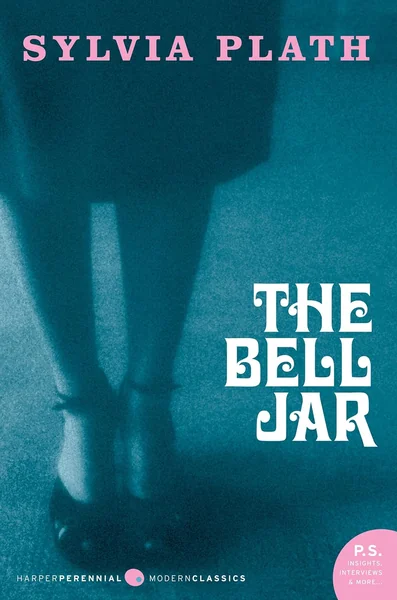
- Readers who respond to Girl, Interrupted typically gravitate toward other landmark memoirs and novels at the intersection of mental illness, womanhood, and institutional critique. Sylvia Plath's The Bell Jar is the most direct companion — a semi-autobiographical novel that also draws on Plath's own psychiatric hospitalization and her time at McLean, and which Kaysen's memoir is frequently read alongside. Elizabeth Wurtzel's Prozac Nation shares Girl, Interrupted's unflinching first-person voice and its scrutiny of how psychiatry intersects with young women's lives. Kay Redfield Jamison's An Unquiet Mind offers a different register — a psychiatrist's account of living with bipolar disorder — while William Styron's Darkness Visible brings comparable literary seriousness to the memoir of depression. For readers drawn to the medical-mystery dimension, Susannah Cahalan's Brain on Fire documents a young woman's sudden descent into a misdiagnosed neurological crisis with similarly urgent prose.
- Who should read this?
- Girl, Interrupted is best suited to adult readers with an interest in mental health narratives, feminist cultural history, or 1960s America. It will resonate especially with those drawn to the question of how psychiatric diagnosis intersects with social nonconformity — and with readers who appreciate memoir that interrogates its own premises rather than delivering a clean redemption arc. Those who have connected with Sylvia Plath's The Bell Jar, or with memoirs such as An Unquiet Mind or Prozac Nation, are a natural audience. The memoir's mature themes — psychiatric confinement, questions of self-harm, and the institutional treatment of young women — make it most appropriate for adult readers.
- About Susanna Kaysen
- Susanna Kaysen is an American author, best known for her 1993 memoir Girl, Interrupted.
- Tell me about the adaptation
- Girl, Interrupted was adapted into a 1999 film directed by James Mangold and starring Winona Ryder as Susanna Kaysen and Angelina Jolie as the charismatic and volatile fellow patient Lisa Rowe. The film is perhaps the memoir's most widely known cultural offshoot, though it leans more heavily on narrative drama than on Kaysen's philosophical interrogation of sanity and diagnosis. Beyond the film, the memoir inspired singer-songwriter Aimee Mann's 2021 album Queens of the Summer Hotel, and subsequently a Mann-scored musical that opened in New York City — a sustained cultural afterlife that underscores the memoir's singular resonance across more than three decades.
- What are the content warnings?
- Girl, Interrupted deals directly with psychiatric institutionalization, borderline personality disorder, and self-harm — including a notable episode in which Kaysen, during a period of depersonalization, bites open her hand believing she has "lost her bones." The memoir also addresses the experiences of fellow patients with serious mental illnesses, and interrogates suicide and the clinical management of young women. It is frank and unflinching throughout, consistent with Newsweek's description of it as "tough-minded." Sensitive readers should be aware of these themes before beginning.
- What is the historical context?
- Kaysen's story unfolds in the late 1960s, a period of kaleidoscopic social upheaval, and the memoir situates her institutionalization within that charged landscape. McLean Hospital in Belmont, Massachusetts, was notable not only for its progressive treatment methods but for its roster of famous patients — including Sylvia Plath, Robert Lowell, James Taylor, and Ray Charles — giving the setting a particular cultural weight. Kaysen's critique of the rigid norms of the era asks where genuine mental illness ends and socially inconvenient nonconformity begins, a question that critics have noted retains its force well beyond the 1960s context.
Summarize this book
Follow up
Synthesized from verified book data & published reviews · How we review
What would you like to know about Girl, Interrupted?
Answers come from our editorial notes on this book. If we haven't covered something, we'll say so.
Readers often ask
Our Review
What the Memoir Is and What Happened
The World of the Ward
Kaysen's Central Argument and the Title's Resonance
Strengths: Voice, Perception, and Critical Reception
Who This Book Is For and Its Place in the Canon
Sources & Further Reading
The key facts and claims in this review are grounded in the retrieved, verified sources listed below.
- Cited in this review
- 1
- 2
- Further reading
- 3
Susanna Kaysen, Wikipedia
- 4
Age & Reading Level
Recommended age
Ages 16+
Reading level
Adult
4 content notes · who it suits
Content to know about
Best for: Adults / mature 16+ — frank depictions of self-harm, psychiatric confinement, and suicidal ideation
Skip if you're looking for a hopeful recovery narrative or a book that offers resolution about mental illness
Reader reviews
Be one of the first readers to answer.
Read it? Was it right for you?
Books like Girl, Interrupted
Curated picks for readers who enjoyed Girl, Interrupted, with our reasoning for each match.

If you liked Girl, Interrupted