9 min read
3.3
· 9,672 Amazon ratings, as of Oct 2026Share This Review
Our review
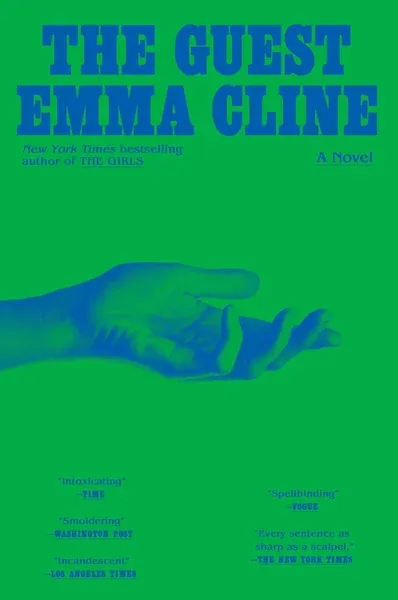
The Guest
The Guest by Emma Cline Review: A Razor-Sharp Study in Calculated Survival
The Guest is Emma Cline's second novel, following a 22-year-old escort named Alex as she drifts through the moneyed enclaves of the Hamptons over five summer days, after being ejected from her wealthy older companion Simon's house. A national bestseller longlisted for the PEN/Faulkner Award, it earned year-end recognition from The New Yorker, Time, NPR, and The Washington Post, among many others.
LuvemBooks Verdict
Best for
Readers who enjoy literary fiction built on mood, menace, and social observation rather than plot mechanics — particularly those drawn to morally unmoored female protagonists navigating class-stratified worlds.
Worth it if
Worth reading if you can surrender to a novel that operates through atmosphere and implication rather than explanation, and find a protagonist's opacity a feature rather than a flaw.
Skip if
Skip it if you need a protagonist whose interiority you can access or a narrative that builds toward emotional catharsis — some reviewers found the nihilistic detachment a barrier rather than a provocation.
Where reviewers agree and split
Readers rate it 3.3 on Amazon. The reviews we read that discuss it in depth split on some points:
Of the 2 reviews we read that discuss its originality, 1 highlights arresting originality and fresh form, but 1 sees it as a familiar shape-shifting genre piece.
Originality
1 highlights arresting originality and fresh form · 1 sees it as a familiar shape-shifting genre piece
Prose
2 call it wire-taut and scalpel-sharp
Characters
2 find Alex a compelling, destabilizing antihero
Pacing
2 call it propulsive and hard to look away from
Who says what
Originality
“It's a gorgeously smart affair whose deceptive lightness conceals strange depths and an arresting originality”
— The Guardian · Trade review“The Guest, like its non-heroine, is something of a shape-shifter. The book restlessly flits between familiar forms”
— Bookmarks · Book blogProse
“Her prose is drifty and wire-taut, easy on the eye, with an awful undertow of unease that never lets up.”
— emmacline.com (Geoff Dyer blurb) · Book blogCharacters
“It did almost send me to the emergency room due to the secondhand stress I was feeling on behalf of the main character, Alex”
— What Is Quinn Reading · Book blogPacing
“Thanks to Cline's facility with words and pace The Guest kept me reading until the final sentence”
— Gilmore Guide to Books · Book blogWhat readers & critics say
The Guardian called The Guest "a gorgeously smart affair whose deceptive lightness conceals strange depths and an arresting originality," framing it as a confident step forward from Cline's debut; Kirkus Reviews awarded it a starred review, calling it "a propulsive read starring an irresistible antihero," while bookmarks.reviews offered a cooler verdict, arguing "vibes do not a novel make" and that the nihilistic detachment left them wanting the story to make them feel something.
“Sultry and engrossing, with a note of menace, it's a gorgeously smart affair whose deceptive lightness conceals strange depths and an arresting originality.”
— The Guardian“A propulsive read starring an irresistible antihero.”
— Kirkus ReviewsAsk LuvemBooks
Was this helpful?
- Is it worth reading?
- For readers comfortable surrendering to atmosphere and implication rather than explanation, The Guest delivers something genuinely rare: a protagonist who unsettles the novel itself, not just the people around her. Kirkus Reviews called it "a propulsive read starring an irresistible antihero," and the novel's year-end placement across more than a dozen major outlets confirms both its critical reach and its readability. The honest caveat is that Alex's opacity — no explained backstory, no psychological access — and a controversial ending divide readers in ways the critical enthusiasm can obscure.
- Similar books
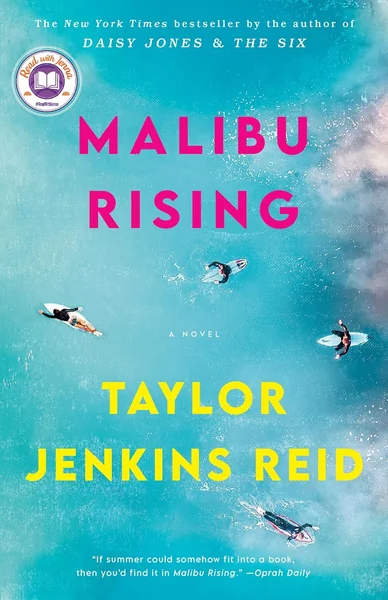
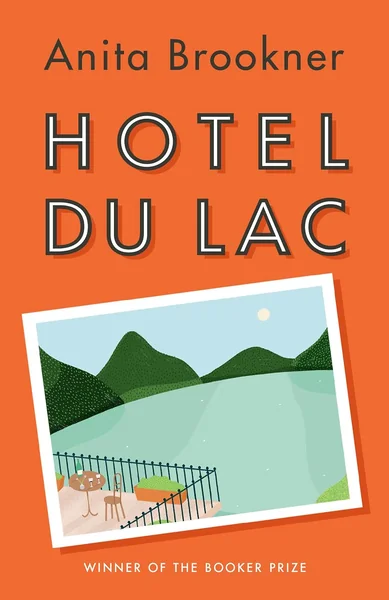
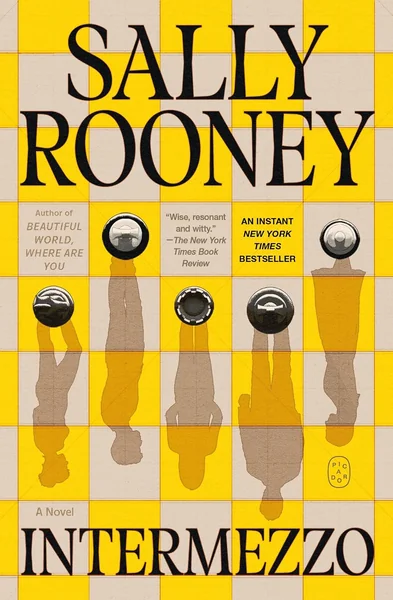
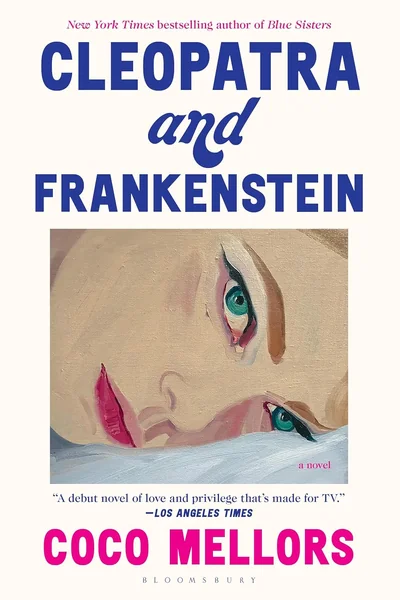
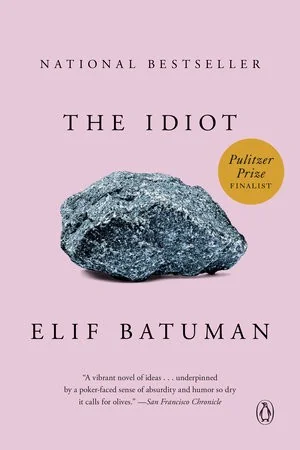
- Readers drawn to The Guest's coastal atmosphere and class-conscious social observation will find a natural companion in Taylor Jenkins Reid's Malibu Rising, another summer-set novel where a single compressed event exposes the fault lines beneath a wealthy family's surface. Anita Brookner's Hotel Du Lac shares the mood of a solitary woman navigating a moneyed, performance-driven world with cool detachment. For the morally unmoored female protagonist specifically, Coco Mellors' Cleopatra and Frankenstein and Sally Rooney's Intermezzo both explore women operating at the edges of relationships and class structures. Elif Batuman's The Idiot offers a similarly cerebral, irony-laced take on a young woman adrift in an unfamiliar social world.
- Who should read this?
- The novel is best suited to readers who enjoy literary fiction built on mood, menace, and social observation — particularly those drawn to morally unmoored female protagonists navigating class-stratified worlds, in the vein of Patricia Highsmith's cool surfaces or Joan Didion's moral vacancy. It will also reward readers interested in the Hamptons as a social ecosystem rather than a backdrop, since the novel functions simultaneously as a thriller of manners and a critique of a world where authentic response has been replaced by performance. Readers who require psychological access to their protagonist, or a narrative that moves toward resolution, are likely to find Alex's deliberate opacity a sustained obstacle.
- About Emma Cline
- Emma Cline is an American writer and novelist from California.
- What are the key themes?
- At its core, The Guest is a novel about class performance and the social contract — Alex survives by exploiting the etiquette and embarrassment-avoidance instincts of the Hamptons wealthy, which the novel frames as a world where authentic response has been replaced by commercial and performative exchange. Themes of precariousness, survival, and moral vacancy run throughout: Alex's predicament is always physical and immediate, but the novel uses it to examine how identity is constructed and maintained when there is no stable self underneath. The absence of backstory is itself a thematic statement — the novel insists, through Alex's own words, that there was no originating trauma, no explanation, which makes her a genuinely unsettling figure.
- Is this a good book club pick?
- The Guest generates exactly the kind of productive disagreement that book clubs thrive on: reviewers themselves split on whether Alex's opacity is a bold formal choice or an alienating evasion, and the ending has sparked significant public debate. Discussion could turn on questions of what it means to read a protagonist with no legible interiority, whether the novel's social critique of the Hamptons is earned or surface-level, and how it compares to the Didion and Rhys novels it's been set alongside. It is compact enough — unfolding over five days — that most readers will finish it before the meeting.
- Where to start with Emma Cline?
- Readers new to Emma Cline face a genuine choice between two distinct registers. The Girls, her 2016 debut, is the more lyrical and hype-driven entry point, steeped in the atmosphere of a 1960s California cult. The Guest is the more controlled and compressed work — The Guardian calls it the product of "a fine talent maturing on its own terms" — and is arguably the better introduction for readers drawn to cool, atmospheric literary fiction rather than coming-of-age lyricism.
Summarize this book
Follow up
Synthesized from verified book data & published reviews · How we review
What would you like to know about The Guest?
Answers come from our editorial notes on this book. If we haven't covered something, we'll say so.
Readers often ask
Our Review
We review the evidence: published critics, reader verdicts and BookTube reviews, gathered and weighed with AI assistance and edited by LuvemBooks, rather than one reader's first-hand take.
What the Novel Is and What Happens
The Novel's Place in Cline's Career and the Literary Landscape
What the Novel Does Exceptionally Well
A Genuine and Specific Limitation
Who The Guest Is For
Sources & Further Reading
The key facts and claims in this review are grounded in the retrieved, verified sources listed below.
- Cited in this review
- 1
barnesandnoble.com
- 2
penguinrandomhouse.com
- 3
- Further reading
- 4
Emma Cline, LuvemBooks
- 5
en.wikipedia.org
- 6
- 7
emmacline.com
- 8
- 9
booksthatslay.com
- 10
lifesuccessjournal.com
- 11
bookmarks.reviews
- 12
gilmoreguidetobooks.com
- 13
newbookrecommendation.com
- 14
bookbrowse.com
Age & Reading Level
Recommended age
Adult
3 content notes · who it suits
Content to know about
Best for: Adults — themes of escort work, predatory social manipulation, and moral vacancy suit a mature reading sensibility.
Skip if you need a protagonist whose interiority you can access or a narrative that builds toward emotional catharsis.
Reader reviews
Be one of the first readers to answer.
Read it? Was it right for you?
Books like The Guest
Curated picks for readers who enjoyed The Guest, with our reasoning for each match.

If you liked The Guest