8 min read
4.0
· 4,102 Amazon ratingsShare This Review

Our review
Hotel Du Lac
Hotel Du Lac by Anita Brookner Review: A Quiet, Prizewinning Novel of Solitude
Hotel du Lac is Anita Brookner's Booker Prize–winning novel about Edith Hope, a romance novelist exiled to a Swiss lakeside hotel, where her encounters with fellow guests — including the calculating Mr. Neville and the imperious Mrs. Pusey — force a reckoning with independence, convention, and desire. Though its prize win was contested and its plot arc drew some critical reservations, the novel's prose precision and wry emotional intelligence have secured it a lasting place in twentieth-century British fiction, and Wikipedia's reception summary notes it was one of the top ten bestselling books of the 1980s.
LuvemBooks Verdict
Best for
Readers drawn to restrained, ironic British literary fiction — particularly those who prize sentence-level prose craft and character-driven interiority over plot momentum — and anyone looking for a natural entry point into Anita Brookner's body of work.
Worth it if
You value compression, dry wit, and a protagonist whose quiet refusal of social compromise is itself the drama — and you're prepared to meet a novel that works through what it withholds as much as what it states.
Skip if
You need narrative momentum or a satisfying resolution, as the novel's deliberately narrow, interior world — one hotel, one off-season, a handful of characters — and a second half widely noted to grow contrived will leave plot-driven readers cold.
What readers & critics say
The Guardian credits Brookner's prose as "so splendid in its own right that Hotel du Lac never felt less than impressive," while also noting that the novel's contested 1984 Booker Prize win drew significant critical flak — Malcolm Bradbury called it "parochial," and Brookner herself suggested J. G. Ballard's Empire of the Sun was the more deserving winner. Kirkus Reviews, in its original 1984 notice, judged the novel "less subtle, more artificial than Brookner's three previous, similar character-portraits," with themes "laid on thick," though Foxed Quarterly affirms it remains Brookner's most popular novel and the one that most clearly sets out the ideas underlying her whole body of work.
“Brookner's prose is so splendid in its own right that Hotel du Lac never felt less than impressive — but the opening gives way to something more overwrought.”
— The Guardian“In many ways, this sad little comedy is less subtle, more artificial than Brookner's three previous, similar character-portraits: the themes are laid on thick.”
— Kirkus ReviewsAsk LuvemBooks
Was this helpful?
- Is it worth reading?
- For readers who value restrained, ironic British prose, Hotel du Lac has compelling credentials: a Booker Prize win, top-ten bestselling status in the 1980s, and sustained critical admiration for Brookner's sentence-level craft. Anne Tyler called it 'Brookner's most absorbing novel,' and Kirkus Reviews praised its 'extra-dry humor, tartly wistful introspection, and literary self-consciousness' as genuine pleasures. The honest counterweight is that critics also found its themes 'laid on thick' compared to Brookner's earlier novels, and The Guardian argued the second half grows 'overwrought' when Mr. Neville's proposal arrives. It rewards the right reader handsomely — but it does demand patience with interior, unhurried fiction.
- Similar books
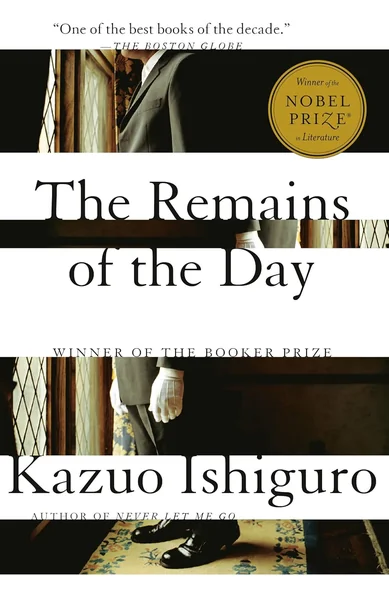
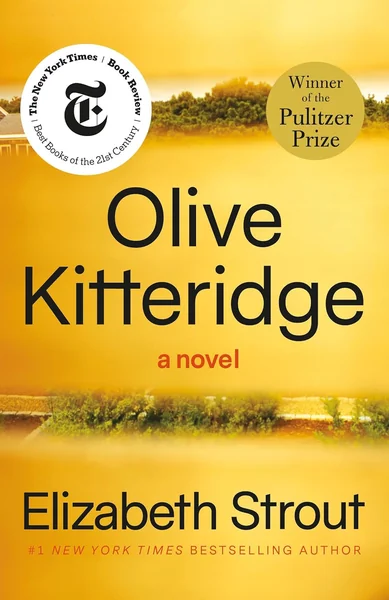
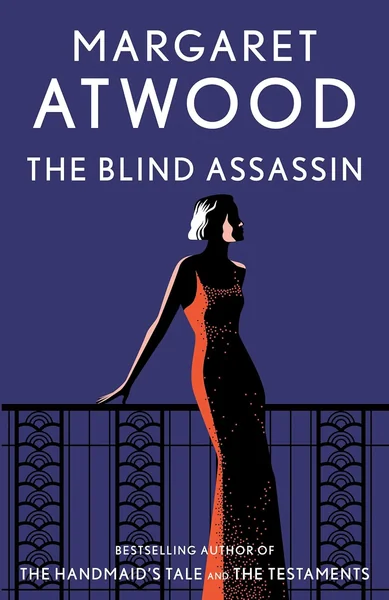
- Readers drawn to Hotel du Lac's restrained, ironic interiority will find strong company in several closely curated titles. Kazuo Ishiguro's The Remains of the Day shares the mode of the repressed, self-deceiving English narrator whose voice reveals more than it intends — a near-perfect companion piece. Margaret Atwood's The Blind Assassin offers a similarly layered portrait of women constrained by social expectation, with a structural sophistication Atwood admirers will recognise. Elizabeth Strout's Olive Kitteridge provides another sharply observed character study of a difficult, independent woman navigating social friction, while Olga Tokarczuk's Flights offers a more fragmented but equally contemplative take on displacement and the self. Coco Mellors' Cleopatra and Frankenstein brings a more contemporary register to questions of romantic compromise and identity.
- Who should read this?
- Hotel du Lac is written for readers who value the tradition of restrained, ironic British fiction — prose that does its work through what is withheld as much as through what is stated. As Anne Tyler's characterisation of it as 'very small-scale' suggests, this is a novel for those who find that narrowness a discipline rather than a limitation. It is particularly well suited to readers interested in women's inner lives and social constraint, and to those who appreciate literary self-consciousness — Edith Hope is herself a novelist, and the book is alert to the gap between romantic fiction and reality. Those expecting eventful storytelling or external drama will be disappointed.
- Did it really deserve the Booker Prize?
- Hotel du Lac won the Booker Prize in 1984, but the win was widely regarded as a surprise and has never been entirely uncontested. Novelist Malcolm Bradbury called it 'parochial' and argued it was not the kind of novel that should have won, and Brookner herself is reported to have suggested that J. G. Ballard's Empire of the Sun would have been the more deserving winner. Reviewers also found the novel 'less subtle, more artificial' than Brookner's earlier work. What the Booker pedigree does reflect is its genuine popular reach: Wikipedia's reception summary notes it ranked among the top ten bestselling books of the 1980s — a commercial resonance that the critical debate tends to obscure.
- What makes Brookner's prose distinctive?
- Brookner's prose in Hotel du Lac is characterised by compression, irony, and what critics described as an 'oddly detached, very small-scale, faintly humorous' tone — a style that operates through restraint rather than accumulation. Kirkus Reviews singled out its 'extra-dry humor, tartly wistful introspection, and literary self-consciousness,' and even critics with reservations about the novel's structure conceded that 'Brookner's prose is so splendid in its own right that Hotel du Lac never felt less than impressive.' The effect is a narrative that reveals its characters and themes as much through what is withheld as through what is stated outright.
- Does the novel have any notable weaknesses?
- Critical reception identified two substantive reservations worth weighing. First, compared to Brookner's three previous novels, Hotel du Lac was judged 'less subtle, more artificial,' with themes 'laid on thick' — a charge that the Booker win perhaps amplified. Second, and more structurally specific, The Guardian's critic argued that the novel's second half — in which Mr. Neville's proposal arrives and the narrative pivots — gives way to something 'more overwrought,' plunging the reader 'out of the suspension of disbelief and making a previously very natural narrative seem contrived.' For a novel whose early strengths are quietness and naturalism, this is a pointed reservation.
Summarize this book
Follow up
Synthesized from verified book data & published reviews · How we review
Press Enter to ask. Answers come from our editorial Q&A — start typing to see related questions.
Our Review
What the Novel Is and What It Contains
Literary Standing and the Booker Prize Controversy
What the Book Does Well
Where the Novel Invites Criticism
Who This Novel Is For
Sources & Further Reading
The key facts and claims in this review are grounded in the retrieved, verified sources listed below.
- Cited in this review
- 1
anarrativeoftheirown.substack.com
- 2
penguinrandomhouse.com
- 3
jacquiwine.wordpress.com
- Further reading
- 4
en.wikipedia.org
- 5
theguardian.com
- 6
thebookerprizes.com
- 7
- 8
- 9
encyclopedia.com
- 10
- 11
barnesandnoble.com
- 12
Age & Reading Level
Recommended age
Adult
Reading level
Adult
who it suits
Skip if You're looking for plot-driven fiction with narrative momentum or dramatic external events.
Reader reviews
Be one of the first readers to answer.
Read it? Was it right for you?
Books like Hotel Du Lac
Curated picks for readers who enjoyed Hotel Du Lac, with our reasoning for each match.

If you liked Hotel Du Lac