

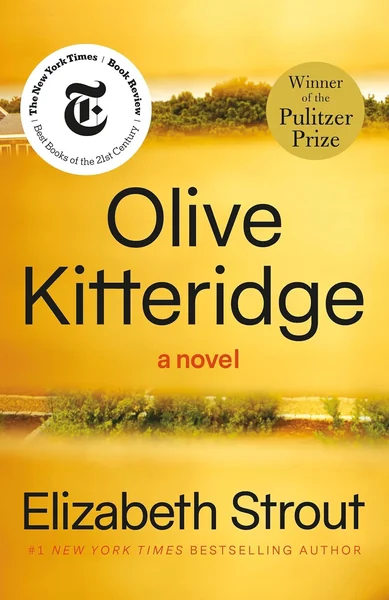
When a new novel lands on the New York Times bestseller list and dominates summer reading recommendations, it tends to cast a long shadow backward over an author's earlier work. That's precisely what's happening with Elizabeth Strout right now. As reported by ABC News Australia and a range of other outlets in late May and early June 2026, Strout's new novel The Things We Never Say — her eleventh book — has become a fixture on best-of-summer lists, with multiple reviews consistently directing new readers toward her Pulitzer Prize-winning Olive Kitteridge as essential background reading.
What Makes Olive Kitteridge the Entry Point Critics Keep Recommending
The pattern is striking in its consistency. Coverage from ABC News, the Chicago Tribune, the Daily News Online, and the WV Gazette Mail, among others, each introduces Strout in roughly the same terms: as the Pulitzer Prize-winning author of Olive Kitteridge. It's the kind of shorthand that signals just how thoroughly that earlier book has defined her literary identity, even nearly two decades after its publication. According to elizabethstrout.com, The Things We Never Say marks a notable departure — it's the first Strout novel not set in the fictional Maine hometown that Olive Kitteridge made famous. That break from her established fictional world makes the repeated critical redirections back to Olive Kitteridge all the more significant: reviewers seem to be signaling that the earlier book remains the clearest window into what Strout does and why it matters.
Olive Kitteridge is a structurally inventive work — thirteen interrelated stories set in the coastal Maine town of Crosby, held together by one of American fiction's most indelible characters, a retired schoolteacher whose presence anchors a community's worth of quiet devastation and hard-won grace. It won the Pulitzer Prize for Fiction and was a finalist for the National Book Critics Circle Award, named a best book of its year by outlets ranging from People to The Atlantic to the Chicago Tribune. The Pulitzer Prize board cited its illumination of the inner lives of a small community whose joys and sorrows are linked by Olive herself. For readers new to Strout, it remains the essential text — and our review of Olive Kitteridge offers a close look at why the book has endured.
A New Novel, a Returning Readership, and What It Tells Us About Strout's Legacy
The commercial and critical momentum behind The Things We Never Say illuminates something important about how literary reputations function. Strout is not a writer who moves units through plot machinery or genre hooks — her work trades in the compression of ordinary experience, the weight of what goes unsaid between people. That a new novel described by People magazine as her eleventh book and her first to depart from Olive's fictional world can still command this level of attention speaks to the depth of reader loyalty she has cultivated. But it also speaks to the specific gravitational pull of Olive Kitteridge itself. Strout revisited the character once before, in Olive, Again — reviewed by NPR as a return to the ornery Maine schoolteacher a full decade after the original — and the appetite for that character proved durable. Now, with Strout moving deliberately away from that world, critics appear to be treating Olive Kitteridge not merely as background reading but as a foundational text for understanding her prose sensibility.
Readers coming to Strout through her 2026 release would also do well to look at Tell Me Everything, her most recent work before this new novel, which demonstrates the same commitment to psychological precision in spare, emotionally loaded prose. But for anyone trying to understand why Strout's name carries the weight it does, the path still runs through Crosby, Maine, and its most famous resident. Want the full verdict? Read our review of Olive Kitteridge to understand what makes it the work critics keep returning to.
Frequently Asked Questions
Is Olive Kitteridge worth reading in 2026?
Absolutely. Olive Kitteridge won the Pulitzer Prize for Fiction and remains a benchmark of American literary fiction. With Elizabeth Strout's new 2026 novel The Things We Never Say drawing widespread critical attention, multiple reviewers are actively recommending Olive Kitteridge to new readers as the essential entry point into Strout's work.
Do I need to read Olive Kitteridge before The Things We Never Say?
The Things We Never Say is a standalone novel and, notably, Strout's first book not set in the fictional Maine world of Olive Kitteridge. You don't need prior knowledge of Olive to read the new book. That said, critics covering the 2026 release consistently recommend Olive Kitteridge as the clearest introduction to Strout's voice and sensibility.
What is Olive Kitteridge about?
Olive Kitteridge is a novel in thirteen interrelated stories set in the fictional coastal Maine town of Crosby. It follows the community's residents through joy, grief, and quiet crisis, anchored by the formidable presence of a retired schoolteacher named Olive Kitteridge. The Pulitzer Prize board praised its profound insights into the human condition and the endurance everyday life requires.
Who should read Olive Kitteridge?
Olive Kitteridge is ideal for readers who value emotionally precise, character-driven literary fiction — particularly those drawn to writers like Alice Munro or Richard Russo. If you're new to Elizabeth Strout and curious about her after hearing about The Things We Never Say, this is the book critics unanimously point to first.
Is there a sequel to Olive Kitteridge?
Yes. Elizabeth Strout published Olive, Again in 2019, returning to the same character and community roughly a decade after the original. NPR described it as a return to 'ornery Olive' as she continues to navigate life in Crosby, Maine. The Things We Never Say, published in May 2026, is a separate standalone novel set outside that fictional world.
Did Olive Kitteridge win the Pulitzer Prize?
Yes. Olive Kitteridge won the Pulitzer Prize for Fiction, which remains the most prominent recognition associated with the book. It was also a finalist for the National Book Critics Circle Award and was named a best book of its year by a wide range of publications, cementing Elizabeth Strout's reputation as a major figure in American literary fiction.
Reader Discussion
No comments yet
Be the first to share your thoughts!