

8 min read
4.3
· 28,404 Amazon ratingsShare This Review
Tell Me Everything by Elizabeth Strout Review: A Luminous Return to Crosby, Maine
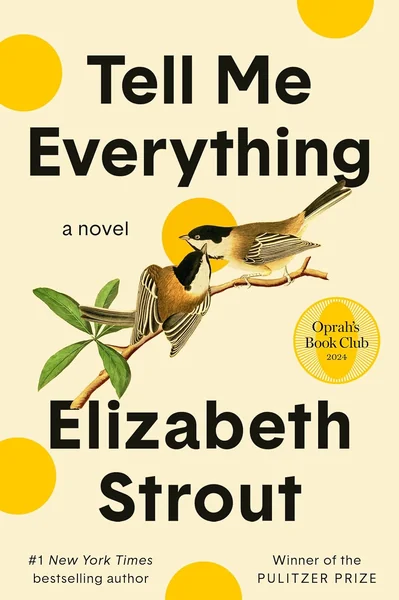
Tell Me Everything is a New York Times bestseller, an Oprah's Book Club pick, and a Women's Prize for Fiction shortlistee in which Pulitzer Prize–winning author Elizabeth Strout reunites readers with Lucy Barton, Olive Kitteridge, and Bob Burgess in autumn-drenched Crosby, Maine — weaving a murder investigation, a profound new friendship, and meditations on memory and meaning into what the publisher describes as Strout operating at the height of her powers.
LuvemBooks Verdict
Best for
Readers already invested in Elizabeth Strout's Amgash/Crosby, Maine universe — particularly fans of Olive Kitteridge, Lucy Barton, or Bob Burgess — who will find the long-awaited convergence of these characters a genuine and emotionally weighty literary event.
Worth it if
Worth reading if you prize restraint, emotional precision, and the accumulation of small human moments over plot momentum — and especially if you've followed Strout's fictional world across earlier books and want to witness Lucy Barton and Olive Kitteridge finally share the same room.
Skip if
Skip it if you're drawn to propulsive narratives or expecting the murder investigation to drive a conventional crime-fiction plot — the pacing is deliberately contemplative and resolutions are emotional rather than structural.
What readers & critics say
The novel arrived with substantial institutional recognition: named a Best Book of the Year by Time, NPR, Vogue, and Parade, shortlisted for the Women's Prize for Fiction, and called a "stunner" by People, as gathered from the Penguin Random House listing. The Denver Post described it as "a breathtakingly good read," citing critical coverage' observation that Strout's characters share "a yearning for just one person to really see" their suffering, while Parnassus Books surfaced starred reviews from both critical coverage ("an absolute must-have") and critical coverage ("longtime fans and newcomers alike will relish this").
Sources: Penguin Random House, Denver Post, Parnassus BooksAge & Reading Level
Recommended age
Adult
Reading level
Adult
3 content notes · who it suits
Content to know about
Skip if you want a plot-driven crime thriller with a conventional investigation and resolution.
In This Review
- What Works & What Doesn't
- What the Novel Is and What It Contains
- Significance and Place in Strout's Universe
- What It Does Well: Voice, Structure, and Emotional Resonance
- Accessibility and Who the Novel Rewards Most
- Limitations and Honest Caveats
What Works & What Doesn't
What Works
- A New York Times bestseller and Oprah's Book Club pick that delivers on its accolades, with major-outlet praise from The Washington Post, People, and the San Francisco Chronicle
- The long-awaited first meeting of Lucy Barton and Olive Kitteridge — two of contemporary fiction's most beloved characters — is the novel's emotional centerpiece
- Named a Best Book of the Year by Time, NPR, Vogue, and Parade, and shortlisted for the Women's Prize for Fiction
- Strout's characteristic restraint and moral depth are on full display, with the publisher describing this as the author operating at the height of her powers
- Oprah Daily notes the novel is accessible enough for newcomers while still rewarding longtime readers of the Amgash/Crosby series
What Doesn't
- The murder investigation functions as emotional backdrop rather than a plot-driven thriller — readers expecting conventional crime-fiction momentum may find the pacing too contemplative
- As the fifth book in the Amgash/Crosby series, the reunion of familiar characters carries the most weight for readers already invested in Strout's fictional world
What the Novel Is and What It Contains
Significance and Place in Strout's Universe
What It Does Well: Voice, Structure, and Emotional Resonance
Accessibility and Who the Novel Rewards Most
Limitations and Honest Caveats
Frequently Asked Questions
Sources & Further Reading
The key facts and claims in this review are grounded in the retrieved, verified sources listed below.
- Cited in this review
- 1
- 2
- 3
- Further reading
- 4
Elizabeth Strout, Wikipedia
- 5
oprahdaily.com
- 6
- 7
- 8
parnassusbooks.net
- 9
Related Reviews
Reviews of books we picked for readers who enjoyed Tell Me Everything.

Reader Comments
No comments yet
Be the first to share your thoughts!