8 min read
Share This Review
James by Percival Everett Review: A Pulitzer-Winning Reimagining of an American Classic
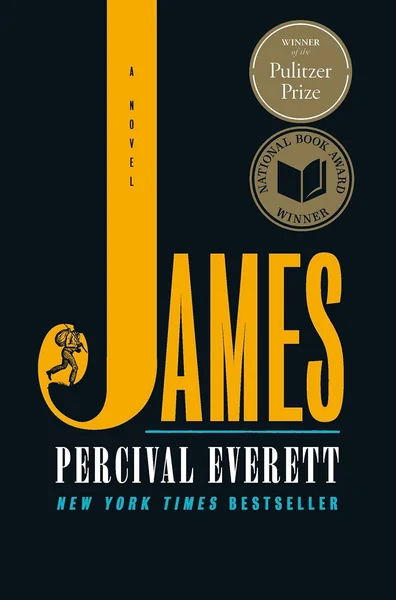
Percival Everett's James, published by Doubleday in 2024, retells Adventures of Huckleberry Finn from the perspective of the enslaved Jim — recast as a secretly literate, deeply calculating man performing ignorance for survival — and swept the major literary awards of its year, winning the National Book Award for Fiction, the 2024 Kirkus Prize, and the 2025 Pulitzer Prize for Fiction.
LuvemBooks Verdict
Best for
Readers of literary fiction who relish novels that operate simultaneously as adventure, social critique, and philosophical inquiry — particularly those with some familiarity with Adventures of Huckleberry Finn who will appreciate the full force of Everett's structural and moral recontextualization.
Worth it if
Worth reading if you're drawn to fiction that reframes a canonical text from the inside out, transforming a historically fraught portrayal into a portrait of calculated intelligence and resilience while delivering genuine narrative propulsion alongside its ideas.
Skip if
Skip it — or approach with adjusted expectations — if you're seeking lighter literary fare, as the antebellum setting is rendered in deliberately grimmer and bloodier terms than Twain's original, and readers with no prior knowledge of Huckleberry Finn will miss much of the novel's layered irony and structural power.
What readers & critics say
Kirkus Reviews awarded James a starred review, named it among the best books of 2024, and declared that "one of the noblest characters in American literature gets a novel worthy of him," while the Chicago Review of Books described it as "a relentless code-switching satire, a meditation on the constructedness of racial identity, a love letter to the written word" that can stand entirely apart from its source material. The novel went on to win the National Book Award for Fiction, the 2024 Kirkus Prize, and the 2025 Pulitzer Prize for Fiction, and was shortlisted for the Booker Prize — a sweep of honors that, per multiple retrieved sources, is exceptionally rare in contemporary American literary fiction.
“One of the noblest characters in American literature gets a novel worthy of him.”
— Kirkus ReviewsAsk LuvemBooks
Was this helpful?
- Is it worth reading?
- James swept the major American literary prizes of its year — the National Book Award for Fiction, the 2024 Kirkus Prize, and the 2025 Pulitzer Prize for Fiction — and was named a Booker Prize finalist, an exceptionally rare concentration of honors. Kirkus Reviews, which awarded it a starred review, declared that 'one of the noblest characters in American literature gets a novel worthy of him' and confirmed it delivers 'page-turning excitement but also off-kilter philosophical picaresque.' Readers drawn to literary fiction that operates simultaneously as adventure, social critique, and philosophical inquiry will find it among the most substantive American novels published in recent years. The key caveat: readers entirely unfamiliar with Adventures of Huckleberry Finn will miss much of the novel's layered recontextualization, and its antebellum setting is rendered in deliberately grimmer, bloodier terms than Twain's version.
- Similar books
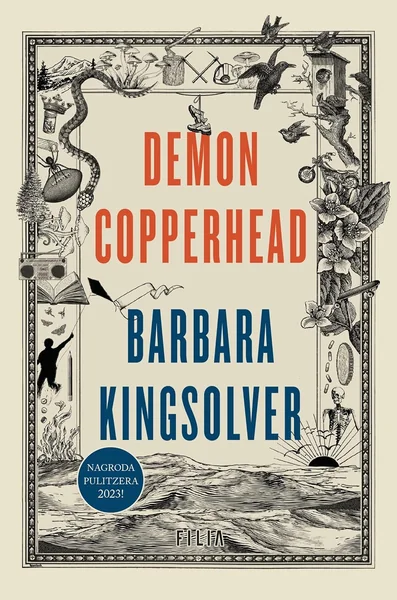
- Readers who respond to James's blend of formal reinvention, antebellum history, and philosophical depth will find several strong companions. Toni Morrison's Beloved is the essential touchstone for literary fiction that confronts the full psychological and moral weight of slavery. Colson Whitehead's The Underground Railroad likewise centers an enslaved protagonist navigating antebellum America through a structurally inventive lens. Percival Everett's earlier novel Erasure — the basis for Cord Jefferson's film American Fiction — offers the same sharp satirical intelligence applied to race and literary convention, making it the natural next read for those new to Everett's work. For award-winning literary fiction that reimagines a canonical American narrative through a fresh perspective, Barbara Kingsolver's Demon Copperhead (a Pulitzer Prize winner itself) provides a compelling parallel. Wallace Stegner's Angle of Repose, another Pulitzer Prize winner, shares James's interest in American history rendered with moral complexity and formal ambition.
- Who should read this?
- James is best suited to adult readers of literary fiction who are drawn to narratives that operate on multiple registers simultaneously — adventure, social critique, philosophical inquiry, and formal reinvention. Readers with some familiarity with Adventures of Huckleberry Finn will get the most from the novel's layered recontextualization and structural ironies, though Kirkus Reviews confirms it stands as thrilling and soulful on its own terms. Those who appreciated Toni Morrison's Beloved, Colson Whitehead's The Underground Railroad, or Percival Everett's own Erasure are particularly well-positioned to appreciate what James achieves. Readers who prefer lighter literary fare should be aware that the antebellum setting is rendered in deliberately grimmer and bloodier terms than Twain's original.
- What are the main themes?
- The novel's central thematic engine is the survival strategy of performed ignorance: Jim and the enslaved people around him deliberately code-switch — speaking standard English among themselves and an unsophisticated patois in front of white people — exposing language itself as a site of racial power. Running alongside this is an interrogation of Enlightenment philosophy: Jim has secretly educated himself in the works of Voltaire and John Locke, and the novel asks how the intellectual frameworks that underpinned American democracy coexisted with the institution of slavery. Themes of family, self-preservation, and the construction of identity under coercion run throughout, culminating in what Kirkus described as a 'stunning' late revelation for readers familiar with Twain's original.
- What awards has it won?
- James achieved one of the most decorated years in recent American literary history, winning the National Book Award for Fiction, the 2024 Kirkus Prize, and the 2025 Pulitzer Prize for Fiction — a sweep of the three major American literary honors that is exceptionally rare. The novel was also named a Booker Prize finalist; the 2024 Booker judges called it 'a captivating response to Mark Twain's classic that is both a bold exploration of a dark chapter in history and a testament to the resilience of the human spirit.' Kirkus Reviews named it among the best books of 2024, and it has been praised across major outlets as a cornerstone work of twenty-first-century American literature.
- Tell me about related adaptations
- James itself has not been announced as a film or television adaptation as of this writing. However, Percival Everett's earlier novel Erasure was adapted into the acclaimed 2023 film American Fiction, written and directed by Cord Jefferson and starring Jeffrey Wright — giving readers a sense of how Everett's satirically charged, formally inventive prose translates to screen. American Fiction won the Academy Award for Best Adapted Screenplay, suggesting significant Hollywood interest in Everett's work; it is reasonable to expect James to attract similar attention given its extraordinary awards profile.
Summarize this book
Follow up
Synthesized from verified book data & published reviews · How we review
Press Enter to ask. Answers come from our editorial Q&A — start typing to see related questions.
Age & Reading Level
Recommended age
Adult
Reading level
Adult
Content to know about
Best for: Adults — the novel's antebellum violence, period racial slurs, and philosophically dense narrative are intended for mature adult readers.
Skip if you are looking for lighter literary fare and find unflinching depictions of slavery and antebellum violence demanding.
Our Review
What the Novel Is and What It Does
The Central Conceit: Code-Switching as Survival
Everett's Jim: A Philosopher in Chains
Awards, Reception, and Place in the Canon
Who This Novel Is For — and Where It Demands the Most
Sources & Further Reading
The key facts and claims in this review are grounded in the retrieved, verified sources listed below.
- Cited in this review
- 1
kirkusreviews.com
- 2
- 3
panmacmillan.com
- Further reading
- 4
en.wikipedia.org
- 5
frugalbookstore.net
- 6
- 7
words-and-dirt.com
- 8
bookmarks.reviews
- 9
Books like James A Novel
Curated picks for readers who enjoyed James A Novel, with our reasoning for each match.
If you liked James A Novel