BOOKS
Published

Read Time

8 min read

Reader rating

4.6

· 1,791 Amazon ratings
reader ratings, not a LuvemBooks score
Curated & edited by

LuvemBooks Editorial

How we create our reviews →
Share This Review

The Nesting Place by Myquillyn Smith Review: Warm, Practical Home-Decorating Encouragement

Myquillyn Smith's The Nesting Place is a four-color home-decorating book built on a single liberating premise: a home doesn't need to be perfect to be beautiful, and real life — kids, pets, mess, and all — is not an obstacle to a welcoming space but the very thing worth designing around.
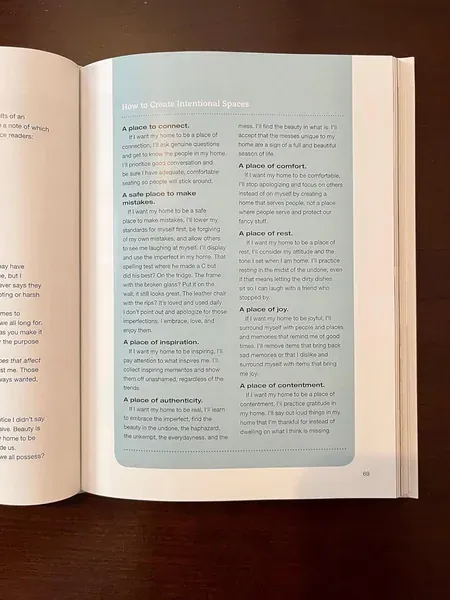
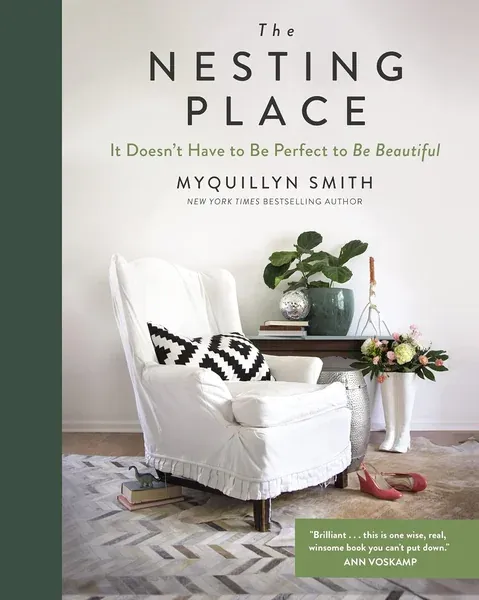
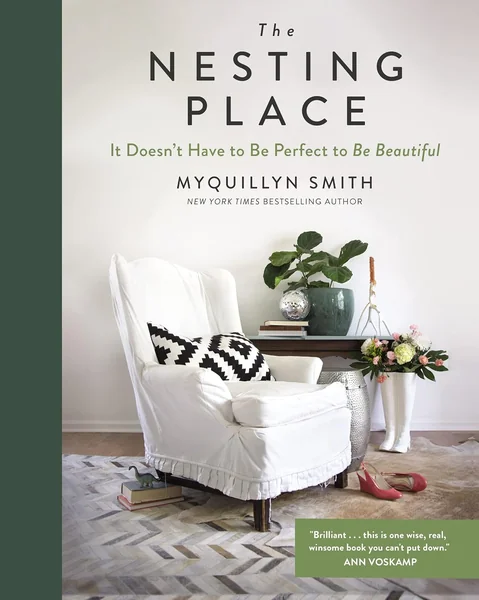
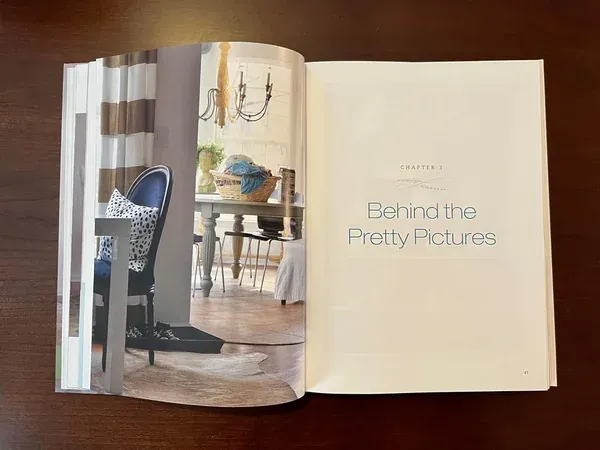
Interior spread showing chapter on creating intentional spaces with subheadings for connection, rest, joy, inspiration, and authenticity.The Nesting Place: It Doesn't Have to Be Perfect to Be Beautiful by Myquillyn Smith front coverChapter opening spread showing styled interior room with furniture and decor, introducing "Behind the Pretty Pictures" section.Tap to enlarge

LuvemBooks Verdict

Best for

Readers who feel paralyzed by an imperfect home, a tight budget, or the pressure to match aspirational interiors — particularly those in busy family households who want practical encouragement over prescriptive design rules.

Worth it if

You want a warm, permission-giving framework that frees you from perfectionism and helps you shape a livable, personal home without waiting for ideal conditions or a designer budget.

Skip if

You're looking for technically rigorous design instruction — detailed spatial planning, color theory, or a systematic room-by-room methodology — as the book leans firmly toward encouragement over comprehensive decorating reference.

Retailer and publisher descriptions consistently highlight the book's practical, photo-rich format and its core promise of helping readers "find beauty in imperfection," as noted across Barnes & Noble and HarperCollins UK. Bookwyrms Hoard's review praises Smith's anti-perfectionist philosophy directly, noting that her experience across many homes makes the advice feel genuinely tested rather than idealized.

Sources: Barnes & Noble, HarperCollins UK, Bookwyrms Hoard
4.6from 1,791 Amazon ratings— reader ratings, not a LuvemBooks score
In This Review
  • What Works & What Doesn't
  • What the Book Is and What It Argues
  • Significance and Place in the Genre
  • Strengths: Accessibility and Permission-Giving
  • Limitations and Who May Be Frustrated
  • Who It Is For and How It Holds Up

What Works & What Doesn't

What Works
  • Centers a liberating, anti-perfectionist philosophy that explicitly rejects aspirational 'flawless look' standards in favor of real, livable homes
  • Draws on Smith's experience across thirteen different homes, grounding advice in varied, practical situations rather than a single idealized setup
  • Full four-color photo format pairs ideas with visual reference, supporting the book's practical, step-by-step decorating guidance
  • Praised by Sherry Petersik (bestselling author of Young House Love) for 'approachable ideas, encouragement, and a whole lot of heart'
  • Frames decorating as a confidence-building exercise, making it accessible to readers with limited budgets or imperfect starting points
What Doesn't
  • Leans toward encouragement and permission-giving over technically detailed design instruction, which may leave readers seeking rigorous methodology wanting more
  • Smith's perspective is rooted in a specific domestic context — a family home with children and pets — that may not translate as directly for readers in different living situations
A home-decorating book grounded in imperfection rather than aspiration, The Nesting Place makes the case that beauty and livability are not at odds.

What the Book Is and What It Argues

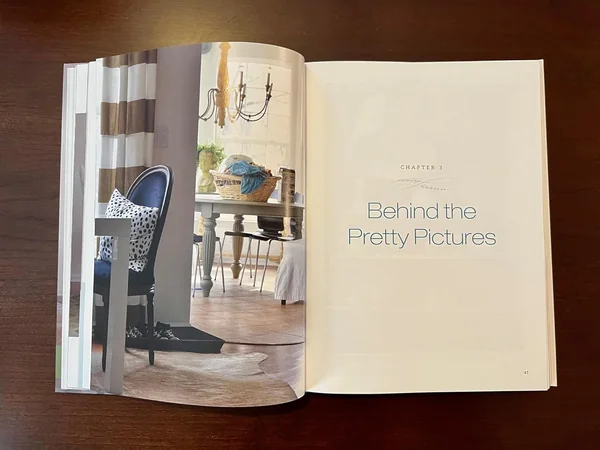
Chapter opening spread showing styled interior room with furniture and decor, introducing "Behind the Pretty Pictures" section.
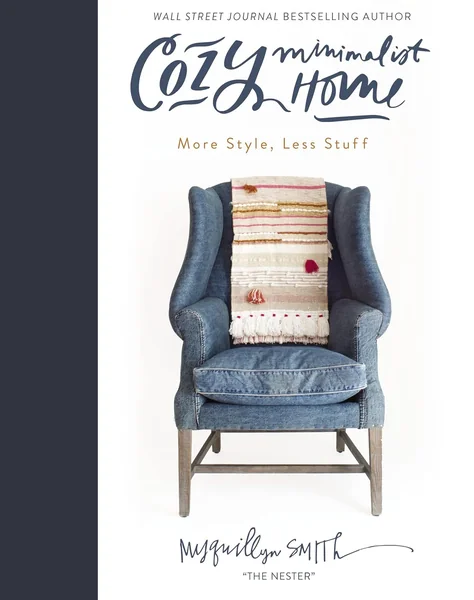
The Nesting Place: It Doesn't Have to Be Perfect to Be Beautiful is a full-color home-decorating book by Myquillyn Smith, the blogger known as The Nester and also the author of Cozy Minimalist Home. Its central argument is direct: decorating is not about achieving a flawless look to impress guests — it is about making peace with imperfection and shaping a home that genuinely reflects the people living in it. Smith draws on her own experience across thirteen different homes to show readers how to think differently about what a home is for, and to tailor their spaces to their own style without overspending or measuring themselves against idealized interiors.
full of approachable ideas, encouragement, and a whole lot of heart
The book is aimed squarely at real households — the kind bursting with kids, pets, and the unpredictable messes of everyday life. Smith frames her own North Carolina fixer-upper, worked on alongside her husband and their three boys, as the testing ground for every idea she shares.

Significance and Place in the Genre

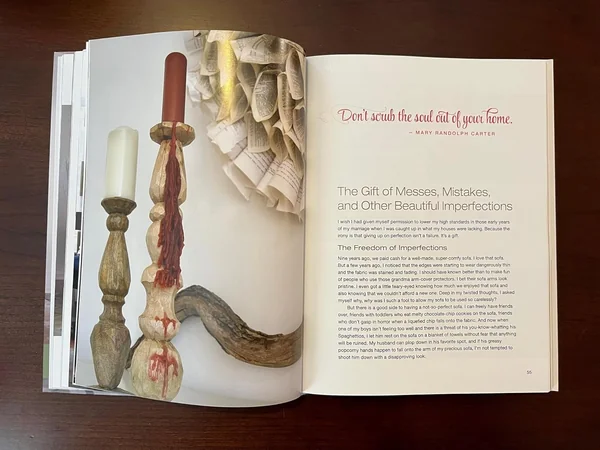
Interior spread featuring vintage candlesticks and fabric, illustrating imperfect home styling for practical decorating guidance.
Home-decorating publishing is crowded with aspirational content that can leave readers feeling their actual homes fall short. The Nesting Place occupies a distinct niche within that genre by explicitly rejecting the perfection standard. Smith's blogger roots — she built her following as The Nester before the book's original publication — give the book a voice that reads more like an enthusiastic friend than a design authority handing down rules. That sensibility is part of what the book is known for and why it continues to find an audience.
Sherry Petersik, home blogger and bestselling author of Young House Love, describes the book as "full of approachable ideas, encouragement, and a whole lot of heart" — a blurb that captures the tone Smith is clearly aiming for throughout.

Strengths: Accessibility and Permission-Giving

The book's most consistent strength, reflected across its promotional record, is accessibility. According to the publisher's description, The Nesting Place is structured around easy tips, simple steps, and practical advice — the kind of guidance designed to give readers the courage to take risks with their homes rather than wait for a budget, a renovation, or a perfect starting point. The four-color photo format supports that practical intent, pairing ideas with visual reference so readers can see how arrangements and decorating choices actually translate to a space.
The emphasis on freedom — specifically, freeing readers from comparison and from the pressure of a "flawless look" — runs throughout. This is not a book that assumes a designer budget or a magazine-ready room. Its value proposition, as the publisher frames it, is confidence-building as much as instruction.

Limitations and Who May Be Frustrated

Readers looking for technically detailed design instruction — precise guidance on spatial planning, color theory, or architectural intervention — will find The Nesting Place leans more toward encouragement than methodology. The book's explicit focus on imperfection and livability, while freeing for some, means it does not position itself as a comprehensive decorating reference. Those seeking a systematic, room-by-room technical manual are likely better served elsewhere.
Additionally, Smith's perspective is rooted in a specific domestic context: a family home with children and pets, and a philosophy shaped by that particular lived experience. Readers in very different living situations — urban apartments, minimalist households, those without families — may find the framing less directly applicable even if the broader permission-giving message still resonates.

Who It Is For and How It Holds Up

The Nesting Place is designed for the reader who feels stuck — paralyzed by an imperfect space, a limited budget, or the sense that their home should look different before they invest in it. Smith's framework, built on thirteen homes' worth of trial and adaptation, is explicitly anti-perfectionist, and that focus gives the book a coherent identity. The publisher describes its aim as helping readers "create the home — and life — you've always wanted," which signals that Smith treats the home not just as an aesthetic project but as a reflection of how people want to live.
Readers who respond to a warm, first-person, encouragement-forward voice and who want practical prompts rather than prescriptive rules will find this book well matched to those expectations. It is a book about permission as much as decoration, and for the audience it is written for, that is precisely the point.

Sources & Further Reading

The key facts and claims in this review are grounded in the retrieved, verified sources listed below.

  1. Cited in this review
  2. 1
  3. Further reading
  4. 2
  5. 3
  6. 4
  7. 5
  8. 6
  9. 7
  10. 8